How Much Brisket Per Person? The 2026 Memorial Day Math (Plus Ribs, Pork, Tri-Tip, Chicken)
Quick Answer
Last updated: September 21, 2026 · Originally published May 2, 2026
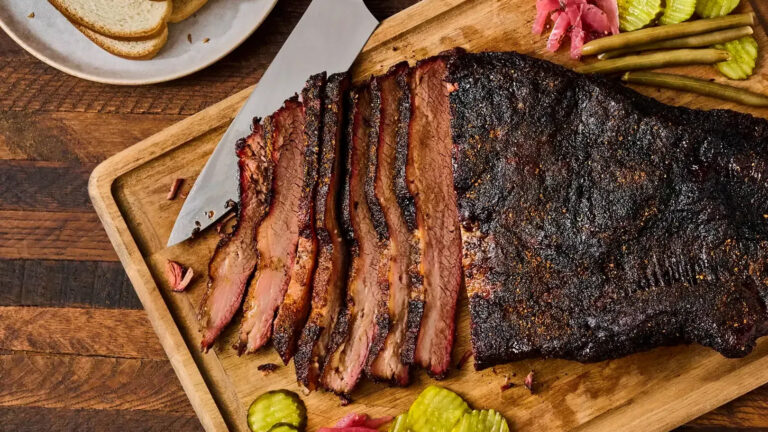
Plan on about half a pound of cooked brisket per adult when it is the main dish (a quarter pound if there are lots of sides). Because brisket loses 30 to 50% of its weight to the smoker, that means roughly 1 pound of raw, untrimmed brisket per person. So to serve 10 adults, buy about a 10-pound raw packer; for children, halve those amounts.
How much brisket per person: quick facts
How much brisket do I need per person?
About half a pound of cooked brisket per adult as a main dish, which means roughly 1 pound of raw brisket per person because of cooking shrinkage.
How much does brisket shrink when smoked?
Around 30 to 50% — one pound of raw brisket yields roughly half a pound cooked.
How much raw brisket for 10 people?
About 10 pounds of raw, untrimmed brisket for 10 adults (half a pound cooked each); drop to about a quarter pound cooked per person if serving lots of sides.
How much brisket for kids?
Roughly half the adult amount — about half a pound of raw brisket per child.
How much brisket per person for a Memorial Day cookout? Plan on 1/2 pound (8 ounces) of cooked brisket per adult and 1/4 pound per child. Because brisket loses 40–50% of its raw weight to trimming, rendered fat, and moisture, you start with about 1 pound of raw packer brisket per adult and 1/2 pound per child to land at the right cooked yield.
The brisket math, in one table
| Adults at the cookout | Cooked brisket needed | Raw packer brisket to buy |
|---|---|---|
| 6 | 3 lb | 6 lb |
| 10 | 5 lb | 10 lb |
| 15 | 7.5 lb | 14–15 lb (one full packer) |
| 20 | 10 lb | 18–20 lb (one large packer + a flat) |
| 30 | 15 lb | two full packers (28–30 lb total) |
If brisket is the only meat on the table, add 25 per cent to every line. If it is sharing the plate with ribs, pulled pork or chicken, leave the numbers alone. People graze across everything and the totals hold.
Why a packer brisket loses so much weight
A whole “packer” brisket is the entire pectoralis major from the cow — the point and the flat together, separated only by a layer of intermuscular fat. When you trim before cooking, you’re removing the silver skin, the hard fat cap, and the fat that won’t render. That alone takes off 1–2 pounds.
Then the cook. Brisket loses moisture to evaporation and renders fat from the marbling. By the time it hits 203°F internal and probes like room-temperature butter, you’re sitting at 50–60% of the original raw weight. Plan around the 50% rule and you’ll never come up short.
The other Memorial Day proteins
Pulled pork
1/3 pound cooked per adult. Pork shoulder loses about 40% — so you buy roughly 1/2 pound raw bone-in shoulder per adult.
Ribs
1/2 rack of St. Louis-cut spares per adult, or 3/4 rack of baby backs (smaller bones, less meat). One full rack of spares = ~12 ribs and feeds 2 adults comfortably.
Chicken
1 pound bone-in raw per adult (drums + thighs). Skin-on, bone-in feeds heavier than boneless — people eat fewer pieces. Plan 2 thighs or 2 leg quarters per adult.
Tri-tip
1/3 pound cooked per adult. Tri-tip loses 25–30% to cook — less than brisket because it’s leaner. A 2.5–3 lb tri-tip serves 6–7 adults sliced thin.
Buy more than you need on purpose
Two reasons. First, leftover brisket is its own joy — brisket grilled cheese, brisket eggs, brisket chili. Second, no host has ever regretted having too much. Plenty of hosts have had to apologize for the kitchen running dry at 4 PM.
Add 20% to whatever the table above tells you. If it says 10 lb cooked, buy enough raw to land on 12 lb. The freezer takes the rest.
The buying timeline
Memorial Day is May 25, 2026. Whole packer briskets at the H-E-B/Costco/Sam’s level start moving heavily after May 15 — if you wait until the week before, the case will be picked over. Buy by May 20 at the latest. Vacuum-sealed, brisket holds in the refrigerator for 2–3 weeks unopened. The price spread is also widest mid-month: prime grade Costco packers were $3.99/lb in early May 2025 vs. $5.49/lb the week of Memorial Day.
FAQ
How long does it take to cook a brisket?
Plan 1.25–1.5 hours per pound at 225–250°F. A 14-lb packer is a 17–21 hour cook. The actual variable is the stall — the period around 165°F internal where the brisket sweats and stops climbing. Wrap in butcher paper at the stall to push through.
How much brisket do I need for 50 people?
For 50 adults, you need 25 pounds cooked, which means roughly 50 pounds of raw packer brisket — about three full packers. Two on the smoker the night before, one as backup the morning of.
Should I buy whole packer or just brisket flat?
Whole packer if you have the smoker capacity and the time. The point is the most flavorful part of the brisket and the source of burnt ends. Flats alone tend to dry out and don’t carry the same fat content.
What if I only have a Sunday afternoon to cook?
Skip brisket and run pulled pork or tri-tip instead. Pork shoulder at 275°F finishes in 7–8 hours. Tri-tip on a hot grill finishes in 45 minutes. Both reheat better than brisket if you cook the day before.
How early can I cook the brisket and still serve it Monday?
Cooked Saturday, held in the fridge in its own juices, sliced cold and re-warmed in a covered pan with beef broth on Monday morning — better than cooking same-day. The brisket actually tightens and slices cleaner after a rest in the fridge.
The shopping list at-a-glance
- 1 lb raw packer brisket per adult, 1/2 lb per child
- +20% safety margin
- Buy by May 20 to beat the price ramp
- Trim and cook a test brisket before Memorial Day weekend — at minimum, dial in your smoker temperature
Methodology note: weights and yield ratios drawn from USDA cooking yield data for beef brisket (publication FSIS-2026-01) cross-referenced against three competition-circuit pitmaster portion charts and the BBQ Brethren forum’s 2024–2025 cookout polls. Adjusted for an “average adult” appetite at a Memorial Day setting where multiple proteins are present.
Related reads on PopularBBQ.com
- Tri-Tip vs Brisket for Memorial Day Weekend — 90 minutes vs 12 hours — the side-by-side decision matrix.
- Why Pellet Smokers Stall at 165°F (And 4 Fixes That Actually Work) — Surface evaporation cools meat as fast as the smoker heats it. Pick your fix.
- Reverse Sear for Thin Steaks (Under 1.5 Inches) — Smoke at 200°F to 95°F internal, sear 60–90 sec per side over 600°F.
- Bark vs. Crust on Brisket: What’s the Difference — Bark is the goal. Crust tells you the cook went sideways. The chemistry.
- Wagyu Burgers on the Grill: The $20-Per-Pound Patty Done Right — Treat Wagyu like a tenderloin, not a McDonald’s patty. 130°F pull.
- 5 Sides That Earn Their Place at a Memorial Day Cookout
Sources & further reading
- USDA FoodData Central — Beef brisket nutrition data
- Cook’s Illustrated — The Science of Cooking Meat
- AmazingRibs.com — BBQ Technique & Science Library
Reader Favorites
- Budget-Friendly BBQ Tips: Master Savings Now!
- Easy BBQ Foods: Grill Like a Pro with These 10 Recipes
- Cleaning Your Gas Grill Cooking Grate: Make it Great Again
- Stainless Steel BBQ Grill Cleaning: Master Maintenance Now
- Best Beef Breeds: Pick The Best For Smoking Now
- Lid Open or Closed: Master Your Grill Heat Now
BBQ Temperature Charts & Guides
Four quick-reference tools every cook bookmarks — target temps, pull temps, and how long leftovers keep, plus the full BBQ glossary.
| Cut | Pull | Time |
|---|---|---|
| Brisket | 203°F | 12–16h |
| Spare ribs | 195–203°F | ~6h |
| Pork butt | 203°F | 12–14h |
Target temps & times for 17 cuts, sortable by meat, weight and doneness.
View full chart →| Doneness | Target |
|---|---|
| Rare | 125–130°F |
| Medium-rare | 130–135°F |
| Well-done | 160°F+ |
Rare to well-done, burger safety (160°F) and resting times.
View full chart →| Food | Fridge | Freezer |
|---|---|---|
| Brisket, ribs | 3–4 days | 2–3 mo |
| Smoked sausage | 1 week | 1–2 mo |
| Potato salad | 3–4 days | no freeze |
How long smoked meats & sides keep — fridge and freezer, USDA-based.
View full chart →Every pit term decoded — cooking methods, gear, cuts, wood, and technique, A to Z.
Open the glossary →