Smoked Beef Ribs: How to Make Tender Dino Ribs for Father’s Day 2026
Smoked beef ribs are the most jaw-dropping cook in barbecue: huge, meaty bones with a glossy black bark and a center that eats like brisket. Nicknamed dino ribs, they turn a backyard smoker into a showstopper and make an unforgettable Father’s Day plate. This guide covers how to make smoked beef ribs that come off tender, jiggly, and packed with beefy smoke flavor.
No product testing here, just the temperatures, timing, and technique the best pitmasters lean on. Salt, pepper, smoke, and patience are all it takes. If you cook pork ribs too, compare the method with our smoked baby back ribs guide.
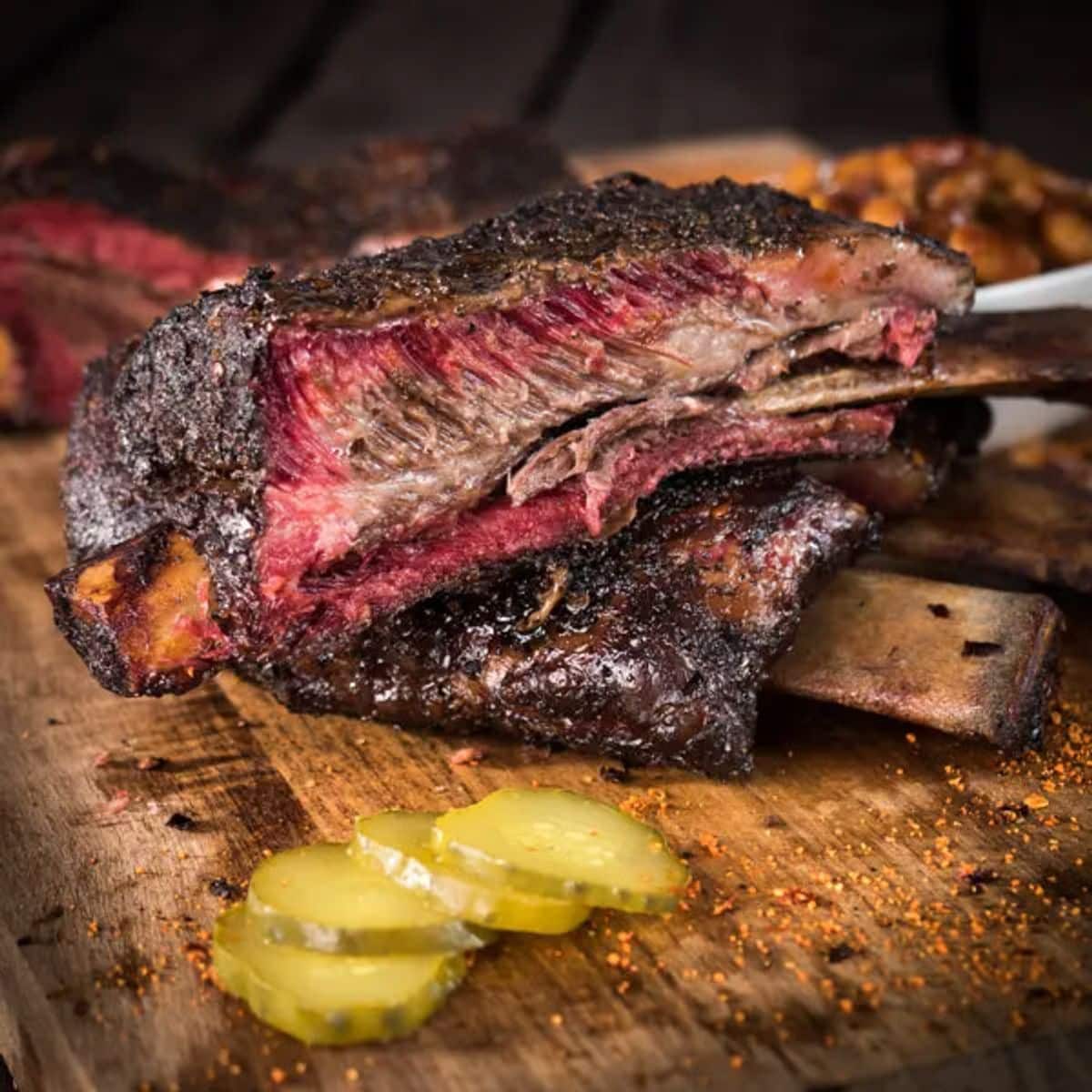
Beef Plate Ribs vs. Short Ribs
The dino ribs you see online are beef plate ribs, cut from the lower rib section and prized for their thick, marbled meat. Beef chuck short ribs are smaller and more widely available, and they cook the same way in less time. Either makes excellent smoked beef ribs.
Look for a rack with a thick, even meat cap over the bones. Leave the bones long; that meat is the whole point. Remove the thin membrane on the bone side if it is intact so the rub and smoke reach the meat.
Season Texas Style
Like brisket, beef ribs need nothing but a heavy coat of salt and coarse black pepper, equal parts. The simple rub builds a deep, dark bark and lets the beef shine. Add a little garlic powder if you like, but resist the urge to over-season.
Oak is the classic wood for beef, with hickory and pecan as bolder options. Our smoking woods pairing guide breaks down every choice for big beef cuts.
Smoke to Tender
Run the smoker at 250°F to 275°F with indirect heat and place the ribs bone-side down. There is no wrap and no fuss; let them ride unwrapped the whole cook for maximum bark. Spritz with water or beef broth every hour or so if the surface looks dry.
Plan on roughly 6 to 9 hours depending on size and temperature. If your cooker stalls or swings, our pellet smoker stall fixes will steady it. Start early so the ribs have time to render fully.
Temperature and Time at a Glance
| Cut | Smoker Temp | Time |
|---|---|---|
| Beef plate ribs (dino) | 250°F | 7–9 hours |
| Beef chuck short ribs | 275°F | 6–8 hours |
| Pull both at | 203°F internal | Probe-tender |

Beef ribs are done at an internal temperature of 203°F to 207°F, when a probe slides in like butter and the meat jiggles. Beef is safe at the USDA minimum of 145°F, but ribs are pushed far higher so the tough connective tissue melts. A reliable leave-in thermometer makes the call easy.
The Jiggle and Probe Test
Temperature gets you close, but texture confirms doneness. Lift a rack with tongs: done smoked beef ribs jiggle and sag like a water balloon. A probe or toothpick should slide into the thickest meat with zero resistance.
If they still feel firm at 203°F, give them more time; collagen-rich beef ribs reward patience. Rushing them off the smoker is the single most common way to end up with tough, chewy meat.
Rest and Serve
Rest the ribs 30 minutes to an hour before serving so the juices redistribute. Slice between the bones into individual ribs, or serve them whole for maximum drama at the Father’s Day table.
Pair your smoked beef ribs with a tray of smoked mac and cheese and classic BBQ side dishes. For a full beef feast, add a smoked brisket.
Where to Buy Beef Ribs
Big beef plate ribs are not always sitting in the meat case, so it pays to ask. Tell the butcher you want a full plate of beef short ribs, also called IBP 123A, with the bones left long and the meat cap intact. Many will cut them to order with a day’s notice, and a good warehouse club or restaurant supplier often stocks them.
If plate ribs are unavailable, chuck short ribs are an easy substitute and far more common. They deliver the same rich, beefy result in a smaller package and a shorter cook, which makes them a smart pick for a first batch of smoked beef ribs.
Beef Ribs vs. Brisket
Beef ribs are often called brisket on a stick, and the comparison is fair. Both are tough, collagen-rich beef cuts that turn meltingly tender when smoked low and slow to around 203°F, and both wear a simple salt-and-pepper bark beautifully.
The difference is time and effort. Beef ribs cook faster, need no trimming or wrapping, and forgive beginners, which makes them the easier showpiece. For a full beef feast, smoke both: see our step-by-step smoked brisket guide.
Make-Ahead and Reheating
Like brisket, smoked beef ribs hold well once they are probe-tender. Keep them wrapped in butcher paper and rest them in a dry cooler for up to a few hours, which frees you to finish the cook in the morning and serve when the family gathers.
For leftovers, wrap individual ribs and refrigerate up to four days. Reheat gently in a low oven with a splash of beef broth and the paper rewrapped, so the meat warms through without drying out. The flavor only deepens overnight.
Sauce, or No Sauce?
Great smoked beef ribs need no sauce; the simple salt-and-pepper bark and rendered fat carry all the flavor. Serve them dry, Texas style, and let the beef speak for itself. That is how the best barbecue joints plate them.
If you like a glaze, brush a thin coat of barbecue sauce over the last thirty minutes so it sets without burning. A vinegar-forward sauce cuts the richness, while a sweet sauce caramelizes into a sticky crust. Keep it light so the smoke and beef stay front and center.
Frequently Asked Questions
How long does it take to smoke beef ribs?
About 6 to 9 hours at 250°F to 275°F depending on size. Cook to an internal temperature of 203°F and a probe-tender feel rather than the clock.
What temperature are beef ribs done?
Pull them at 203°F to 207°F, when a probe slides in with no resistance and the rack jiggles. Texture is the true test.
Do you wrap beef ribs?
No need. Most pitmasters smoke beef ribs unwrapped the entire cook for the deepest, darkest bark. Spritz occasionally if the surface looks dry.
What is the best wood for smoking beef ribs?
Oak is the classic, clean choice for beef. Hickory and pecan are bolder options that also pair well with big beef cuts.
More Beef & Rib Guides from PopularBBQ
- Smoked Brisket: Step-by-Step Guide
- Smoked Baby Back Ribs (Pork)
- Smoked Prime Rib
- Smoking Woods by Cut
- Pellet Smoker Stall Fixes
Reader Favorites
- Creative BBQ Recipes: Fire Up A Unique BBQ Menu Now
- Easy BBQ Foods: Grill Like a Pro with These 10 Recipes
- Best Beef Breeds: Pick The Best For Smoking Now
- Trimming Beef Brisket: Learn What the Pros Know Now
- Grill Steaks Like a Pro: Master the Perfect Sear Now!
- Ben Forte’s Smashburgers: Grill the Ultimate Burger Now
Our pitmaster temperature charts
Three quick-reference tools every cook bookmarks — target temps, pull temps, and how long leftovers keep.
| Cut | Pull | Time |
|---|---|---|
| Brisket | 203°F | 12–16h |
| Spare ribs | 195–203°F | ~6h |
| Pork butt | 203°F | 12–14h |
Target temps & times for 17 cuts, sortable by meat, weight and doneness.
View full chart →| Doneness | Target |
|---|---|
| Rare | 125–130°F |
| Medium-rare | 130–135°F |
| Well-done | 160°F+ |
Rare to well-done, burger safety (160°F) and resting times.
View full chart →| Food | Fridge | Freezer |
|---|---|---|
| Brisket, ribs | 3–4 days | 2–3 mo |
| Smoked sausage | 1 week | 1–2 mo |
| Potato salad | 3–4 days | no freeze |
How long smoked meats & sides keep — fridge and freezer, USDA-based.
View full chart →


