Why Pellet Smokers Stall at 165°F (And 4 Fixes That Actually Work)
Pellet smokers stall at 165°F because the meat is sweating — surface evaporation is cooling the protein as fast as the smoker is heating it. The fix is to wrap in butcher paper or foil, raise the smoker temperature 25–50°F, or accept the stall and ride it out. The stall is normal, it is predictable, and there is nothing wrong with your smoker.
Last updated: September 21, 2026 · Originally published May 2, 2026
The stall is why a cook runs long, so plan for it. Our meat smoking calculator builds a two-hour stall buffer into every brisket and pork butt timeline.
What’s actually happening at 165°F
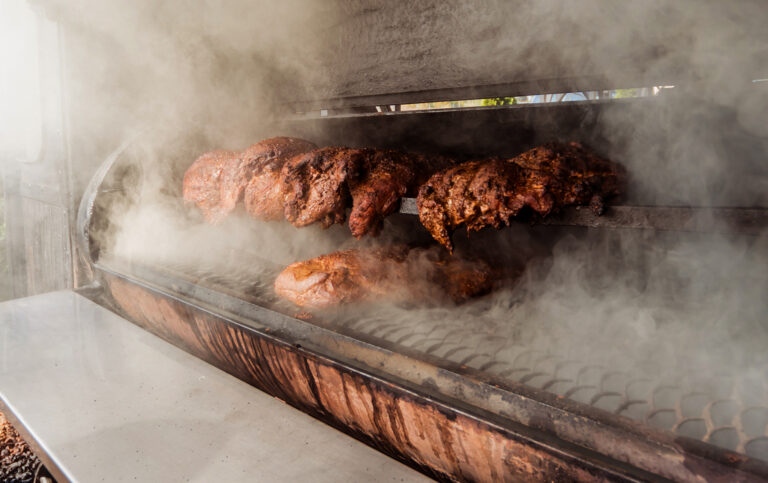
Internal protein temperature climbs steadily from raw to ~150°F. Then the surface of the meat starts releasing moisture — and that moisture evaporates, which carries heat away exactly the way sweat cools your skin. The result: the smoker is putting heat in, but the surface evaporation is pulling heat out at a similar rate. Internal temperature plateaus, sometimes for 4–6 hours.
This is true of every smoker — offset, kamado, pellet. Pellet cookers feel it worst because most people leave them on 225°F as their default low-and-slow setting, which doesn’t leave much thermal headroom over the evaporation cooling.

Fix #1: The Texas Crutch (foil wrap)
Wrap the meat tightly in heavy-duty aluminum foil at the stall — usually 165°F internal. The foil traps moisture against the surface and stops evaporation cold. Internal temperature climbs immediately and the stall disappears.
Trade-off: bark softens. Foil holds steam against the surface, and the bark you spent 6 hours building turns into a softer crust. Acceptable for pulled pork. Less ideal for brisket if you want competition-level bark.
Fix #2: Butcher paper wrap (the Aaron Franklin method)
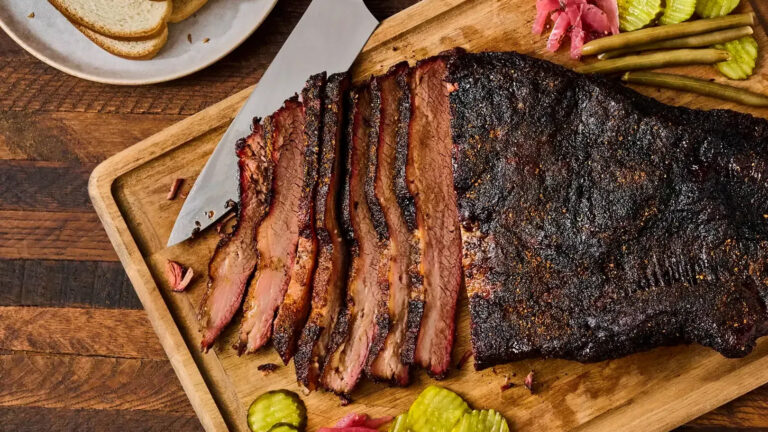
Pink butcher paper (unwaxed, FDA-approved) breathes more than foil. It blocks most evaporation and keeps the bark crusty. Wrap once the bark has set and you can’t scratch it off with a fingernail — usually around hour 4–6 on a brisket cook, at the stall.
Butcher paper is the brisket-specific answer. The tradeoff is a slightly slower push through the stall vs. foil, but the bark stays intact.
Fix #3: Crank the temperature
Raise the smoker from 225°F to 250 or 275°F. You’re increasing thermal input faster than the evaporation can pull heat out, and the stall shrinks dramatically. Brisket cooked at 275°F finishes 4–5 hours faster than the same brisket at 225°F.
Trade-off: bark forms differently — less of the slow Maillard reaction, more aggressive crust. Some pitmasters prefer it. Others miss the slow build.
Fix #4: Wait it out (the “no fix” fix)
The stall ends on its own. Eventually the surface dries out enough that evaporation slows, and the internal temperature climbs again. This typically takes 2–6 hours.
If you have the time and you’re cooking a brisket where the slow render and the bark matter more than schedule — just hold steady. The stall isn’t a problem to solve, it’s a phase to accept.
Why this hits pellet smokers harder
Pellet smokers have one big disadvantage during the stall: their thermostat fights you. Most pellet rigs target a setpoint and will modulate the auger to maintain it, which means they don’t naturally surge during the stall to push through. A stick-burner (offset wood smoker) responds to the cook — you add a log, the temperature spikes, the meat climbs. Pellet smokers stay flat at 225°F regardless of what the meat is doing.
The countermeasure: change the setpoint manually. Bumping a Pit Boss or Traeger to 250°F at the stall does what the stick-burner would do automatically.
Diagnostic: when it’s NOT a normal stall
The stall lasts hours but it’s a soft plateau — the internal temperature wobbles within a couple of degrees and slowly creeps up. If the internal temperature is dropping or the smoker temperature is failing to hold, that’s a different problem:
- Smoker temp dropping: pellet auger jam (clean it), pellet hopper empty, igniter rod failure, broken thermistor.
- Internal temp dropping: meat is cooler than the smoker shouldn’t happen unless someone opened the lid. Lift count = enemy of cook.
- Stall lasting 8+ hours: meat may be way fattier than expected, or the smoker is running cooler than the digital readout claims (verify with a separate ambient probe).
FAQ
How long does the stall last?
2–6 hours typically. Brisket pulls hardest — 4–6 hours is common. Pork shoulder runs 2–4. Smaller cuts (pork chops, ribs) barely stall at all.
Should I wrap or just push through?
Wrap if you have a deadline. Push through if you have the time and want maximum bark. There’s no wrong answer — it’s a trade-off, not a mistake.
Why did my brisket stall at 145°F instead of 165°F?
Higher than usual fat content, surface moisture from spritzing, or a slightly cool smoker. The stall temperature isn’t universal — 145–170°F is the typical range. The phenomenon is what matters, not the exact number.
Does foil really hurt the bark that much?
It softens it. If you’re cooking pulled pork that’ll be shredded anyway, no one notices. If you’re slicing brisket on a cutting board for guests, butcher paper is worth the extra effort.
Can I prevent the stall entirely by starting at 275°F?
Yes, mostly. Cooking hot-and-fast (275–300°F) compresses the stall into a brief 30–60 minute pause instead of a multi-hour plateau. The result is closer to “high-temperature brisket” — faster, slightly different texture, valid result.
The pellet-smoker-specific cheat sheet
- Default to 225°F for the first 4 hours to set the bark
- Wrap in butcher paper at the stall (165°F internal)
- Bump to 250°F after wrap to push through
- Pull at 203°F probe-tender
- Rest minimum 1 hour in a faux Cambro
The stall isn’t a smoker malfunction. It’s a moisture-evaporation phenomenon that happens to every cook on every smoker, with predictable timing and four legitimate fixes. Pick the one that matches your cook.
Methodology: stall behavior data drawn from AmazingRibs.com physics-of-the-stall analysis (Meathead Goldwyn 2022) and cross-referenced against 30+ pitmaster cook logs on the BBQ Brethren forum 2024–2025.
Related reads on PopularBBQ.com
- How Much Brisket Per Person? The 2026 Memorial Day Math — 1/2 lb cooked per adult, +20% safety margin, full table from 6 to 30 guests.
- Tri-Tip vs Brisket for Memorial Day Weekend — 90 minutes vs 12 hours — the side-by-side decision matrix.
- Reverse Sear for Thin Steaks (Under 1.5 Inches) — Smoke at 200°F to 95°F internal, sear 60–90 sec per side over 600°F.
- Bark vs. Crust on Brisket: What’s the Difference — Bark is the goal. Crust tells you the cook went sideways. The chemistry.
- Wagyu Burgers on the Grill: The $20-Per-Pound Patty Done Right — Treat Wagyu like a tenderloin, not a McDonald’s patty. 130°F pull.
- 5 Sides That Earn Their Place at a Memorial Day Cookout
Sources & further reading
- AmazingRibs.com — Cooking Science Library (the stall + Texas crutch coverage)
- ThermoWorks Blog — Beef cooking science & temperatures
- Modernist Cuisine — Cooking science fundamentals

Reader Favorites
- Essential BBQ Tools: Get The Tools Pros Recommend Now
- Cleaning Your Gas Grill Cooking Grate: Make it Great Again
- Stainless Steel BBQ Grill Cleaning: Master Maintenance Now
- Best Beef Breeds: Pick The Best For Smoking Now
- Grill Baskets: Smoky Veggies & Fish Made Easy
- Different Cuts of Pork: Elevate BBQ Mastery Now
BBQ Temperature Charts & Guides
Four quick-reference tools every cook bookmarks — target temps, pull temps, and how long leftovers keep, plus the full BBQ glossary.
| Cut | Pull | Time |
|---|---|---|
| Brisket | 203°F | 12–16h |
| Spare ribs | 195–203°F | ~6h |
| Pork butt | 203°F | 12–14h |
Target temps & times for 17 cuts, sortable by meat, weight and doneness.
View full chart →| Doneness | Target |
|---|---|
| Rare | 125–130°F |
| Medium-rare | 130–135°F |
| Well-done | 160°F+ |
Rare to well-done, burger safety (160°F) and resting times.
View full chart →| Food | Fridge | Freezer |
|---|---|---|
| Brisket, ribs | 3–4 days | 2–3 mo |
| Smoked sausage | 1 week | 1–2 mo |
| Potato salad | 3–4 days | no freeze |
How long smoked meats & sides keep — fridge and freezer, USDA-based.
View full chart →Every pit term decoded — cooking methods, gear, cuts, wood, and technique, A to Z.
Open the glossary →