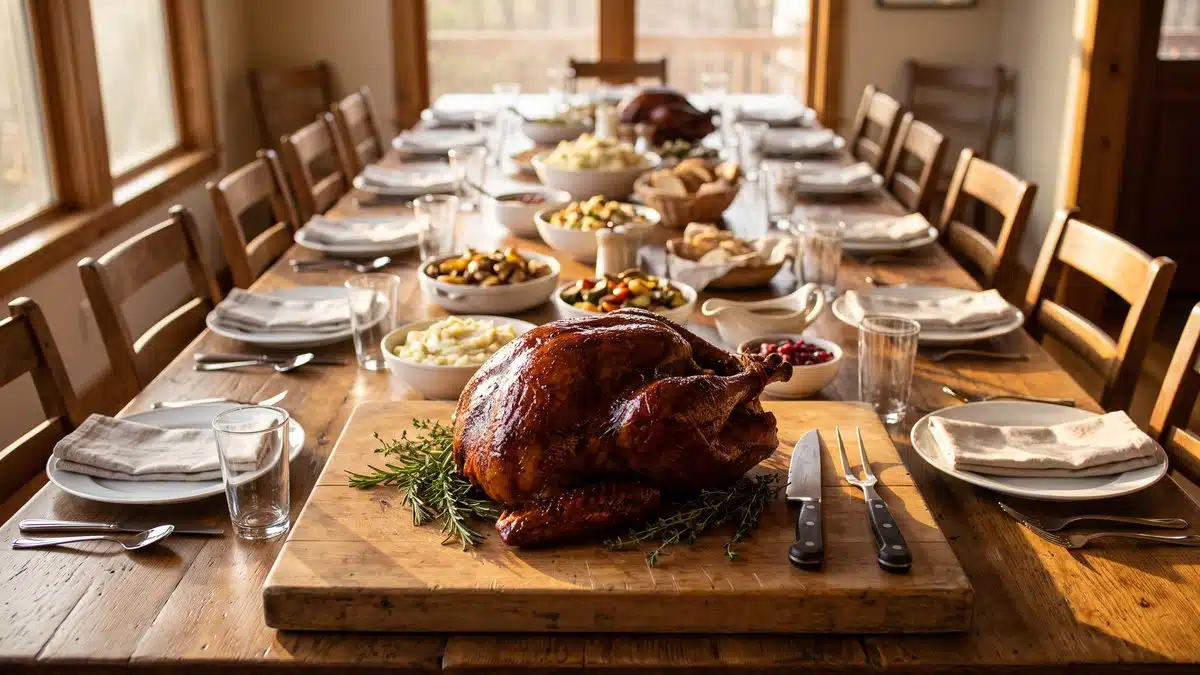
How Much Turkey Per Person: Find Your Crowd Size
USDA says 1 pound of whole turkey per guest. Find your crowd from 4 to 30 guests, with leftover sizes, a breast-only option and the day to start thawing.
Your weekend smoking plan, every Saturday.
BBQ recipes, smoking times and calculator picks, delivered to your inbox.
✓ You're in! Check your inbox to confirm.

Dry brining, done by weight. Salt density by brand, the 71 percent error nobody flags, USDA own two-day protocol, how far salt actually travels, and how to spot a pre-brined bird.
Read More →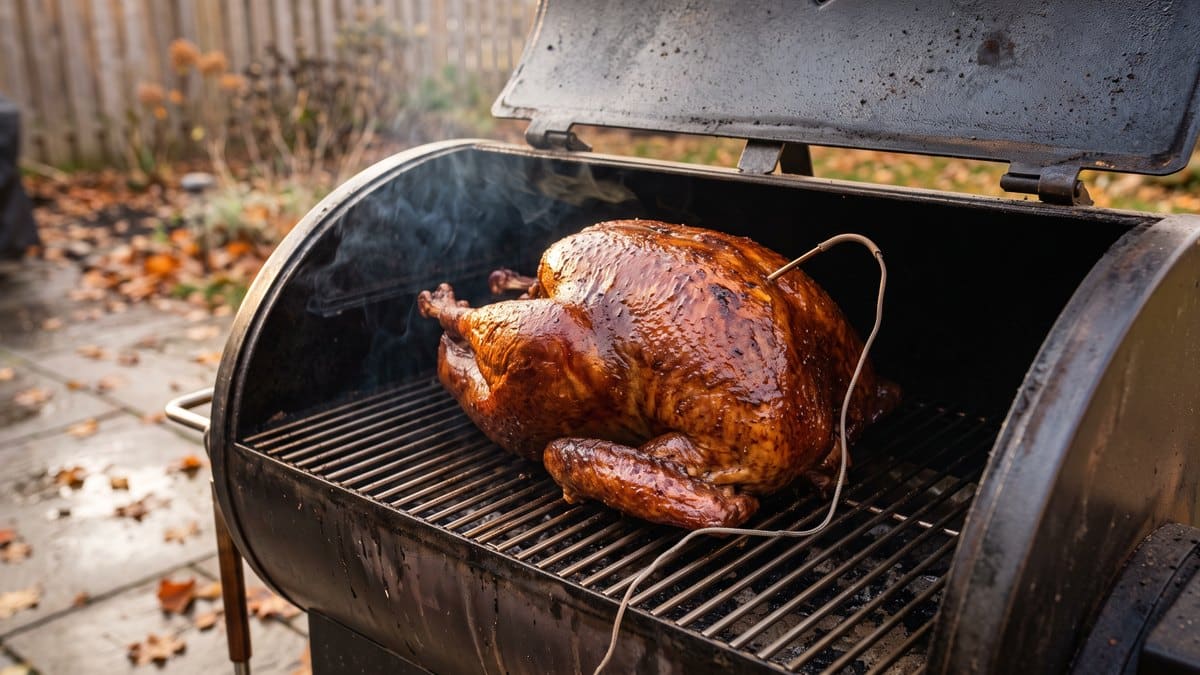
Smoke time for whole turkeys from 10 to 22 pounds at 225°F, 250°F, 275°F and 300°F, with USDA's 165°F check in three spots and its 8 to 12 pound smoking size.
Read the articleStart here. Charcoal versus gas, lighting a fire, direct and indirect heat, and the handful of tools worth buying first.
USDA says 1 pound of whole turkey per guest. Find your crowd from 4 to 30 guests, with leftover sizes, a breast-only option and the day to start thawing.
Pork loin and pork tenderloin both cook to 145°F with a three-minute rest. What differs is the oven: 350°F for a loin, 425–450°F for a tenderloin. Every temperature here is cited to USDA, FSIS, the CFR or a land-grant Extension service, with dates.
How long to marinate every cut, with an evidence grade on each recommendation, plus why marinade barely penetrates and what sugar does on a hot grill.
Dry brining, done by weight. Salt density by brand, the 71 percent error nobody flags, USDA own two-day protocol, how far salt actually travels, and how to spot a pre-brined bird.
Two-zone setup, vent control, and the 150-degree disagreement over what medium-high heat means, plus the charcoal safety data every other guide skips.
Where to put the probe on every cut, the USDA safe-temperature chart, and the altitude-corrected boiling-point table FSIS tells you to go find somewhere else. In Denver, calibrating to 212F builds in a permanent 9.6-degree undercook.
Barbecue is meat cooked slowly by wood or charcoal heat and smoke – but no US authority defines it by temperature. The one federal rule, 9 CFR 319.80, regulates fuel and yield. Plus the primary-source attestations showing the word originally named a rack, not a recipe.
Smoking times and temperatures: most cuts smoke at 225 to 250F, about 1 to 1.5 hours per pound for brisket, about 1.5 for pork butt. Quick answer: Most barbecue cuts smoke at 225–250°F. Plan on roughly 1–1.5 hours per pound for brisket, about 1.5 hours per pound for pork butt, 5–7 hours for a rack…
Tri-tip vs. brisket: which one wins for your Memorial Day cookout? The decision matrix — cook time, cost-per-person, group size, skill ceiling — and how to cook each one right.
Memorial Day brisket math, in one table: 1/2 lb cooked per adult, 1/4 lb per child, +20% safety. Plus the raw-weight conversion, ribs/pork/chicken/tri-tip portions, and the buy-by-May-20 timeline.
Five months of winter does strange things to a smoker. The 7-step startup that takes 90 minutes — gaskets, ash-out, grease flush, probe calibration, fuel check, paint touch-ups, and a 90-minute burn-in — that saves your first brisket of the season.
Confused about brining vs marinating for BBQ? Learn exactly when to brine (for juicy chicken & turkey), when to marinate (for killer bark on brisket & ribs), pro recipes, and the science behind both methods.


