Cookout Party Planner: How Much Food to Buy Per Person
Most cookout calculators tell you cooked weight, then send you to buy that number in raw pounds. This one works in what you actually buy.
Every other cookout calculator answers the wrong question. They tell you how much cooked meat lands on the plate, then let you walk into the store and buy that number in raw pounds. USDA’s own purchasing data says that is off by roughly half: one as-purchased pound of bone-in pork shoulder yields only 0.52 lb of cooked, trimmed pulled pork, and a pound of bone-in chicken wings yields just 0.34 lb. This planner does the buying math the way a school-lunch purchasing agent does it — from the USDA Food Buying Guide yield tables — then adds buns, sides, drinks and a cooler-ice figure calculated from the heat of fusion rather than guessed.
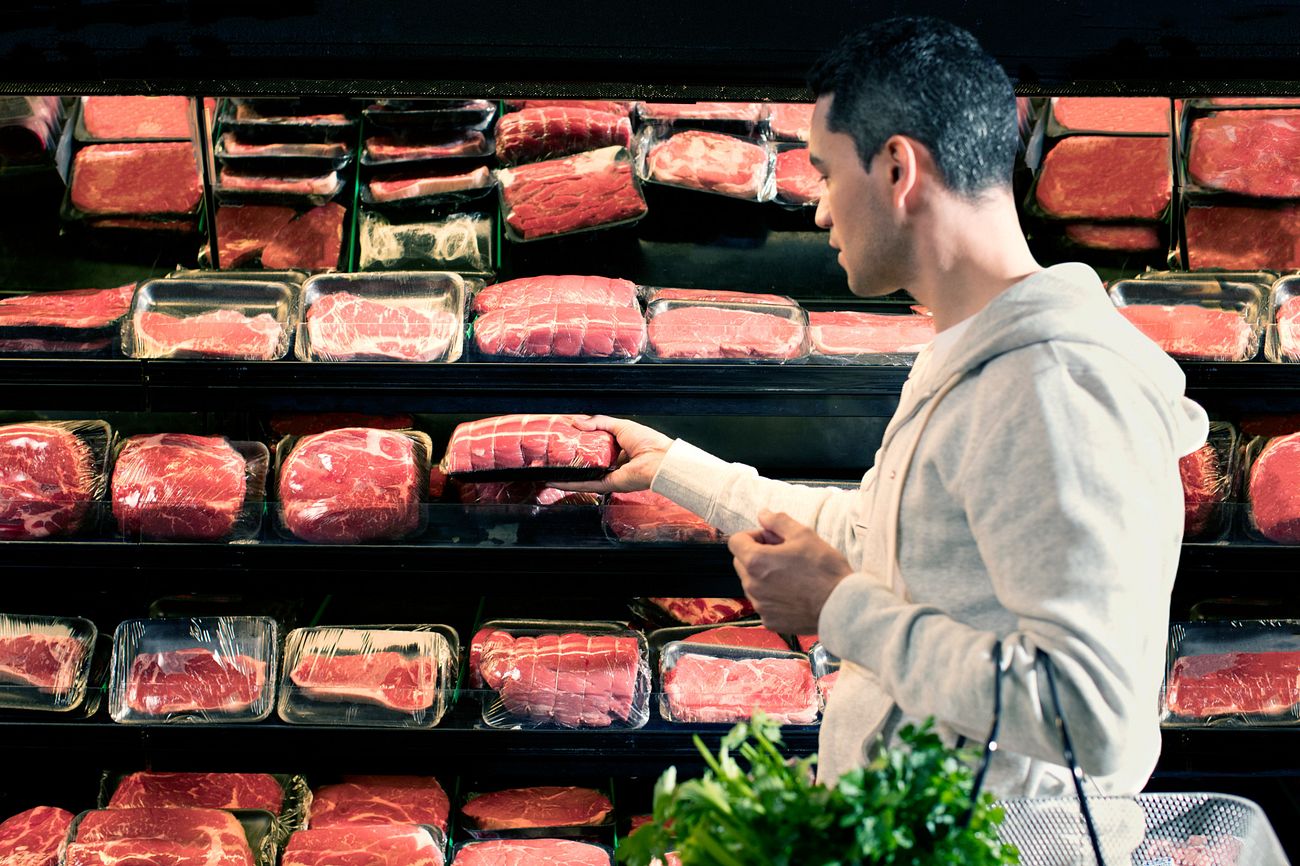
Your shopping plan
How the planner works
Three separate calculations run behind the tool. Each one is stated in plain text so you can check it by hand.
1. Meat. The plate target is cooked weight; the store sells as-purchased weight. So:
cooked oz needed = (adults + 0.5 x children) x oz per adultas-purchased lb to buy = (cooked oz needed / 16) / USDA yield factor
The yield factor is the USDA Food Buying Guide figure for pounds of cooked, boned, trimmed lean meat obtained from one pound of the product as you buy it. It already accounts for bone, external fat and cooking loss together, which is why it is the right number for a shopping list and why it is so much lower than the cooking-yield percentages people usually quote.
2. Sides and bread. Each side is scaled from a published quantity-cooking figure — the USDA Food Buying Guide for purchased items, Michigan State Extension quantity recipes for scratch sides, NDSU Extension for adult portion sizes. The per-person amount and the source for each one are in the reference table below, and the tool shows both the as-purchased amount and the serving size it is based on.
3. Ice. No United States government or land-grant extension publication we could find states a pounds-of-ice-per-person figure. USDA’s own cooler-safety pages say only to bring “plenty of ice.” Rather than invent a number, the tool computes the thermodynamic minimum:
ice lb = (drink lb x 1.0 BTU per lb per deg F x temperature drop in deg F) / 143.6 BTU per lb
143.6 BTU per lb is the latent heat of fusion of water (334 kJ/kg) and 1.0 BTU per lb per deg F is the specific heat of water (4186 J per kg per deg C). The result is a hard floor: it ignores heat leaking through the cooler walls, the warming of ice that starts below freezing, and every time somebody opens the lid. Plan on more, and now you know exactly what the “more” is covering.
Worked example: 25 adults, pulled pork
25 adults at 5 oz of cooked meat each is 125 oz, or 7.81 lb of cooked pork on the plate. All of it from bone-in Boston butt, which the USDA Food Buying Guide rates at 0.52 lb cooked lean per as-purchased pound:
- Pork to buy: 7.81 / 0.52 = 15.0 lb of raw bone-in Boston butt — two butts of about 7.5 lb each.
- Boneless instead: 7.81 / 0.60 = 13.0 lb. You buy 2 lb less product, so boneless is the better deal whenever it costs less than about 15 percent more per pound.
- Buns: one per sandwich, so 25 buns for one sandwich each.
- Canned baked beans: the Food Buying Guide puts 100 quarter-cup servings at 2.10 No. 10 cans. A one-cup adult serving is four of those, so 25 adults need the same 2.10 No. 10 cans, about 14.4 lb.
- Coleslaw: Michigan State’s quantity recipe uses 16 lb of chopped cabbage for 100 half-cup servings, so 25 half-cup servings need 4.0 lb of cabbage.
- Ice: 25 people at 16 fl oz is 3.13 gallons, or 26.1 lb of drink. Cooling that from 70 to 38 deg F takes 26.1 x 32 = 835 BTU, which is 835 / 143.6 = 5.8 lb of ice as an absolute minimum before any allowance for the cooler itself.
USDA buying yields: what one as-purchased pound actually gives you
This is the table the calculator runs on. Every figure is pounds of cooked, boned, trimmed lean meat obtained from one pound of the product as purchased, from the USDA Food Buying Guide for Child Nutrition Programs, Section 1 (Meats and Meat Alternates). The “buy multiplier” column is simply 1 divided by the yield — the number you multiply your cooked-weight target by to get a shopping weight.
USDA Food Buying Guide cooked-lean yields, common cookout cuts| Cut, as purchased | Cooked lean per lb AP | Yield | Buy multiplier |
|---|---|---|---|
| Ham, fully cooked, boneless, natural juices | 0.90 lb | 90% | 1.11x |
| Ham, fully cooked, boneless, water added | 0.82 lb | 82% | 1.22x |
| Ground beef, 90/10 | 0.76 lb | 76% | 1.32x |
| Ground beef, 85/15 | 0.75 lb | 75% | 1.33x |
| Ground beef or ground pork, 80/20 | 0.74 lb | 74% | 1.35x |
| Ground beef, market style, up to 30% fat | 0.70 lb | 70% | 1.43x |
| Beef brisket flat, practically free of fat | 0.69 lb | 69% | 1.45x |
| Beef chuck roast, boneless | 0.63 lb | 63% | 1.59x |
| Italian pork sausage, raw | 0.62 lb | 62% | 1.61x |
| Pork shoulder, Boston butt, boneless, 1/4-inch trim | 0.60 lb | 60% | 1.67x |
| Pork shoulder, picnic, boneless, 1/4-inch trim | 0.57 lb | 57% | 1.75x |
| Beef chuck roast, bone-in | 0.54 lb | 54% | 1.85x |
| Chicken thighs, bone-in, with skin | 0.52 lb | 52% | 1.92x |
| Pork shoulder, Boston butt, bone-in, 1/4-inch trim | 0.52 lb | 52% | 1.92x |
| Chicken drumsticks, bone-in, with skin | 0.49 lb | 49% | 2.04x |
| Pork sausage, bulk or link, market style | 0.47 lb | 47% | 2.13x |
| Beef brisket flat, 1/4-inch trim, boneless | 0.46 lb | 46% | 2.17x |
| Chicken, whole, with skin | 0.44 lb | 44% | 2.27x |
| Pork shoulder, picnic, bone-in, 1/4-inch trim | 0.43 lb | 43% | 2.33x |
| Chicken leg quarters, bone-in, with skin | 0.42 lb | 42% | 2.38x |
| Pork spareribs, bone-in | 0.39 lb | 39% | 2.56x |
| Chicken wing drumettes, bone-in, with skin | 0.36 lb | 36% | 2.78x |
| Chicken wings, whole, bone-in, with skin | 0.34 lb | 34% | 2.94x |
Hot dogs are sold by count, not yield: the Food Buying Guide lists 8 servings per pound for 2.0 oz franks and 10 per pound for 1.6 oz franks.
Cooking yield is a different number — do not mix them up
USDA publishes two yield datasets and they measure different things. The Food Buying Guide table above is cooked lean per as-purchased pound. The Agricultural Research Service Table of Cooking Yields for Meat and Poultry measures total cooked product weight, bone and fat included, against raw weight. Pork spareribs are the clearest illustration: ARS says 76 percent, the Food Buying Guide says 39 percent, and both are correct because they are counting different things. Use ARS to predict what comes off the pit. Use the Food Buying Guide to decide what to put in the cart.
USDA ARS cooking yields (cooked product weight as a share of raw weight)| Item | Method | Cooking yield |
|---|---|---|
| Chicken wings, meat and skin | Poached, simmered or stewed | 86% |
| Beef bottom round roast, 1/8-inch trim | Baked or roasted | 84% |
| Pork loin back ribs, bone-in | Baked or roasted | 82% |
| Beef eye of round roast, 1/8-inch trim | Baked or roasted | 81% |
| Pork tenderloin | Roasted | 80% |
| Chicken, whole broiler-fryer, with skin | Baked or roasted | 78% |
| Chicken wings, meat and skin | Roasted | 78% |
| Pork spareribs, lean and fat | Baked or roasted | 76% |
| Pork shoulder, arm picnic, lean and fat | Braised | 74% |
| Ground beef patty, 12 to 22% fat | Pan-broiled | 73% |
| Chicken breast, meat and skin | Baked or roasted | 72% |
| Beef brisket flat half, boneless, 1/8-inch trim | Braised | 69% |
| Ground beef patty, 12 to 22% fat | Broiled or grilled | 69% |
| Ground beef crumbles, 12 to 22% fat (taco meat) | Pan-fried | 67% |
ARS groups “barbecued” under broiled or grilled, and every brisket and shoulder figure in the table was measured by braising or oven roasting. There is no USDA-measured yield for low-and-slow smoking, so treat smoked-brisket yield as an inference rather than a measurement.
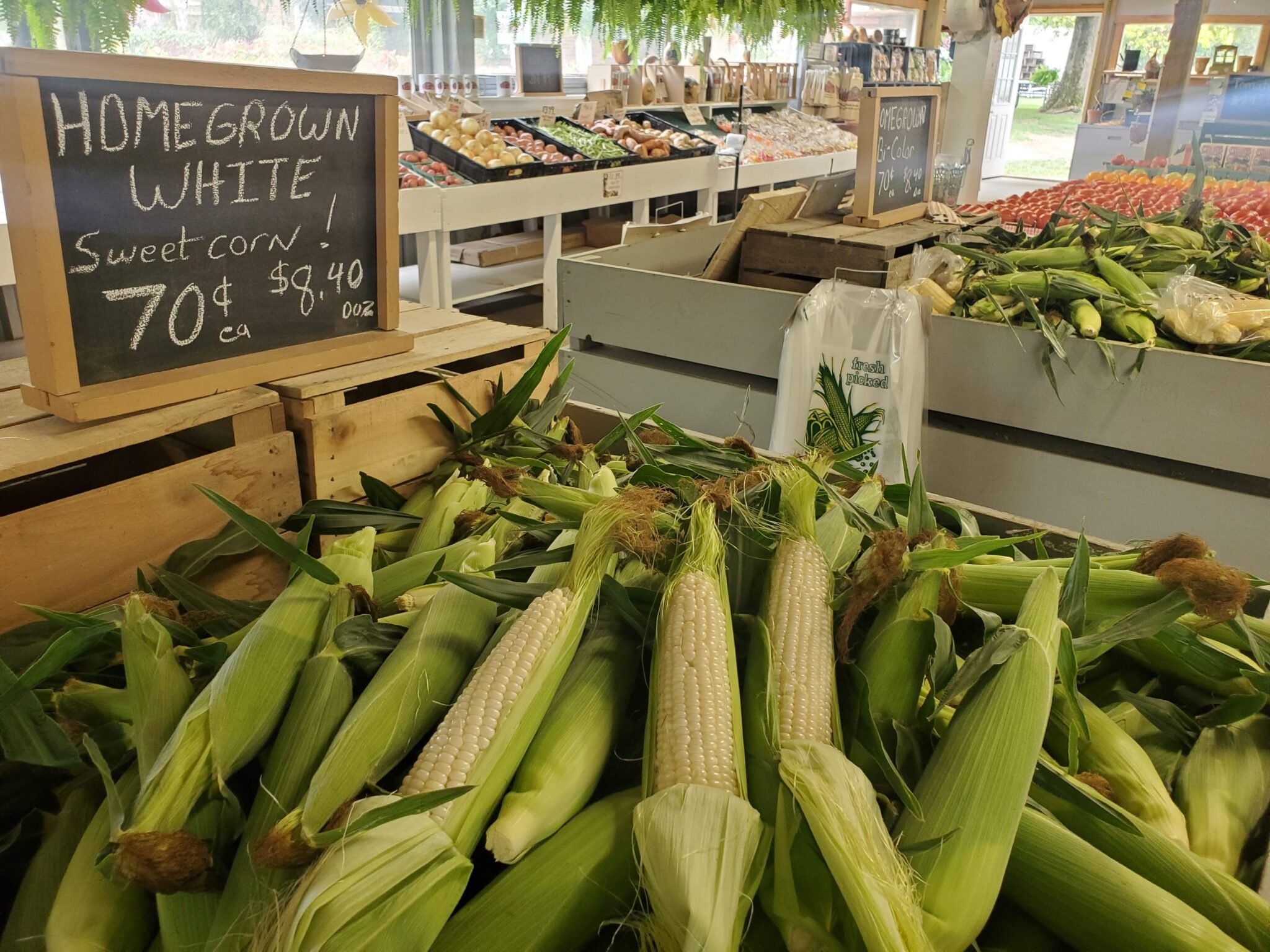
Per-person side, bread and drink quantities
Sourced per-person amounts used by the calculator| Item | Serving basis | Per person, as purchased | Source |
|---|---|---|---|
| Cooked meat, adult | Adult field-meal portion | 4 to 5 oz cooked | NDSU Extension FN2105, A Pocket Guide to Meals in the Field (2023) |
| Hamburger or sandwich buns | 1 bun per sandwich | 1 bun (about 2 oz) | NDSU Extension quantity recipes (50 buns per 50 servings) |
| Baked beans, canned | 1 cup adult serving | 9.24 oz (0.58 lb) | USDA FBG Section 2: 2.10 No. 10 cans per 100 quarter-cup servings, scaled to a 1-cup adult serving |
| Baked beans, from dried navy beans | 1 cup cooked | 0.24 lb dried beans | MSU Extension TR590, recipe 19 (24 lb dried per 100 servings) |
| Potato salad | 3/4 cup | 0.24 lb raw potatoes | MSU Extension TR590, recipe 44 |
| Coleslaw | 1/2 cup | 0.16 lb raw cabbage | MSU Extension TR590, recipe 20 |
| Corn on the cob | 1 ear | 1 medium ear (0.41 lb frozen) | USDA FBG Section 2 |
| Sliced cheese | 1 oz | 1.0 oz (0.063 lb) | USDA FBG Section 1 |
| Shredded iceberg lettuce | 1/4 cup | 0.035 lb | USDA FBG Section 2 |
| Sliced fresh tomato | 1/4 cup | 0.115 lb | USDA FBG Section 2 |
| Dill pickle chips, drained | 1/4 cup | 0.072 lb | USDA FBG Section 2 |
| Tortilla or corn chips | 1 oz | 0.067 lb | USDA FBG Section 4 |
| Watermelon, diced without rind | 1 cup adult serving | 0.244 lb as purchased | USDA FBG Section 3 (1 lb AP yields 0.61 lb ready to serve) |
| Dessert | 1 item, or 1/2 cup pudding | 1 per person | NDSU Extension FN2105 |
| Drinks at a picnic | 2 cups | 16 fl oz | MSU Extension TR590, recipe 56 note |
What this planner will not guess
We searched USDA.gov, FSIS, the Food Buying Guide sections 1 through 4, and quantity-cooking publications from Penn State, Iowa State, Nebraska, Georgia, Clemson, Utah State, Michigan State, Minnesota, North Dakota State, Arkansas and Purdue extension services. The following have no primary-source per-person figure, so the calculator does not print one:
- Pounds of ice per person. USDA’s cooler guidance says “plenty of ice” and nothing more. We compute the thermodynamic minimum instead and label it as a floor.
- Buffet condiments — ketchup, mustard, mayonnaise, BBQ sauce, relish in squeeze bottles on a table. Extension publications give condiment quantities only as ingredients inside a recipe, which is a different measurement.
- Potato chips as distinct from corn and tortilla chips.
- Tortillas per person. The Food Buying Guide grains table has no tortilla entry as a bread item. The tool takes your count instead.
- Whole packer brisket, St. Louis ribs and loin back ribs as purchasable units. The Food Buying Guide publishes brisket flat and generic spareribs only.
- Macaroni salad, dinner rolls and per-person soda or coffee counts for an outdoor party.
If you want a number for any of these, pick one deliberately and own it. We would rather tell you the data does not exist than dress a guess up as USDA data.
Taco bar calculator
A taco bar is the same arithmetic with a different denominator. Ground beef is one of the few cuts where the raw-to-cooked relationship is published from both directions: the Food Buying Guide puts 80/20 ground beef at 0.74 lb of cooked lean per as-purchased pound, and ARS measures pan-fried crumbles at a 67 percent cooking yield. Choose the Food Buying Guide figure for shopping.
Set the menu preset to Taco bar and the tool switches the plate to ground beef, drops buns, and turns on chips, cheese, lettuce and tomato. Set tortillas per person yourself.
Taco bar quick reference, 80/20 ground beef at a 0.74 USDA yield| Guests | Cooked taco meat at 3 oz each | Raw ground beef to buy | Cooked meat at 4 oz each | Raw ground beef to buy |
|---|---|---|---|---|
| 10 | 1.88 lb | 2.5 lb | 2.50 lb | 3.4 lb |
| 20 | 3.75 lb | 5.1 lb | 5.00 lb | 6.8 lb |
| 25 | 4.69 lb | 6.3 lb | 6.25 lb | 8.4 lb |
| 30 | 5.63 lb | 7.6 lb | 7.50 lb | 10.1 lb |
| 40 | 7.50 lb | 10.1 lb | 10.00 lb | 13.5 lb |
| 50 | 9.38 lb | 12.7 lb | 12.50 lb | 16.9 lb |
| 75 | 14.06 lb | 19.0 lb | 18.75 lb | 25.3 lb |
| 100 | 18.75 lb | 25.3 lb | 25.00 lb | 33.8 lb |
Three ounces of cooked meat is roughly two loaded tacos. Four ounces is roughly three. Those are portion choices, not USDA figures — the sourced part is the 0.74 yield that turns cooked ounces into pounds at the register.
How to read your results
- Buy the as-purchased number, not the cooked number. The tool shows both on purpose. The cooked figure tells you whether people will be full; the as-purchased figure is what goes on the list.
- Bone-in versus boneless is a price question, not a quality question. Divide the boneless yield by the bone-in yield for your cut. Boston butt gives 0.60 / 0.52 = 1.15, so boneless wins any time it costs less than 15 percent more per pound.
- Round up to whole pieces. Butts come in 7 to 9 lb units and briskets in 12 to 16 lb units. Buying “15.0 lb” means buying two butts, and leftover pulled pork freezes better than almost anything else you will cook.
- The ice number is a floor. Doubling it for a hot day and a cooler that gets opened constantly is reasonable. The point is knowing which part is physics and which part is padding.
- Children at half a portion is a convention. If your crowd is mostly teenagers, count them as adults.
Related on Popular BBQ
- BBQ meat calculator — meat only, in one screen, if that is all you need
- How much brisket per person — brisket on its own, with the shrink maths
- Smoke and serve planner
- Turkey thawing and cooking calculator
- Equilibrium brine calculator
Frequently asked questions
How much meat per person for a BBQ?
Plan 4 to 5 oz of cooked meat per adult for a full meal with sides, following NDSU Extension’s adult portion figure, and more if meat is the whole point of the event. The number that trips people up is not the portion — it is the conversion from that cooked portion back to a shopping weight, which for bone-in cuts is close to a factor of two.
How many pounds of pulled pork do I need for 50 people?
At 5 oz cooked per adult, 50 people need 15.6 lb of cooked pork. Bone-in Boston butt at the USDA 0.52 yield means buying 30.1 lb as purchased; boneless at 0.60 means 26.0 lb. In practical terms that is four bone-in butts of about 8 lb each.
How much brisket per person?
The Food Buying Guide publishes brisket flat only. At 1/4-inch trim its yield is 0.46, so a 5 oz cooked portion needs 0.68 lb of raw flat per person. Trimmed-lean flat is rated 0.69, which needs 0.45 lb per person. Whole packer briskets are not in the guide at all, and a packer carries more fat than a flat, so its real yield sits at or below the flat figure.
Why is your number so much higher than other calculators?
Because most of them silently treat the plate portion as a shopping weight. If a calculator tells you 50 guests need 15 lb of pork, ask whether that 15 lb is what you buy or what you serve. For bone-in cuts those two answers differ by roughly a factor of two, and the USDA yield tables are the published record of exactly how much.
How much ground beef for tacos per person?
Three ounces of cooked meat covers about two loaded tacos, four ounces about three. Converting to a shopping weight through the USDA 0.74 yield for 80/20 ground beef, that is 0.25 lb or 0.34 lb of raw ground beef per person.
How many buns should I buy?
One per sandwich. NDSU Extension’s quantity recipes list 50 buns for 50 servings and 48 buns for 48 servings, so there is no yield factor to apply. Buy a few extra for tearing and dropping, and note that buns are the one item on the list nobody notices you over-bought.
How much ice do I need for a cookout?
For drinks alone, the physical minimum is about 0.22 lb of ice per pound of beverage per 32 degree F of cooling. For 25 people drinking two cups each and starting at room temperature, that is about 5.8 lb. Real coolers in real sunshine need considerably more, and no government or university source publishes the multiplier, so we do not print one.
Can I share or save my plan?
Yes. Every input is written into the page address as you type, so copying the link preserves the whole plan. Your last plan is also stored in your browser and restored when you come back. Nothing is sent anywhere and no email is required to see the result.
Data updated August 2026. Yield tables are reviewed annually against the USDA Food Buying Guide and the ARS cooking-yield release. This page is a planning aid, not a food-safety instruction: cook every item to the safe minimum internal temperature published at foodsafety.gov.
Sources
- USDA Food and Nutrition Service, Food Buying Guide for Child Nutrition Programs, Section 1 Meats and Meat Alternates, Section 2 Vegetables, Section 3 Fruits, Section 4 Grains — Section 1 yield table (PDF)
- USDA Agricultural Research Service, Table of Cooking Yields for Meat and Poultry, Release 2 (2014) — data table (XLSX)
- NDSU Extension, FN2105 A Pocket Guide to Meals in the Field (2023) — PDF
- Michigan State University Extension, Camp Quantity Food Service bulletin TR590 — PDF
- North Dakota DPI / NDSU Extension, Quantity Recipes including Legumes — PDF
- FoodSafety.gov, Safe Minimum Internal Cooking Temperature Chart — chart
- USDA, Check Your Steps: Chill. How to Pack a Cooler — article
- Davis, L., Body Physics 2.0, Open Oregon Educational Resources — latent heat of fusion of water 334 kJ/kg, specific heat 4186 J/(kg deg C) — chapter