Homemade Ketchup From Garden Tomatoes: An Easy Small-Batch Recipe
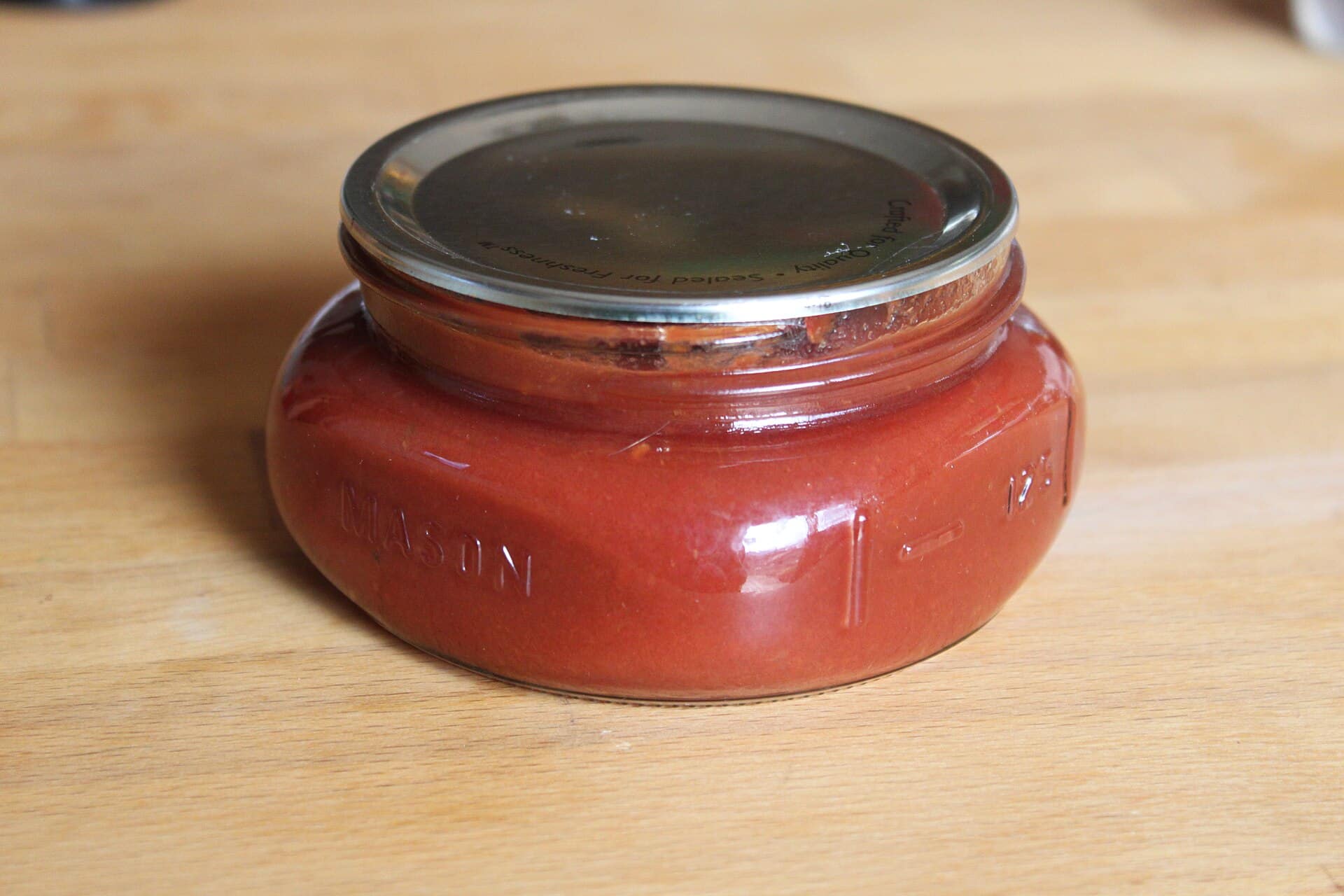
Homemade ketchup turns a late-summer tomato glut into a pantry staple that beats anything in a squeeze bottle. It comes together in one pot from ingredients you already keep on hand, and once you have made it you will taste exactly why: real tomato flavor, the sweetness and tang dialed to your liking, and none of the high-fructose corn syrup. It is also the perfect base for homemade BBQ sauce, which makes it a smart first project for any backyard cook.
This small-batch recipe uses tomato paste for a fast weeknight version, plus notes for cooking it down from fresh or home-canned tomatoes when the garden is overflowing.
Quick answer: To make homemade ketchup, simmer 1 (6 oz) can tomato paste, ½ cup water, ⅓ cup apple cider vinegar, ¼ cup brown sugar, and ½ tsp each salt, onion powder, and garlic powder for 20 minutes until thick and glossy. Cool, then refrigerate up to 1 month.
In This Guide
- Why Make Homemade Ketchup
- The Best Homemade Ketchup Recipe
- Making It From Fresh or Canned Tomatoes
- Canning & Storing Homemade Ketchup
- Turn Your Ketchup Into BBQ Sauce
- Frequently Asked Questions
Why Make Homemade Ketchup
Store-bought ketchup is mostly tomato concentrate, corn syrup, and vinegar. Homemade ketchup gives you the same convenience with better flavor and full control: less sugar, more spice, or a smoky twist for the grill. A single batch costs pennies when tomatoes are in season, and it stores for weeks.
It also solves the annual problem of too many ripe tomatoes. A big harvest cooks down into jars of concentrated flavor that carry the garden straight into winter.
The Best Homemade Ketchup Recipe
Ingredients
- 1 (6 oz) can tomato paste
- ½ cup water
- ⅓ cup apple cider vinegar
- ¼ cup packed brown sugar (or 3 Tbsp honey)
- ½ tsp fine salt
- ½ tsp onion powder
- ¼ tsp garlic powder
- ¼ tsp ground allspice
- Pinch of ground cloves and black pepper
Method
- Whisk every ingredient together in a small saucepan until smooth.
- Bring to a low simmer over medium heat, stirring often.
- Reduce the heat and simmer gently for 20 minutes, stirring so it does not scorch, until thick and glossy.
- Taste and adjust: more vinegar for tang, more sugar for sweetness, more salt to round it out.
- Cool completely, then transfer to a jar. It keeps in the refrigerator for up to one month.
Yield is about 1 cup. For a perfectly smooth, bottle-style texture, blend the cooled ketchup for a few seconds before jarring.
Making Homemade Ketchup From Fresh or Canned Tomatoes
When the garden is in full swing, skip the paste and build ketchup from whole tomatoes. Roughly 5 pounds of ripe paste tomatoes cook down to about 2 cups of thick ketchup after a long, slow simmer and a pass through a food mill to remove skins and seeds.
The easiest path is to preserve the harvest first, then make ketchup all year from your own stores. Current Homesteading covers that groundwork in detail: start with how to preserve tomatoes, and if you want shelf-stable jars ready to cook with, follow their guide to water-bath canning tomatoes. From there, a quart of home-canned tomatoes becomes the base for a batch of this ketchup any time you like.
Canning & Storing Homemade Ketchup
| Method | Keeps for | Notes |
|---|---|---|
| Refrigerator | Up to 1 month | Airtight jar; vinegar and sugar preserve it |
| Freezer | Up to 6 months | Freeze in small portions with headspace |
| Water-bath canning | Up to 1 year | Tested, acidified recipe only |
Safety note: To can ketchup for the pantry, use a lab-tested recipe with the correct acid level, leave the specified headspace, and adjust processing time for your altitude. The same rules apply when you scale up your sauce — see our guide to canning BBQ sauce. When in doubt, refrigerate or freeze.
Turn Your Homemade Ketchup Into BBQ Sauce
Ketchup is the backbone of most American barbecue sauces, so a jar of the homemade version is a head start. Stir in brown sugar, molasses, Worcestershire, and smoked paprika and you are most of the way to a Kansas City-style sauce. Our full homemade BBQ sauce guide walks through the master recipe and five regional styles, and the thick, sweet Kansas City-style BBQ sauce is the natural next step once your ketchup is done.
Frequently Asked Questions
Is homemade ketchup cheaper than store-bought?
When tomatoes are in season or you start from a can of paste, a batch costs a fraction of a name-brand bottle, and you control every ingredient. The savings grow if you grow your own tomatoes.
How long does homemade ketchup last?
Stored airtight, it keeps up to one month in the refrigerator and up to six months in the freezer. Canned with a tested, acidified recipe, it lasts about a year in the pantry.
Can I make homemade ketchup without sugar?
Yes. Replace the sugar with an equal amount of honey or a sugar-free sweetener, or leave it out for a tart, savory ketchup. Taste as you go, since sweetness balances the vinegar.
What tomatoes are best for ketchup?
Meaty paste varieties like Roma and San Marzano have less water and more flesh, so they cook down faster into a thick ketchup. Tomato paste works year-round when fresh ones are out of season.
More BBQ Guides from PopularBBQ
- Homemade BBQ Sauce: How to Make It From Scratch
- Canning BBQ Sauce: The Safe Water-Bath Method
- Kansas City-Style BBQ Sauce
- Swicy Is the 2026 BBQ Sauce Trend
Reader Favorites
- Creative BBQ Recipes: Fire Up A Unique BBQ Menu Now
- How To Master a Homemade Barbecue Sauce Recipe Best
- How to Make the Perfect Pineapple Chipotle BBQ Sauce
- Chestnut Butter Recipe: How to Make the Perfect Fall Spread
- Chow Chow Relish: Southern BBQ History in a Jar, Make it Now
- The Ultimate Chicken Marinade Collection is Here
BBQ Temperature Charts & Guides
Four quick-reference tools every cook bookmarks — target temps, pull temps, and how long leftovers keep, plus the full BBQ glossary.
| Cut | Pull | Time |
|---|---|---|
| Brisket | 203°F | 12–16h |
| Spare ribs | 195–203°F | ~6h |
| Pork butt | 203°F | 12–14h |
Target temps & times for 17 cuts, sortable by meat, weight and doneness.
View full chart →| Doneness | Target |
|---|---|
| Rare | 125–130°F |
| Medium-rare | 130–135°F |
| Well-done | 160°F+ |
Rare to well-done, burger safety (160°F) and resting times.
View full chart →| Food | Fridge | Freezer |
|---|---|---|
| Brisket, ribs | 3–4 days | 2–3 mo |
| Smoked sausage | 1 week | 1–2 mo |
| Potato salad | 3–4 days | no freeze |
How long smoked meats & sides keep — fridge and freezer, USDA-based.
View full chart →Every pit term decoded — cooking methods, gear, cuts, wood, and technique, A to Z.
Open the glossary →