
Ham Glaze Recipe: Three Glazes for a Smoked Ham
Ham glaze recipe basics: brown sugar, honey and mustard, brushed on in the last 15 to 30 minutes so the sugar shines instead of burning.
Originally published: November 13, 2026
Food safety note. FoodSafety.gov says to reheat a cooked ham packaged in a USDA-inspected plant to 140°F, cook a raw ham to 145°F with a 3-minute rest, and reheat other precooked hams to 165°F. USDA says to keep a smoker between 225°F and 300°F. Check the label to see which ham you have, and use a food thermometer.
Most of the hams you bring home are already fully cooked, which means the smoker’s real job is simple: layer on more flavor. A few hours of gentle smoke does exactly that, deepening the ham with woodsy notes without drying it out. Once the internal temperature is where you want it, the glaze takes over as the final step, brushing on a sticky, caramelized finish that turns a good smoked ham into something special.
A great glaze does three things at once: it adds a glossy, appetizing sheen, builds a thin layer of concentrated flavor, and gives the ham those beautiful dark edges everyone fights over. Because the ham is already cooked, you don’t need a long, complicated process, just heat the glaze until it clings, brush it on during the last 20–30 minutes, and let it set. Here are three reliable glazes that work whether you’re using a spiral-cut city ham or a whole smoked ham straight from the smoker.
The parts that matter
- When: brush the glaze on in the last 15 to 30 minutes, per USDA.
- Done: 140°F for a fully cooked ham from a USDA-inspected plant.
- Easiest glaze: brown sugar, honey and Dijon mustard.
- How much: one batch below covers an 8- to 10-pound ham.
- Smoker: 225°F to 300°F, the range USDA sets.

Ham Glaze Recipe: Three Glazes to Pick From
Every ham glaze recipe here comes from our whole ham BBQ recipes. Pick the row that sounds like your table.
| Glaze | What goes in it | Sized for |
|---|---|---|
| Brown sugar and cinnamon | 1/2 cup brown sugar, 1/4 cup honey, 1 tsp ground cinnamon; ham coated first with 1/4 cup Dijon mustard | 8 to 10 lb precooked ham |
| Honey mustard | 1 cup honey, 1/2 cup brown sugar, 1/4 cup Dijon mustard; whole cloves optional | 10 lb spiral-cut ham |
| Dr Pepper and orange | 2 cups Dr Pepper, 1 cup brown sugar, 1/4 cup Dijon mustard, 1/2 cup orange juice, boiled down to a glaze | 8 lb whole ham |
Amounts are from our 3 whole ham BBQ recipes. For a bigger ham, make one and a half batches for a 12- to 15-pound ham and a double batch above that.
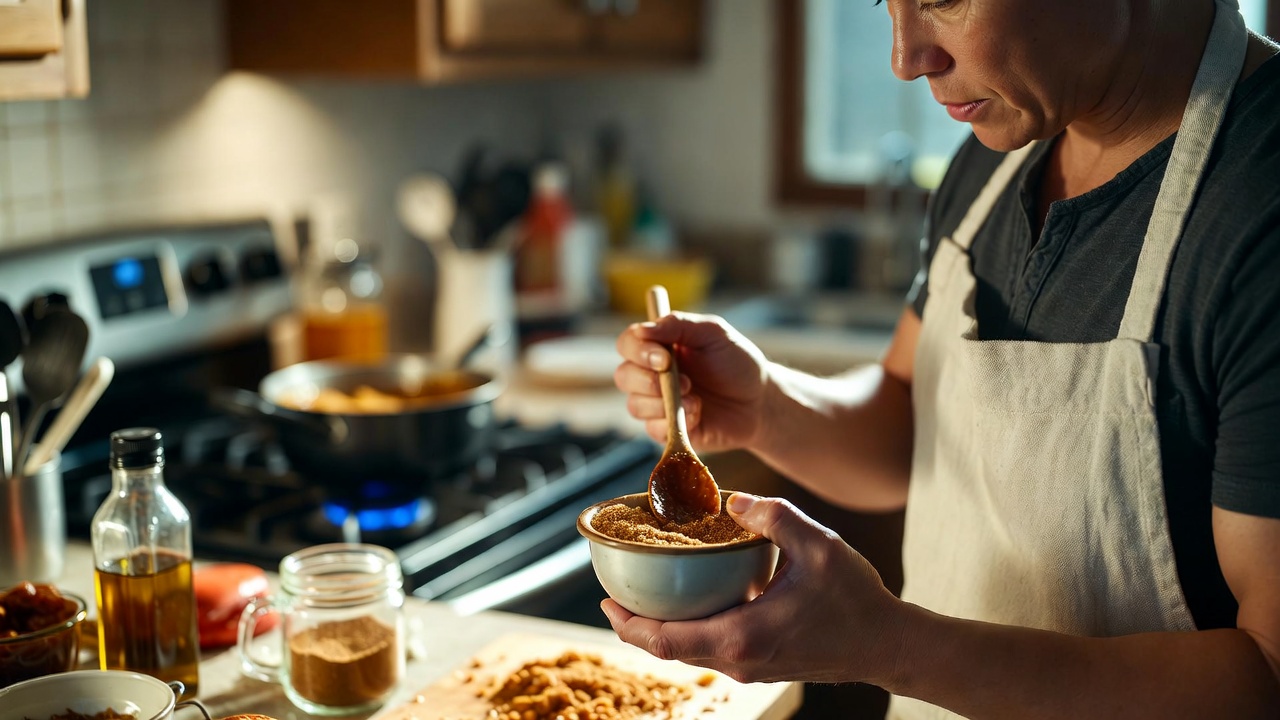
Brown Sugar and Cinnamon Glaze
This one is the easy weeknight version of a holiday ham. Brush the whole ham with 1/4 cup Dijon mustard before it goes on the smoker. Stir 1/2 cup brown sugar, 1/4 cup honey and 1 teaspoon cinnamon together in a bowl, and set it aside until the end of the cook.
Honey Mustard Glaze
This is the glaze for a spiral-cut ham, and it is the closest thing to a three-ingredient glaze: 1 cup honey, 1/2 cup brown sugar and 1/4 cup Dijon mustard, mixed until smooth. Stud the ham with whole cloves first if you like the old-school look. Honey runs, so warm it slightly to make it brush on easier.
Dr Pepper and Orange Glaze
Pour 2 cups Dr Pepper, 1 cup brown sugar, 1/4 cup Dijon mustard and 1/2 cup orange juice into a saucepan and boil it until it thickens into a glaze. It takes a while for that much soda to cook down, so start it before the ham comes up to temperature. The soda gives it a dark, cola-and-cherry edge that nobody at the table will guess.
When to Glaze a Ham on the Smoker
Late. USDA’s smoking guide says to apply a sauce during the last 15 to 30 minutes of smoking to prevent too much browning or burning, and a sugary ham glaze is exactly the kind of sauce it means. Watch the thermometer, not the clock. When a fully cooked ham is within the last half hour of reaching 140°F, brush on the first coat.
A second coat a little later, still inside that window, builds a thicker shell. Spiral hams are the easiest to glaze, because the glaze runs down between the slices.
What Temperature Is a Glazed Ham Done?
The label decides, and FoodSafety.gov lays it out:
- Fully cooked, packaged in a USDA-inspected plant: reheat to 140°F.
- Raw or cook-before-eating: 145°F, then a 3-minute rest.
- Other precooked ham, like store-repackaged or leftovers: 165°F.
Our smoked ham guide decodes every label wording, and it is worth a minute with the wrapper before you light the fire.
Leftover Glazed Ham
A glazed ham feeds a crowd and then feeds the cook for days. Get the leftovers into the refrigerator promptly, and reheat a slice to 165°F, the number FoodSafety.gov uses for leftover cooked ham. Our guide to how long BBQ lasts covers how long it keeps in the fridge and the freezer. If the ham is the main event for the holiday, the Thanksgiving dinner planner lines up the sides around it.
Half of you are feeding fewer than 8 this Thanksgiving.
Frequently Asked Questions
Should you glaze a ham before or after smoking?
Near the end. USDA says to put a sauce on in the last 15 to 30 minutes of smoking, so the ham smokes plain first and gets its glaze at the finish.
What is the best glaze for a ham?
Brown sugar, honey and Dijon mustard is the classic, and it is the base of two of the three glazes above. Swap in Dr Pepper and orange juice for a darker, sweeter one.
How much glaze do I need for a ham?
One batch of any glaze above covers an 8- to 10-pound ham. Make one and a half batches for 12 to 15 pounds and double it for anything bigger.
Why did my ham glaze burn?
It went on too early. Sugar burns over a long cook, which is why USDA says to wait until the last 15 to 30 minutes to add a sauce.
Can I make ham glaze ahead of time?
Yes. Mix it, cover it and refrigerate it, then warm it gently before you brush it on so it spreads evenly.
Plain ham is dinner. Glazed ham is the thing people talk about in the car on the way home. Brush it on late, pull it at the right number, and save a slice for yourself before the crowd gets to it.
Sources: USDA Food Safety and Inspection Service, “Smoking Meat and Poultry”; FoodSafety.gov, “Safe Minimum Internal Temperatures”; Popular BBQ, “3 Whole Ham BBQ Recipes: Easy, Popular, Unique”.
Reader Favorites
- Easy BBQ Foods: Grill Like a Pro with These 10 Recipes
- Smoking Pork Butts: Master Competition-Level BBQ Now
- Different Cuts of Pork: Elevate BBQ Mastery Now
- How To Master a Homemade Barbecue Sauce Recipe Best
- Easy Pulled Pork Recipe: Simple, Tasty, and Perfect for Gatherings
- Baby Back Ribs of Pork: Smoke Up Your Epic BBQ Now
BBQ Temperature Charts & Guides
Four quick-reference tools every cook bookmarks — target temps, pull temps, and how long leftovers keep, plus the full BBQ glossary.
| Cut | Pull | Time |
|---|---|---|
| Brisket | 203°F | 12–16h |
| Spare ribs | 195–203°F | ~6h |
| Pork butt | 203°F | 12–14h |
Target temps & times for 17 cuts, sortable by meat, weight and doneness.
View full chart →| Doneness | Target |
|---|---|
| Rare | 125–130°F |
| Medium-rare | 130–135°F |
| Well-done | 160°F+ |
Rare to well-done, burger safety (160°F) and resting times.
View full chart →| Food | Fridge | Freezer |
|---|---|---|
| Brisket, ribs | 3–4 days | 2–3 mo |
| Smoked sausage | 1 week | 1–2 mo |
| Potato salad | 3–4 days | no freeze |
How long smoked meats & sides keep — fridge and freezer, USDA-based.
View full chart →Every pit term decoded — cooking methods, gear, cuts, wood, and technique, A to Z.
Open the glossary →