Alabama White Sauce: The 1925 Ratio and How to Keep It From Breaking
Alabama white sauce is mayonnaise, cider vinegar, lemon juice, salt and black pepper. Bob Gibson built it in Decatur in 1925, for chicken.
The parts that matter
- It is a mayonnaise sauce, not a dressing. Mayonnaise, apple cider vinegar, lemon juice, black pepper and salt, per the Encyclopedia of Alabama.
- 1925, Decatur, Alabama. Bob Gibson made it at his own pit, and it went on chicken and nothing else for years.
- The vinegar is the point. Get the ratio wrong and you have seasoned mayonnaise sitting on a bird.
- It breaks under direct heat. Use it at the end, off the fire, or as a dip. Do not brush it on over flames.
- Black pepper carries it. More than feels reasonable. This is a peppery sauce that happens to be white.
Most barbecue sauces are red and sweet, and the ones that are not are usually vinegar or mustard. Alabama runs a fourth line entirely: a thin, tart, aggressively peppered mayonnaise sauce that turns up on smoked chicken and confuses everybody the first time they see it.
It has a documented origin, which is rarer in barbecue than you would think. The Encyclopedia of Alabama puts it at Bob Gibson’s pit in Decatur in 1925, and records the base as mayonnaise, apple cider vinegar, lemon juice, black pepper and salt. It was used on chicken alone before it spread to anything else.
What does Alabama white sauce actually taste like?
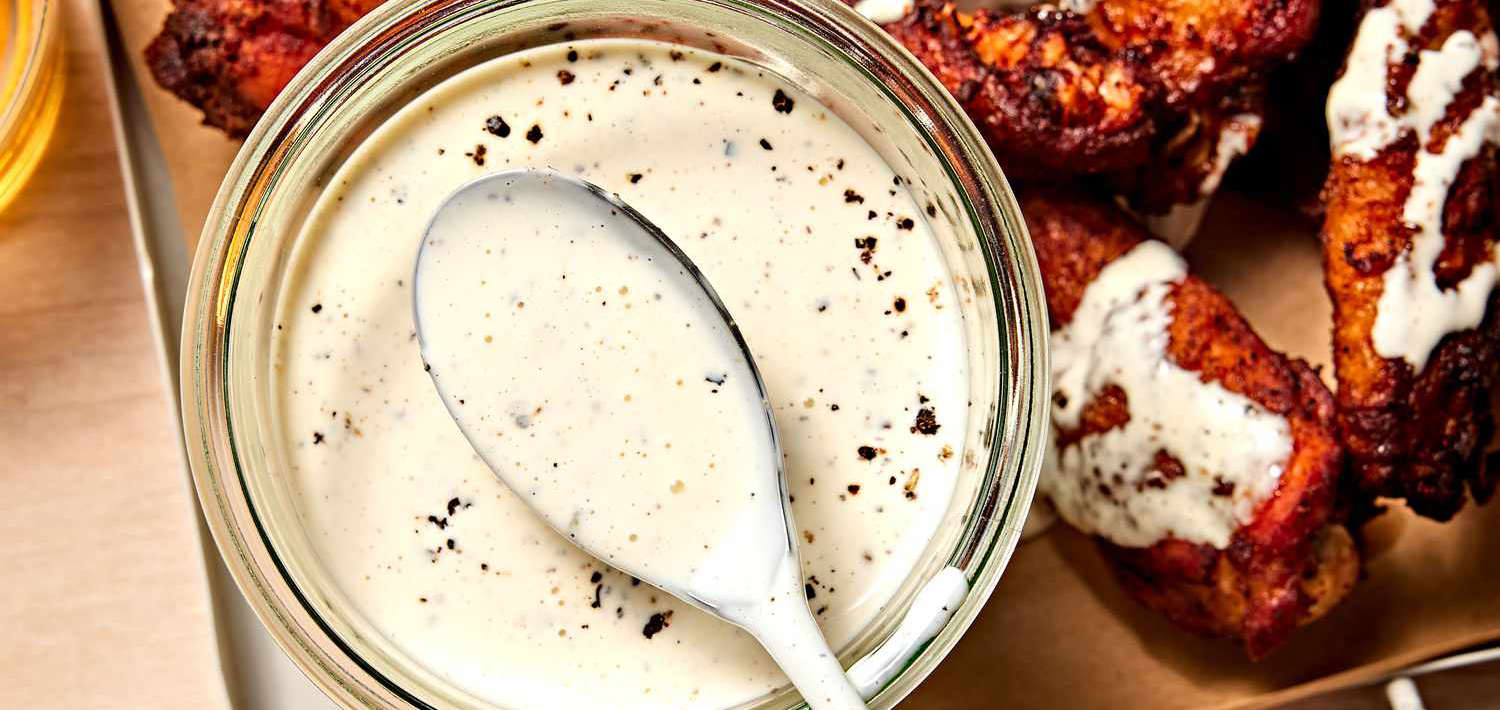
Sharp first, then peppery, then creamy last. If your version tastes creamy first, there is not enough vinegar in it. The mayonnaise is a carrier: it holds the acid and the pepper against the meat instead of running straight off, and it browns a little where it touches hot skin.
That is the whole trick. A vinegar sauce slides off chicken skin. Mayonnaise clings, so the acid stays where you put it.
The working ratio
Start here and adjust once, not four times.
| Ingredient | Amount | What it does |
|---|---|---|
| Mayonnaise | 1 cup | Carrier and cling |
| Apple cider vinegar | 1/4 cup | The acid, and most of the flavor |
| Lemon juice | 1 tablespoon | Brightness the vinegar cannot supply |
| Coarse black pepper | 1 to 2 teaspoons | The heat and the texture |
| Salt | 1 teaspoon | Seasoning |
| Prepared horseradish | 1 teaspoon, optional | Bite without more acid |
| Cayenne | 1/4 teaspoon, optional | Heat that arrives late |
Whisk it cold, refrigerate it for at least an hour, and taste it again before you decide it needs anything. Pepper and vinegar both keep opening up as it sits. Thin it with a spoonful of water if you want a dip rather than a coat.
How do you use it without splitting it?
Mayonnaise is an emulsion, and emulsions break when they get hot. That is why this sauce is not a mopping sauce and not a glaze you build in layers over a long cook.
Three ways that work:
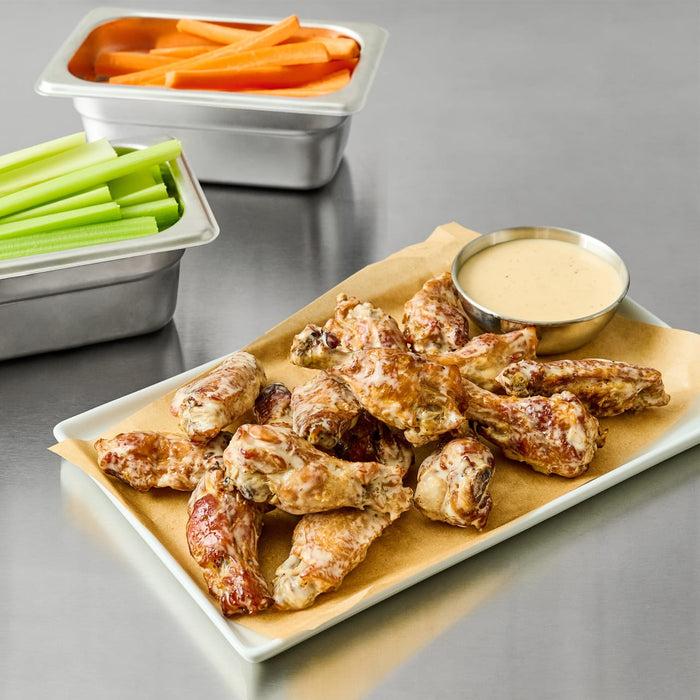
- The dunk. The traditional one. Pull the chicken off, and dip the whole bird or the pieces straight into a bowl of sauce, then let it drain. Ten seconds, not a marinade.
- The finish. Brush it on in the last few minutes, with the meat off direct heat. You want it warmed, not cooked.
- The table sauce. Serve it cold alongside. This is the one that survives contact with reality at a cookout.
It is also the best sauce on the site for smoked turkey, which has the same skin problem and the same need for acid. If you are cooking one, our smoked turkey guide covers the bird and this covers the plate.
What to put it on besides chicken
Chicken is the tradition and still the best use, particularly thighs and whole birds, where the skin gives the sauce something to hold. Beyond that:
- Smoked turkey, for the same reasons as chicken.
- Pork, where it works against the fat the way a vinegar sauce does, with more body.
- Smoked or grilled vegetables, especially anything charred. It behaves like a ranch that has been taken seriously.
- Slaw dressing, thinned, if you want the whole plate to read Alabama.
- Fried chicken sandwiches, which is not traditional and is not going to stop anyone.
Where it sits on the American sauce map
It helps to see the four main lines next to each other, because each one solves a different problem.
| Sauce | Base | Built for |
|---|---|---|
| Alabama white | Mayonnaise and cider vinegar | Smoked chicken, where skin needs cling and acid |
| Kansas City | Tomato and molasses or sugar | Ribs and burnt ends, where a glaze should set |
| Eastern Carolina | Vinegar and pepper | Chopped whole hog, where the sauce must run |
| South Carolina | Mustard and vinegar | Pork, with sharpness and body at once |
None of them is a general-purpose sauce, which is the part people miss. A Kansas City sauce on smoked chicken skin turns to candy and hides the smoke. White sauce on ribs slides off a glaze that wanted to caramelize. Match the sauce to what the meat needs and the whole plate improves, and if you want to build your own from the ground up, start with our homemade barbecue sauce method.
Storage and safety
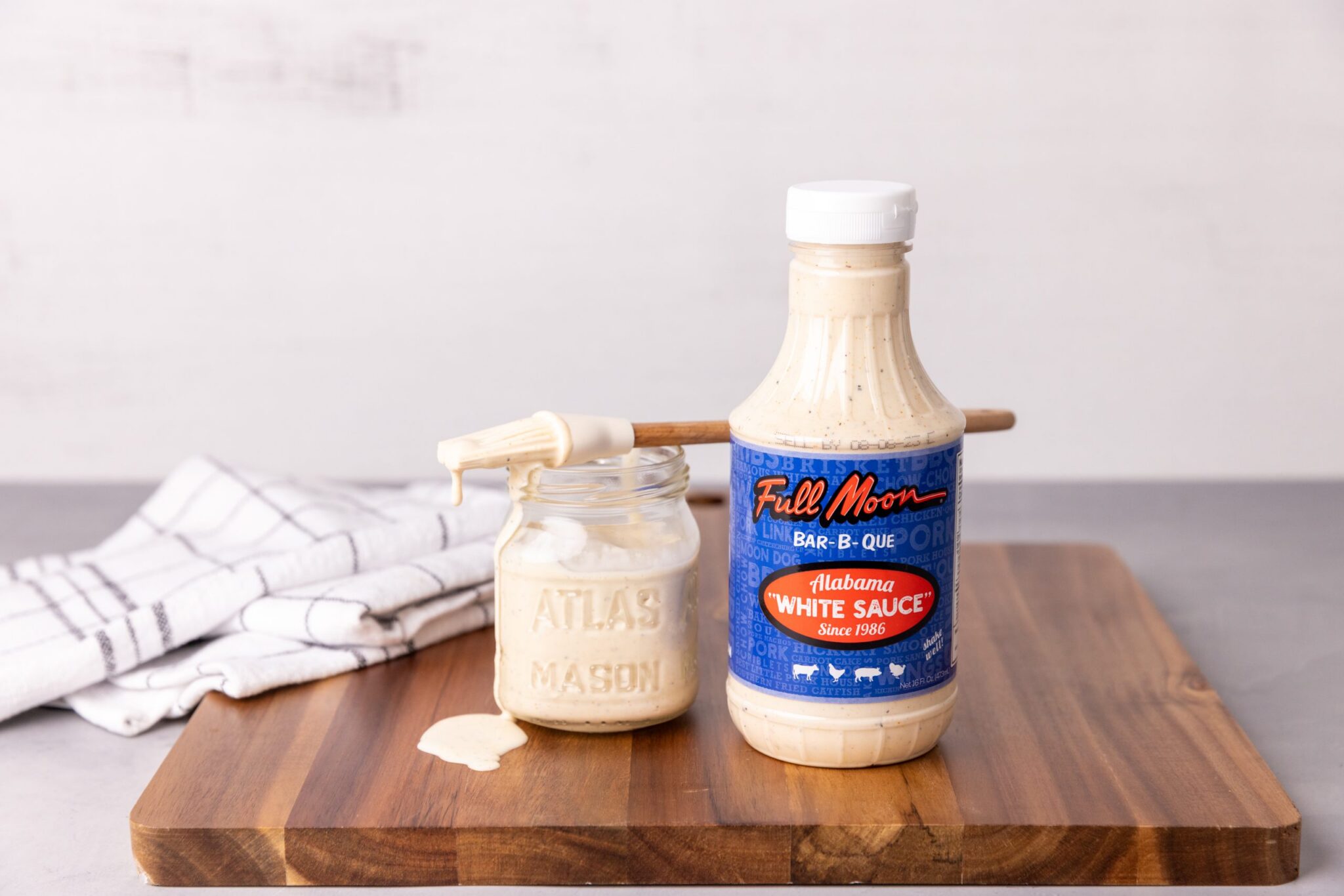
It is a mayonnaise sauce, so treat it like one. Refrigerate it, keep it out of the sun at a cookout, and put the bowl back in the fridge between rounds rather than leaving it on the table for the afternoon. A week in a sealed jar is a sensible ceiling, and the acid means it holds better than plain mayonnaise, not worse.
Never reuse a bowl the raw chicken went near, and never re-serve sauce that a hot bird was dunked in. Split the batch before you cook: one bowl for dunking, one for the table.
Frequently asked questions
Is Alabama white sauce just ranch?
No. Ranch is buttermilk and herbs. This is mayonnaise, vinegar and black pepper, with no herb content at all, and it is far more acidic.
Can I make it without mayonnaise?
You can build the same flavor on Greek yoghurt, and it will be thinner and tangier. It is a different sauce, and it splits even more readily over heat.
Why did mine turn oily on the chicken?
Too much heat. The emulsion broke and the oil separated. Apply it off the fire, or at the end.
How long before it is best?
An hour in the fridge minimum. Overnight is better. The pepper needs time in the liquid.
Does it have to be apple cider vinegar?
That is what the documented original uses. White vinegar is sharper and flatter; it works, and it tastes less rounded.
Sources
- Encyclopedia of Alabama, Big Bob Gibson’s White Sauce — for the 1925 date, the Decatur origin, the base ingredients and the original use on chicken.
Reader Favorites
- How To Master a Homemade Barbecue Sauce Recipe Best
- How to Make the Perfect Pineapple Chipotle BBQ Sauce
- Chestnut Butter Recipe: How to Make the Perfect Fall Spread
- Chow Chow Relish: Southern BBQ History in a Jar, Make it Now
- The Ultimate Chicken Marinade Collection is Here
- 14-Hour Smoked Brisket Recipe: Coffee-Chili Rub Mastery
BBQ Temperature Charts & Guides
Four quick-reference tools every cook bookmarks — target temps, pull temps, and how long leftovers keep, plus the full BBQ glossary.
| Cut | Pull | Time |
|---|---|---|
| Brisket | 203°F | 12–16h |
| Spare ribs | 195–203°F | ~6h |
| Pork butt | 203°F | 12–14h |
Target temps & times for 17 cuts, sortable by meat, weight and doneness.
View full chart →| Doneness | Target |
|---|---|
| Rare | 125–130°F |
| Medium-rare | 130–135°F |
| Well-done | 160°F+ |
Rare to well-done, burger safety (160°F) and resting times.
View full chart →| Food | Fridge | Freezer |
|---|---|---|
| Brisket, ribs | 3–4 days | 2–3 mo |
| Smoked sausage | 1 week | 1–2 mo |
| Potato salad | 3–4 days | no freeze |
How long smoked meats & sides keep — fridge and freezer, USDA-based.
View full chart →Every pit term decoded — cooking methods, gear, cuts, wood, and technique, A to Z.
Open the glossary →