Pork Belly Lollipops: The Most Popular Bacon-Wrapped BBQ Technique (2026 Guide)
Pork belly lollipops are the appetiser people remember from a cookout, and they are easier than they look. Cubes of fatty pork belly skewered on bamboo, wrapped in thick-cut bacon, smoked low, then candied in a sticky glaze — these handheld bites pull the best parts of burnt ends, bacon, and competition rib glaze into one greasy-fingered package.
Last updated: September 2, 2026 · Originally published May 30, 2026

This covers the techniques in current use, from the plain four-hour smoke through to the candied finish, and what each one changes about the result.
What Are Pork Belly Lollipops?
Pork belly lollipops are 1- to 2-inch cubes (or short rectangles) of raw pork belly threaded onto a bamboo skewer, wrapped in a strip of thick-cut bacon, dusted with a sweet BBQ rub, and smoked at low temperatures until the fat renders and the meat hits the magic 200°F internal temp. The skewer becomes the “stick,” the bacon becomes a crispy candy shell, and the pork belly inside turns to pillow-soft butter.
Most pitmasters trace the modern version of pork belly lollipops back to the burnt-ends boom of the late 2010s. Pork belly burnt ends — the cubed cousin of brisket point burnt ends — got skewered, wrapped in bacon for extra fat and visual drama, and the lollipop was born. The format has since spread through pellet-grill recipe sites and competition warm-up boxes because it cooks faster than a full belly, plates beautifully, and gives every guest their own self-contained portion.
Why Pork Belly Lollipops Work So Well
Three things make pork belly lollipops a near-foolproof crowd-pleaser. First, pork belly is roughly 50% fat by weight, so it can take hours of low smoke without drying out. Second, the bacon wrap shields the exterior from the dry heat of a smoker and bastes the cube with its own rendered fat as it cooks. Third, the lollipop format gives you maximum surface area for rub and glaze relative to the meat’s volume, so every bite carries bark, smoke, and sticky sweetness.
The skewer is more than presentation. It keeps the cube from collapsing when the connective tissue breaks down at 200°F internal, and it gives guests something to hold while the fat is still hot enough to scald a fingertip.
The Most Popular Pork Belly Lollipops Technique: The Classic Smoke-and-Sauce
The default technique — the one most pellet-grill cooks land on after a few rounds — is a single-stage smoke followed by a sauce dunk. It’s the version Pit Boss publishes on its recipe site and the one most YouTube cooks default to because it’s hard to screw up.
The classic flow looks like this:
- Cut a skinless pork belly slab into 1- to 1.5-inch cubes (or 2-inch by 1-inch rectangles for a true “lollipop” silhouette).
- Skewer each cube on a 6-inch bamboo skewer, pushing the skewer about 90% of the way through so the cube sits stable on the stick.
- Wrap each cube with a half-strip of thick-cut bacon, securing the seam with a toothpick if needed.
- Season generously on all sides with a sweet BBQ rub — brown-sugar-forward rubs are the consensus pick.
- Smoke at 250°F for roughly 3 to 4 hours, until the internal temperature of the belly hits 200°F and a probe slides in with no resistance.
- Sauce by dunking each finished lollipop directly into a warm pan of BBQ sauce, then resting 5 minutes before serving.
No flipping, no spritzing, no foil wrap — just smoke, probe, dunk. This is why pork belly lollipops have exploded on pellet-grill recipe blogs: the technique forgives a wandering cook who wants to drink a beer instead of babysit the smoker.
Technique Deep Dive #1: The Candied “Candy Apple” Method
The candied technique is the competition-style upgrade. It treats pork belly lollipops the way pitmasters treat pork belly burnt ends — with a pan, butter, brown sugar, and honey for the final braise. The result is the sticky, glossy, almost-too-sweet finish that earns the “candy apple” nickname.
After the initial 2 to 2.5 hours of open smoke, the lollipops come off the grate and go into a foil pan or aluminum tray. Each cube gets a heavy dusting of brown sugar, a drizzle of honey, several pats of unsalted butter scattered across the pan, and a splash of apple juice or apple cider vinegar to keep the bottom from scorching. The pan goes back on the smoker — uncovered or loosely tented — for another 60 to 90 minutes at 250°F.
The brown sugar and butter form a liquid candy that the bacon and belly soak up. By the time the internal temperature hits 200°F, the cubes are sitting in a syrup that doubles as the final glaze. A quick BBQ-sauce coat at the end seals the deal.
Technique Deep Dive #2: The Two-Wood Smoke Profile
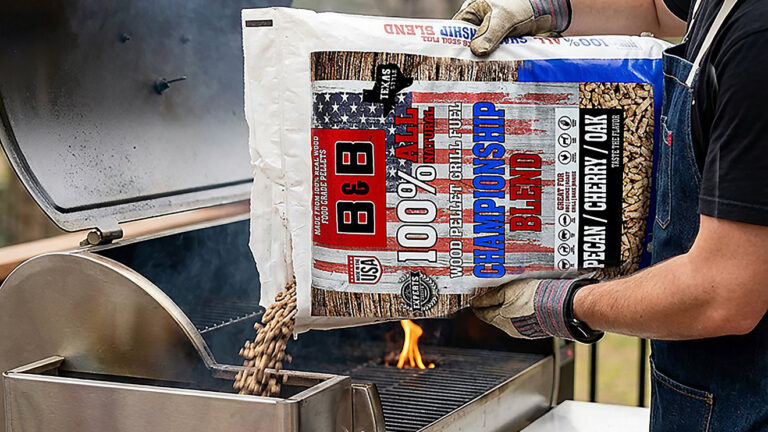
Most pellet-grill recipes for pork belly lollipops call for a blend of two complementary woods rather than a single variety. The combination most often cited is hickory plus a fruit wood — usually apple or cherry — to balance the strong bacon-smoke profile of hickory with the milder sweetness of fruit smoke.
The reasoning: pork belly is fatty enough to absorb heavy smoke without going bitter, but the bacon wrap is already smoke-cured before it ever hits your grate. A 100% hickory cook can push the finished lollipops past pleasant into acrid. Cutting hickory with apple or cherry pellets at roughly a 50/50 ratio gives the bark a clean, sweet edge that pairs with the brown-sugar rub and sauce dunk.
Cooks running offset stick burners often use a hickory base with apple chunks tossed on during the first hour, then let the fire burn clean for the back half of the cook.
Technique Deep Dive #3: The 24-Hour Salt Cure
The Pit Boss recipe — and several competition variants — start the night before with a heavy salt cure. Cubed pork belly gets a liberal coat of kosher salt and rests uncovered in the refrigerator for 12 to 24 hours before it ever sees rub, bacon, or skewer.
This pre-cure does two things. The salt penetrates the cube and seasons it through, not just on the surface. And the uncovered refrigerator rest dries the exterior, which means the rub sticks better and the bark develops faster once the smoker fires up. A dry, slightly tacky surface takes smoke color in the first hour the way a wet, slippery surface never will.
If you’re cooking for guests the same day, skip this step — the lollipops will still be excellent. If you have the lead time and you want to push them from “great backyard appetizer” to “people are asking for the recipe,” the overnight salt cure is the highest-leverage technique on this list.
Technique Deep Dive #4: The Hot-Honey and Bourbon Glaze Variations
Once the base technique is dialed, the glaze is where cooks make pork belly lollipops their own. Three variations dominate the recipe-blog circuit right now.
Hot honey glaze. Equal parts hot honey and your favorite BBQ sauce, warmed in a small saucepan with a tablespoon of apple cider vinegar to cut the sweetness. The capsaicin balances the fat of the belly and the sweetness of the brown sugar rub.
Maple bourbon glaze. A half-cup of pure maple syrup, two tablespoons of bourbon, two tablespoons of brown sugar, and a splash of orange juice, reduced over medium heat until it coats the back of a spoon. This one borrows from smoked pork belly pinwheel recipes and gives the lollipops a citrus-forward, slightly boozy finish.
Chipotle maple. The Girl Carnivore-style glaze: maple syrup, adobo sauce from canned chipotles, a tablespoon of brown sugar, and a splash of apple cider vinegar. Smoky on smoky on smoky — for cooks who want the heat to register before the sweetness.
Pork Belly Lollipops Cooking Reference Table
| Variable | Recommended Setting | Why It Matters |
|---|---|---|
| Smoker temperature | 225–250°F | Renders fat slowly without scorching the bacon wrap |
| Internal target temp | 200°F | Connective tissue fully breaks down; probe slides in with no resistance |
| Cook time | 3–4 hours | Varies with cube size and smoker calibration |
| Cube size | 1 to 1.5 inches | Larger cubes need longer; smaller cubes dry out faster |
| Bacon type | Thick-cut | Thin bacon burns before the belly is done |
| Wood | Hickory + apple or cherry | Balances heavy smoke with fruit sweetness |
| Skewer length | 6 inches, bamboo | Long enough to hold; short enough to fit a pan |
| Yield per pork belly | 30 to 40 lollipops | A 10-lb skinless slab produces enough for 8–10 guests |
Common Mistakes That Ruin Pork Belly Lollipops
Three errors come up over and over in recipe-blog comment sections. The first is pulling the lollipops at 165°F or 175°F because that’s where you’d pull a pork chop or pork loin. Pork belly is collagen-heavy. It needs to push to 200°F internal before the connective tissue surrenders and the cube goes tender. Pull early and you’ll bite into chewy, rubbery fat.
The second mistake is using regular-cut bacon. The 3- to 4-hour cook will incinerate thin bacon long before the belly inside is done. Thick-cut bacon — or, better, slab bacon hand-sliced thick — is non-negotiable.
The third is over-saucing during the smoke. Brushing on BBQ sauce in the first two hours coats the bark with sugar that scorches before the meat is tender. Save the sauce for the dunk at the end, or for the final 20 to 30 minutes on the grate.
Frequently Asked Questions About Pork Belly Lollipops
How long does it take to smoke pork belly lollipops?
Plan on 3 to 4 hours at 250°F for 1- to 1.5-inch cubes. The cook is done when the internal temperature hits 200°F and a probe slides in with no resistance. Larger cubes or lower smoker temperatures can push the total cook to 5 hours.
What’s the best wood for pork belly lollipops?
A 50/50 blend of hickory and a fruit wood (apple or cherry) is the consensus choice. Pure hickory can over-smoke the bacon wrap, while pure fruit wood lacks the depth pork belly can carry. Pecan is a solid all-in-one substitute.
Do I need to pre-cure the pork belly?
No, but a 12- to 24-hour kosher salt cure in the refrigerator improves seasoning depth and bark formation. Skip it if you’re cooking the same day; use it if you want competition-style results.
Can I cook pork belly lollipops on a gas grill or in the oven?
Yes. Run the gas grill on indirect heat at 250°F with a smoker box of hickory chips, or use the oven at 250°F and finish under the broiler for color. You’ll lose the deep smoke ring, but the texture and flavor profile hold up.
How many pork belly lollipops does one slab make?
A standard 10-pound skinless pork belly yields 30 to 40 lollipops, depending on cube size. That’s enough for 8 to 10 guests as an appetizer or 4 to 6 as a main.
More Pork and Smoker Guides from Popular BBQ
- Pork Belly Burnt Ends: Grill the Ultimate BBQ Treat Now
- Smoked Pork Loin: Learn Master Techniques Now
- Different Cuts of Pork: Elevate BBQ Mastery Now
- Smoking Pork Butts: Master Competition-Level BBQ Now
- Smoked Party Ribs: The Technique Pitmasters Are Using to Cut Cook Time in Half (2026)
- Big Green Egg Pork Butt: How to Prep, Smoke, and Pull It
Authority references for further reading: Pit Boss Pork Belly Lollipops recipe, Z Grills Smoked Bacon Wrapped Pork Belly Lollipops, and Napoleon Grills Big Game Bacon Lollipop recipe.
Reader Favorites
- Creative BBQ Recipes: Fire Up A Unique BBQ Menu Now
- Easy BBQ Foods: Grill Like a Pro with These 10 Recipes
- Smoke on a Gas Grill: BBQ Made Simple
- Smoking Pork Butts: Master Competition-Level BBQ Now
- Trimming Beef Brisket: Learn What the Pros Know Now
- Beef Cuts: Master BBQ Perfection with These Essential Tips Now
BBQ Temperature Charts & Guides
Four quick-reference tools every cook bookmarks — target temps, pull temps, and how long leftovers keep, plus the full BBQ glossary.
| Cut | Pull | Time |
|---|---|---|
| Brisket | 203°F | 12–16h |
| Spare ribs | 195–203°F | ~6h |
| Pork butt | 203°F | 12–14h |
Target temps & times for 17 cuts, sortable by meat, weight and doneness.
View full chart →| Doneness | Target |
|---|---|
| Rare | 125–130°F |
| Medium-rare | 130–135°F |
| Well-done | 160°F+ |
Rare to well-done, burger safety (160°F) and resting times.
View full chart →| Food | Fridge | Freezer |
|---|---|---|
| Brisket, ribs | 3–4 days | 2–3 mo |
| Smoked sausage | 1 week | 1–2 mo |
| Potato salad | 3–4 days | no freeze |
How long smoked meats & sides keep — fridge and freezer, USDA-based.
View full chart →Every pit term decoded — cooking methods, gear, cuts, wood, and technique, A to Z.
Open the glossary →