Smoked Brisket: Step-by-Step Guide for a Perfect Father’s Day 2026
Last updated: June 27, 2026 · Originally published: June 19, 2026
Smoked brisket is the holy grail of barbecue and the ultimate cook to put in front of Dad this Father’s Day. It is also the most intimidating, which keeps a lot of backyard cooks from trying. This guide breaks the whole process down so your first smoked brisket comes off the smoker tender, juicy, and ringed with a deep smoke line, from trimming to the rest.
No product testing here, just the temperatures, timing, and technique the best pitmasters lean on. A steady 225°F, a simple salt-and-pepper rub, and patience are all it takes. For the anatomy of the cut itself, see our brisket cuts guide; this is the step-by-step method.
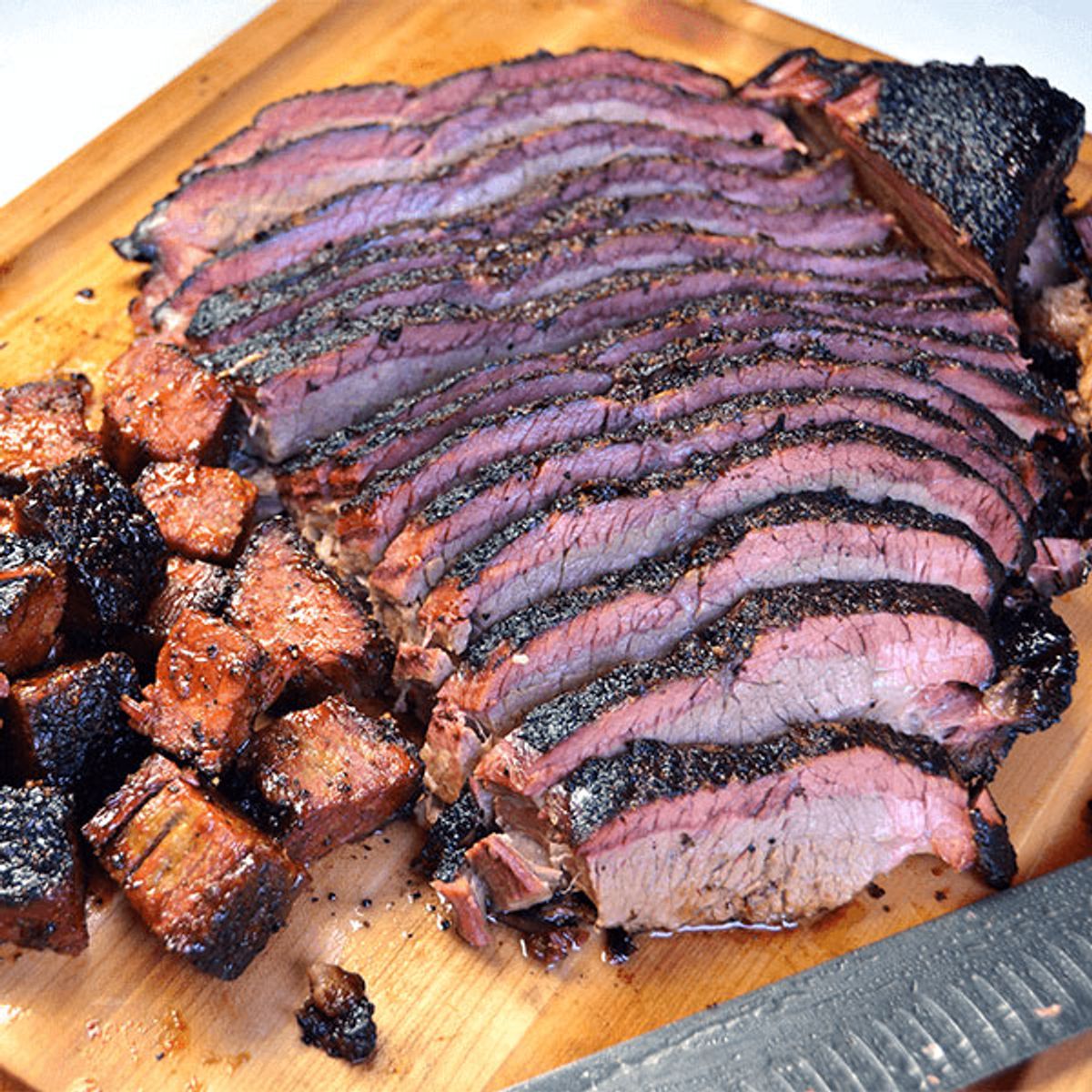
Choose and Trim the Brisket
Buy a whole packer brisket, 12 to 14 pounds, with both the flat and the point. Look for good marbling and a flexible feel. A packer feeds a crowd; for planning portions, see how much brisket per person.
Trimming matters more than any other prep step. With a sharp knife, cut away the thick, hard fat that will never render, leaving about a quarter inch of fat cap to protect the meat. Square off thin edges so they do not burn. Do not be surprised if you remove a couple of pounds of fat.
Season Texas Style
Central Texas brisket needs nothing more than salt and coarse black pepper in equal parts, the classic “SPG” when you add garlic. The simple rub lets the beef and smoke do the talking. Coat every side in an even, heavy layer and let the seasoned brisket sit while the smoker comes up to temperature.
Post oak is the traditional wood for smoked brisket, with hickory and pecan as bolder options. Our smoking woods pairing guide breaks down every choice.
Smoke Low and Slow
Run the smoker at a steady 225°F and place the brisket fat-side up. Plan on roughly 1 to 1.5 hours per pound, but cook to temperature and feel, never the clock. A 13-pound brisket can take 14 to 18 hours, so start the night before for a Father’s Day lunch. If you are new to long cooks, manufacturer walkthroughs like Kingsford’s brisket guide are a helpful reference.
Somewhere around 150°F to 165°F the internal temperature will plateau as moisture evaporates. This is the stall, and it is normal. Our pellet smoker stall fixes explain how to push through it.
Wrap in Butcher Paper
When the bark is a deep mahogany and the internal temperature hits about 165°F, wrap the brisket tightly in pink butcher paper. This Texas crutch powers through the stall, protects the bark, and keeps the meat moist while still letting it breathe, unlike foil.
Return the wrapped brisket to the smoker and cook until done. Butcher paper is the pitmaster standard precisely because it speeds the cook without steaming away the crust you worked hours to build.
Temperature and Time at a Glance
| Stage | Target | What’s Happening |
|---|---|---|
| Smoke unwrapped | 225°F to 165°F internal | Bark and smoke ring form |
| Wrap | 165°F internal | Push through the stall |
| Pull | 200°F to 205°F | Probe-tender, like butter |
| Rest | 1+ hour | Juices redistribute |

The brisket is done when a probe slides into the thickest part of the flat with no resistance, usually between 200°F and 205°F. Texture, not a number, is the real signal; start checking at 195°F. Beef is safe to eat at the USDA minimum of 145°F, but brisket is pushed far past that on purpose so the tough collagen melts into tender, juicy meat. A reliable leave-in thermometer makes the long cook far easier.
The Point, the Flat, and Burnt Ends
A packer smoked brisket is really two muscles. The flat is lean and slices clean for sandwiches and plates. The point is fattier, richer, and more forgiving, and it is the source of one of barbecue’s great treats: burnt ends.
To make burnt ends, separate the point after the cook, cube it, toss the cubes in barbecue sauce, and return them to the smoker for another hour until they caramelize into candy-like bites. It is the best way to stretch one smoked brisket into two showstoppers, and the brisket cuts guide breaks down the anatomy in full.
Rest, Slice, and Serve
Resting is not optional. Let the brisket rest, still wrapped, for at least an hour; many pitmasters hold it in a dry cooler for two to four hours. Slicing too early spills the juices and leaves the meat dry.
Slice against the grain in pencil-thick slices, separating the flat and point since their grains run different directions. Serve your smoked brisket with classic sides from our BBQ side dish recipes and a tray of smoked mac and cheese. For more beef, pair it with smoked beef ribs.
Common Mistakes to Avoid
Four errors sink most first briskets. Skimping on the trim leaves chewy fat in every bite. Slicing with the grain turns tender beef stringy. Rushing the rest dries it out. And pulling by time instead of feel gives you a tough, undercooked flat. Fix all four and your brisket comes out right.
A good instant-read thermometer is non-negotiable for a cook this long; our Father’s Day grill gifts guide covers the best ones.
One last tip for a stress-free Father’s Day: a brisket holds beautifully. Once it is probe-tender, you can keep it wrapped in a dry cooler for up to four hours, which means you can finish the cook in the morning and serve it whenever the family gathers. That long, forgiving hold is exactly why a smoked brisket is the centerpiece worth committing to, and why it tastes like you have been doing this for years even on your first attempt.
Frequently Asked Questions
How long does it take to smoke a brisket?
About 1 to 1.5 hours per pound at 225°F, so a 13-pound brisket can run 14 to 18 hours plus a long rest. Always cook to tenderness, not time.
What internal temperature is a brisket done?
Pull it at 200°F to 205°F, when a probe slides into the flat with no resistance. The exact number matters less than that probe-tender feel.
Should I wrap a brisket?
Yes. Wrapping in pink butcher paper at about 165°F pushes through the stall and protects the bark while keeping the meat moist. Foil works but softens the crust.
What is the best wood for smoking brisket?
Post oak is the Texas standard for its clean, steady smoke. Hickory and pecan are bolder options that also pair well with beef.
More Beef & Smoking Guides from PopularBBQ
- Brisket Cuts: The Ultimate Guide
- Smoked Beef Ribs: Dino Ribs Guide
- Tri-Tip vs. Brisket
- Smoking Woods by Cut
- Pellet Smoker Stall Fixes
Do not toss those brisket trimmings — here is how to render them into beef tallow over on Current Homesteading.
Reader Favorites
- Creative BBQ Recipes: Fire Up A Unique BBQ Menu Now
- Easy BBQ Foods: Grill Like a Pro with These 10 Recipes
- Best Beef Breeds: Pick The Best For Smoking Now
- Trimming Beef Brisket: Learn What the Pros Know Now
- Grill Steaks Like a Pro: Master the Perfect Sear Now!
- Ben Forte’s Smashburgers: Grill the Ultimate Burger Now
BBQ Temperature Charts & Guides
Four quick-reference tools every cook bookmarks — target temps, pull temps, and how long leftovers keep, plus the full BBQ glossary.
| Cut | Pull | Time |
|---|---|---|
| Brisket | 203°F | 12–16h |
| Spare ribs | 195–203°F | ~6h |
| Pork butt | 203°F | 12–14h |
Target temps & times for 17 cuts, sortable by meat, weight and doneness.
View full chart →| Doneness | Target |
|---|---|
| Rare | 125–130°F |
| Medium-rare | 130–135°F |
| Well-done | 160°F+ |
Rare to well-done, burger safety (160°F) and resting times.
View full chart →| Food | Fridge | Freezer |
|---|---|---|
| Brisket, ribs | 3–4 days | 2–3 mo |
| Smoked sausage | 1 week | 1–2 mo |
| Potato salad | 3–4 days | no freeze |
How long smoked meats & sides keep — fridge and freezer, USDA-based.
View full chart →Every pit term decoded — cooking methods, gear, cuts, wood, and technique, A to Z.
Open the glossary →


