May Is One of the Worst Months for Backyard Grill Fires – Here’s What to Check Before Memorial Day
Grill fire safety is the difference between a Memorial Day cookout and a Memorial Day insurance claim. The fire service responds to roughly 6,500 home grill fires every year in the United States, causing about 150 civilian injuries and $27.6 million in direct property damage — and four months drive most of the count. July is the peak, but May, June, and August follow close behind, per the National Fire Protection Association’s Home Grill Fires report. Memorial Day weekend marks the first of those high-volume months. The seven grill fire safety checks below — every one of them five minutes or less — handle the failure modes that cause most of those fires.
Last updated: October 10, 2026 · Originally published May 16, 2026
This is grill fire safety written by a pitmaster, not a clipboard. You will not be told to grill indoors.
Why grill fire safety matters in May
NFPA’s grill-fire data tracks every fire reported to a U.S. fire department where the heat source was an outdoor gas, charcoal, electric, or wood-fired grill. The seasonal curve runs roughly like this:
- July: Peak month — about 18% of the annual total.
- June, May, August: The next three highest — each between 12 and 16%.
- All other months: Drop sharply, especially November through February.
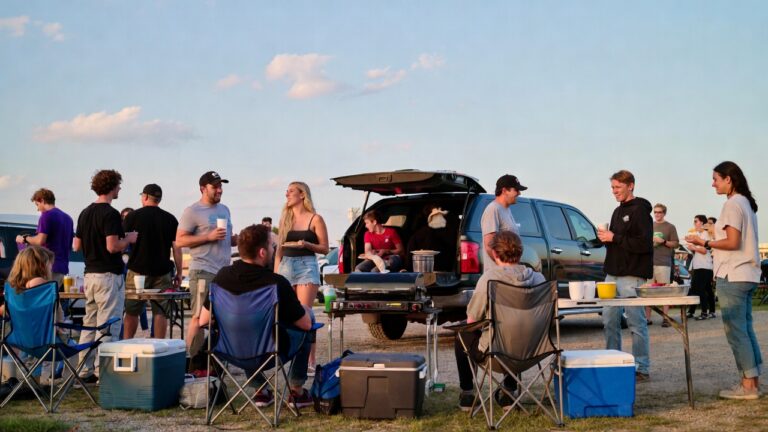
Memorial Day weekend itself is the single highest-incidence weekend of the year — partly because that is when first-of-the-season cooks happen on grills that have been sitting outdoors all winter, and partly because more grills are running at the same time than on any other day of the year. Today is National BBQ Day, and for a lot of pitmasters, today is also the first time the rig comes back online after fall. Grill fire safety is mechanical, not coincidental.
The leading single cause across NFPA’s reporting: gas-fuel line leaks or breaks — about one in five home grill fires. The second: failure to clean the grill — about one in five. Spiders and other insects clogging the gas line is consistently called out by NFPA and the USFA as a specific, common, and preventable cause.
The seven grill fire safety checks below address those mechanical failures directly.


Grill fire safety check 1 — The hose and the regulator
Every propane gas grill in service uses a flexible rubber hose between the tank’s regulator and the burners. The hose is the single highest-failure-rate part on a gas grill, and it is the part most pitmasters never look at twice.
What to do (90 seconds):
- Pull the hose out from under the side shelf where it usually sits coiled.
- Run your hand along its entire length. Feel for cracks, brittleness, soft spots, and visible kinks.
- Inspect the rubber where it joins the regulator at the tank end and the burner manifold at the grill end. These are the highest-stress points.
If the hose is more than five years old, has any visible crack, or has been bitten by a squirrel — and that happens more often than people admit — replace it. A new universal Type-1 connector hose with built-in regulator runs $25 to $40 at any hardware store. Use the OEM hose your grill manufacturer specifies whenever possible.
Grill fire safety check 2 — The soapy-water leak test
This is the test NFPA, the USFA, every fire department in America, and every gas grill manufacturer’s manual specifies. It takes 60 seconds and it is the single highest-value fire safety check on this list.
What to do:
- Mix 1 tablespoon of dish soap into a cup of water.
- Brush, spray, or dab the solution along the entire gas hose, the regulator, and every joint between the tank and the burner manifold.
- Open the tank valve slowly. Do not light the grill.
- Watch every brushed surface. Any bubbles forming and growing = a leak. No bubbles = no leak.
If you find a leak, close the tank valve immediately, wait five minutes for any released propane to dissipate, and replace the leaking component. Do not light the grill until the test passes clean.
This test catches the spider-in-the-line issue, the brittle-hose issue, and the worn-O-ring issue all in one pass.
Grill fire safety check 3 — The grease tray and firebox
The second-leading single cause of grill fires across NFPA’s tracking is failure to clean — accumulated grease igniting under or beside the grates. This is not about appearance. A grease tray with a half-inch of solidified fat in the bottom is a fire that hasn’t started yet.
What to do:
- Pull the grease tray completely out.
- Scrape and dispose of accumulated grease. Heavy buildup goes in a sealed metal container, not the regular trash.
- Wipe the firebox interior. A pellet smoker firebox, a gas grill burner shelf, a charcoal kettle’s ash catcher — all collect grease that drips off the food during normal cooks.
- If the grease tray has rust or a hole through it, replace it. A $15 replacement tray is cheap insurance.
For pitmasters running offset smokers and pellet rigs that don’t get the same daily cleaning as a propane grill, this fire safety check matters more, not less. See also our 7-step spring smoker startup guide for the full first-cook-of-season routine.
Fire safety check 4 — Clearance from structures
NFPA, the IRC (International Residential Code), and every fire marshal in the country specify the same general clearance: at least 10 feet from any structure for charcoal and gas grills, with no overhead obstructions like deck rails, eaves, vinyl siding, or overhanging branches.
What to do:
- Roll the grill out to wherever it will run this weekend.
- Measure (or pace) the distance from the grill to the nearest wall, deck rail, or overhang.
- If you grill on a wood deck under a roof line, you are already in the failure pattern that drives most apartment-and-townhouse grill fires.
The fix is rarely “buy a new house.” The fix is move the grill three feet further from the wall and remove anything flammable within arm’s reach — door mats, plastic chairs, propane tanks (which should never be stored within 10 feet of the grill while it’s hot).
Grill fire safety check 5 — The propane tank itself
Tanks expire. The qualification date is stamped on the collar — month-year format, e.g., 04-21 = April 2021. A propane tank is rechargeable for 12 years from the manufacture date, then requires requalification (a $5–$10 inspection at most propane exchanges) for another 5 years.
What to do:
- Read the tank collar.
- If the date is more than 12 years ago and you’ve never had it requalified, swap it at a propane-exchange station ($28 swap, no questions asked).
- Check the valve handle for stiffness. If it doesn’t turn freely, the valve is failing — swap the tank.
Never store a propane tank indoors — not in a garage, not in a basement, not in a shed with electrical wiring. Outside, upright, in shade, on a non-combustible surface.
Grill fire safety check 6 — Charcoal disposal
For pitmasters running charcoal kettles and offsets, the most common ignition source for a delayed fire is disposed-of-but-not-actually-out charcoal. Coals reach internal temperatures over 700°F during a cook. They cool slowly. A trash bag two hours after the cook is finished is plenty hot enough to ignite paper, plastic, or yard debris underneath it.
What to do:
- Let coals burn out completely with the lid closed and the vents shut — this can take 24 hours.
- When you are absolutely certain the coals are out, scoop the cooled ash into a metal container with a tight-fitting lid.
- Store the metal container away from anything combustible for at least 48 hours before disposing of the contents.
A $20 metal ash bucket with a clamp lid pays for itself the first time it prevents a deck fire.
Fire safety check 7 — The fire-extinguisher reality check
NFPA recommends every household keep at least one ABC-rated dry-chemical fire extinguisher accessible outdoors within reach of the grill. A 5-pound ABC extinguisher runs $25 at any hardware store and has a 10-year service life.
What to do:
- Buy one. Mount it somewhere within 10 feet of where the grill runs.
- Check the pressure gauge once a year — needle in the green = ready; needle outside the green = recharge or replace.
- For a grease fire specifically: never use water. Cut the fuel — close the lid, turn off the gas at the tank, and use the extinguisher only if the fire spreads beyond the grill.
A garden hose is not a substitute. A garden hose on a grease fire spreads burning grease.
What NFPA says about charcoal vs. gas in fire safety
Both fuel types are represented in the grill-fire data. NFPA’s report shows:
- Gas grills account for approximately 84% of home grill fires — driven by the gas-fuel-line failure mode that doesn’t exist on charcoal rigs.
- Charcoal grills account for approximately 12% of grill fires — driven primarily by improper disposal of hot coals.
- Pellet, electric, and other make up the remainder.
The numbers are not a verdict on which grill is “safer.” They reflect what is actually in service. There are vastly more gas grills in U.S. backyards than charcoal grills, so the absolute incident counts skew gas. Per-grill, both fuel types are within the same order of magnitude.
The pellet-grill category is small enough that NFPA doesn’t break it out separately yet, but the failure modes are the same as gas (electrical and gas-line) plus charcoal (smoldering pellets) combined. See our coverage of pellet smoker stall and flame-out issues for the auger-and-burn-pot failure modes specifically.
Grill fire safety FAQ
How many grill fires happen each year in the United States?
The fire service responds to an estimated 6,500 home grill fires every year, per the National Fire Protection Association’s Home Grill Fires report. These fires cause about 150 civilian injuries, fewer than 5 civilian deaths, and roughly $27.6 million in direct property damage annually.
What is the leading cause of grill fires?
Gas-fuel line leaks or breaks are the single leading mechanical cause, responsible for about one in five home grill fires per NFPA reporting. Failure to clean the grill — accumulated grease igniting — is the second leading single cause at roughly one in five.
Why is May a high-risk month for grill fires?
May is the first heavy grilling month of the year, with Memorial Day weekend producing more simultaneous backyard cooks than any other weekend. First-of-the-season cooks happen on grills that have been sitting outdoors through winter — hoses harden, spiders nest in burner tubes, grease that wasn’t cleaned at the end of last season is still in the tray.
How far should a grill be from the house?
NFPA and the International Residential Code specify at least 10 feet of clearance between a charcoal or gas grill and any structure, with no overhead obstructions like deck rails, eaves, vinyl siding, or overhanging branches.
How do I test a propane grill hose for leaks?
Mix 1 tablespoon of dish soap into a cup of water. Brush or spray the solution along the entire gas hose, the regulator, and every joint between the tank and burner manifold. Open the tank valve slowly without lighting the grill. Bubbles forming and growing at any spot = a leak. No bubbles = no leak.
Can a pellet grill catch fire?
Yes. Pellet grills are susceptible to both grease fires (the same failure mode as gas grills) and pellet-auger fires when wet or compacted pellets clog the burn pot and produce a flame-out followed by re-ignition. Spring startup checks on a pellet rig include cleaning the burn pot, emptying the hopper of any old pellets, and verifying the auger turns freely.
Should I have a fire extinguisher near my grill?
Yes. NFPA recommends a 5-pound or larger ABC-rated dry-chemical fire extinguisher within 10 feet of every outdoor grill. A 5-pound ABC unit runs about $25 and has a 10-year service life. Check the pressure gauge once a year.
The kicker
The seven fire safety checks total about thirty minutes of work the first time you run them. After that, the routine — soapy water on the gas line, a wipe-down of the grease tray, a clearance look around the grill — runs five minutes before the first cook of the weekend. Thirty thousand pitmasters every year find out the hard way that the failure mode is real. The other six and a half million find out at the cookout that nothing happened. The cookout where nothing happens is the one worth running.
Primary sources: NFPA Grilling Safety · NFPA Home Grill Fires report · USFA / FEMA Outdoor Fire Safety
Updated May 16, 2026 · By James Nicholas · National BBQ Day edition

Reader Favorites
- Essential BBQ Tools: Get The Tools Pros Recommend Now
- Cleaning Your Gas Grill Cooking Grate: Make it Great Again
- Stainless Steel BBQ Grill Cleaning: Master Maintenance Now
- Grill Baskets: Smoky Veggies & Fish Made Easy
- How to Grill Pizza: Stone or Grates? Tips & Tricks
- Black Friday: Find BBQ Deals for You Outdoor Chef Now
BBQ Temperature Charts & Guides
Four quick-reference tools every cook bookmarks — target temps, pull temps, and how long leftovers keep, plus the full BBQ glossary.
| Cut | Pull | Time |
|---|---|---|
| Brisket | 203°F | 12–16h |
| Spare ribs | 195–203°F | ~6h |
| Pork butt | 203°F | 12–14h |
Target temps & times for 17 cuts, sortable by meat, weight and doneness.
View full chart →| Doneness | Target |
|---|---|
| Rare | 125–130°F |
| Medium-rare | 130–135°F |
| Well-done | 160°F+ |
Rare to well-done, burger safety (160°F) and resting times.
View full chart →| Food | Fridge | Freezer |
|---|---|---|
| Brisket, ribs | 3–4 days | 2–3 mo |
| Smoked sausage | 1 week | 1–2 mo |
| Potato salad | 3–4 days | no freeze |
How long smoked meats & sides keep — fridge and freezer, USDA-based.
View full chart →Every pit term decoded — cooking methods, gear, cuts, wood, and technique, A to Z.
Open the glossary →