Tide-to-TV Buffalo Wings: A Coastal Cook’s Super Bowl Guide
Buffalo wings four ways, in the fryer, the oven, the air fryer and on the grill, with the same hot sauce and butter finish for each.
Crisp, juicy Buffalo wings four ways—fryer, oven, air fryer, and grill—with classic hot-sauce-and-butter flavor and safety you can trust all game long.
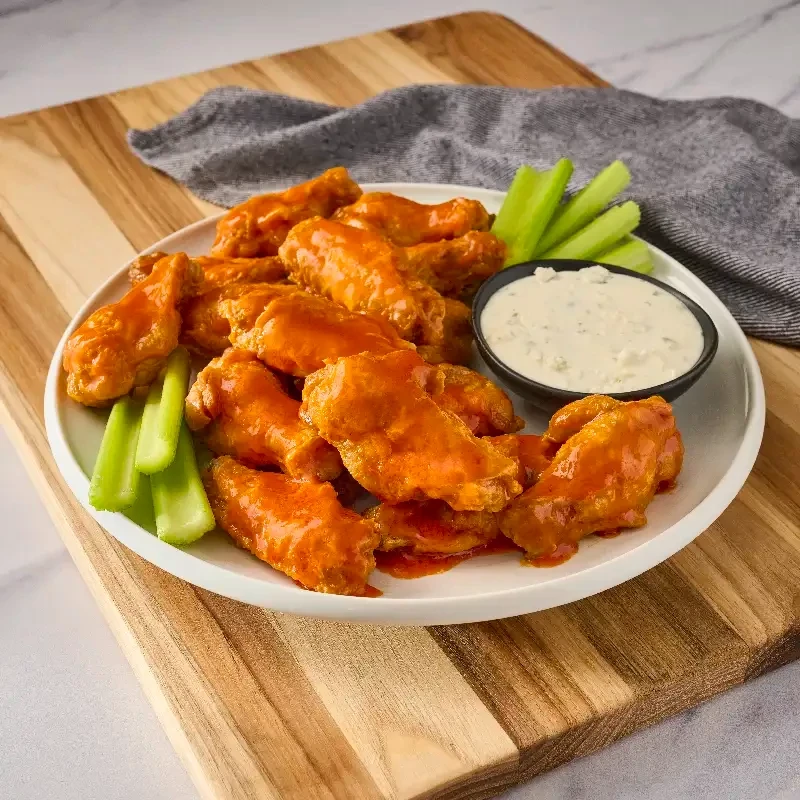
A February wind can howl like surf on a rocky jetty, but inside, the air is warm with the scent of frying chicken, hot sauce, and a roomful of fans holding their breath before kickoff. I grew up listening to waves and radio play-by-plays at the same time, and to me, Buffalo wings are the tide that carries a Super Bowl party from pregame chatter to the final whistle.
In this guide, we’ll walk through crisp, juicy Buffalo wings four ways—fryer, oven, air fryer, and grill. We’ll keep the flavor anchored in the classic: unbreaded wings, fried or roasted until crackling and then tossed in a simple blend of cayenne hot sauce and butter.7 10 Along the way, I’ll point out safety checkpoints, give you confidence cues, and share a few coastal tricks so your wings stay crisp from coin toss to commercials.
Wing Cooking Methods at a Glance
Like choosing your boat for the day, your method depends on the conditions: crowd size, equipment, comfort with hot oil. Here’s a quick chart to steer you.
Time estimates below are practical cooking guidance, not lab data. Always cook wings until they reach at least 165°F / 74°C in the thickest part, away from the bone, as recommended for all poultry.
| Method | Primary heat | Typical cook temp | Approx cook time for ~2 lb (900 g) wings | Where it shines |
|---|---|---|---|---|
| Deep-fried | Oil in Dutch oven or fryer | Oil around 350°F / 177°C, wings to 165–175°F / 74–79°C3 | 12–18 minutes per batch | Maximal shatter-crisp skin, classic bar texture, fast batches for big crowds |
| Oven-baked (dry-brined) | Hot, dry oven air | 425–450°F / 218–232°C, high-heat roasting based on tested oven methods4 | 40–55 minutes total | Big batches, no frying mess, very crispy skin with baking-powder dry brine |
| Air fryer | Concentrated convection air | Around 400°F / 204°C, per tested air-fryer wing methods12 | 18–25 minutes in 1–2 baskets | Smaller gatherings, apartment kitchens, quick cook with almost fried-level crispness |
| Grill (indirect) | Covered, indirect grill heat | Grill in 375–425°F / 190–218°C zone, using gentle, indirect fire as in tested grilled wing methods5 | 35–50 minutes | Outdoor cooks, light smoke, wings that feel like a backyard cookout and a bar snack at once |
Choose the lane that matches your setup. The technique changes, but the soul of the wing stays the same: crisp skin, fully cooked juicy meat, and a bright, buttery Buffalo sauce.
Essential Tips for Game-Day Wings

1. A quick history to ground your technique
Buffalo wings are widely credited to Teressa Bellissimo at the Anchor Bar in Buffalo, New York, around 1964, where she deep-fried unbreaded wings and tossed them in a cayenne hot-sauce-and-butter sauce for late-night bar guests.9 10 Traditional Buffalo wings are still defined as unbreaded, deep-fried pieces, sauced after frying and served with blue cheese dressing and celery.10
Their rise from regional bar snack to national obsession tracked with the Buffalo Bills’ Super Bowl runs in the early 1990s, after which major pizza chains rolled out Buffalo wings nationwide, cementing them as a Super Bowl staple.10
Knowing that origin helps: we’re not chasing breaded tenders here, but crisp-skinned, sauced-after wings with a clean, cayenne-forward bite.
2. Sourcing and cutting the wings
This is where I bring a bit of coastal thinking inland.
- Choose whole, meaty wings. Look for fresh wings with moist, pale skin and no strong odor. Smaller wings cook more evenly and stay juicier.
- Party wings vs. whole wings. Party wings are pre-cut into flats and drumettes. Whole wings are more economical; you can cut them at the joints and save the tips for stock. Cutting is a practical skill you can reuse for any poultry.
- Sustainability mindset. If you can, buy from a local farmer or smaller producer that shares how their birds are raised. It’s the same respect we give the ocean: know the source, honor it in the cook.
3. Safety and timing: keeping wings out of the danger zone
Poultry, including wings, needs to reach a minimum internal temperature of 165°F / 73.9°C, measured with a food thermometer in the thickest part, away from bone. This applies to frying, baking, grilling, and reheating.
For game day, you also need to manage time and temperature on the buffet table. Perishable foods should not sit between 40°F and 140°F for more than 2 hours; set out smaller trays, replenish often, and keep backup pans hot in a low oven or warming setup.1
USDA game-day guidance also recommends reheating cooked wings and other leftovers back to at least 165°F / 74°C before eating.1
Think of it like staying off a sandbar at low tide: keep wings either actually hot or properly cold, and use your thermometer as your chart.
4. Heat choices: fryer, oven, air, or fire
From a technique standpoint:
- Deep-frying in oil around 350°F / 177°C and cooking wings to roughly 175°F / 79°C produces tender meat and crisp skin, according to thermal testing on game-day wings.3
- Oven-baking with a baking-powder dry brine on a rack allows you to roast at high heat and create blistered, shatter-crisp skin without deep frying.4
- Air fryers use focused convection to mimic a mini high-speed oven. Tested Buffalo wing recipes cook wings around 400°F / 204°C for a crisp texture.12
- Grills give you a lick of smoke. Tested grilled Buffalo wing methods use moderate indirect heat and optional baking powder to keep skin crisp.5
Choose one primary method for the bulk of your wings, then use a second (like air fryer or oven) as a backup during the game.
5. The soul of Buffalo sauce
Classic Buffalo sauce is usually just Louisiana-style cayenne hot sauce plus melted butter, sometimes with small touches of acidity or garlic.7 Taste tests and recipe development consistently treat this hot-sauce-and-butter profile—often using a fermented cayenne sauce such as Frank’s Original—as the benchmark Buffalo flavor.7
I think of it this way: the wings give you fat and crunch, the sauce adds heat and tang, and the butter binds them together so every bite feels like surf and fire in balance.
Recipes
Classic Deep-Fried Buffalo Wings (Anchor-Inspired)
This follows the spirit of the original: unbreaded wings, fried until crisp and then tossed in hot-sauce-and-butter. You can scale up in batches; just keep the oil temp steady.
Yield: About 4–6 appetizer servings (from 2 lb / 900 g wings)
Prep time: 20 minutes (plus 30–60 minutes optional air-drying)
Cook time: 25–35 minutes total active frying
Total time: 1–1½ hours
Ingredients
For the wings
- 2 lb (900 g) chicken wings, flats and drumettes separated
- 1¾ tsp (10 g) kosher salt
- ½ tsp freshly ground black pepper
- ½ tsp garlic powder (optional)
- Neutral oil for frying (about 2–3 qt / 2–3 L), such as peanut, canola, or sunflower
For the classic Buffalo sauce
- ½ cup (120 ml) Louisiana-style cayenne hot sauce
- 6 Tbsp (85 g) unsalted butter
- ½ tsp Worcestershire sauce (optional)
- ½–1 tsp fresh lemon juice, to taste
- Pinch of sugar, if your hot sauce is very sharp
For serving
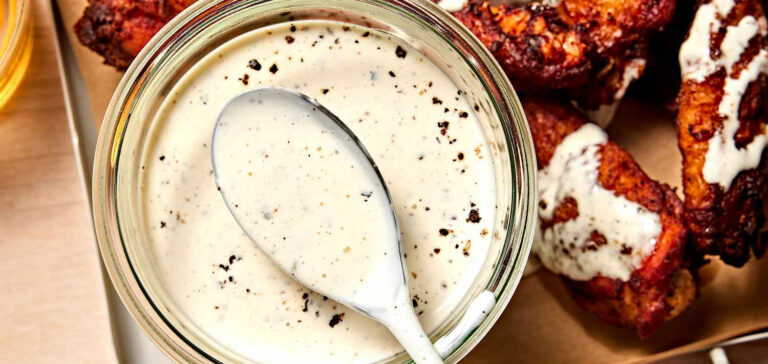
- Chunky blue cheese dressing
- Crisp celery sticks
- Carrot sticks
Steps
-
Dry and season the wings.
- Pat wings very dry with paper towels. This step is your first defense against sputtering oil and soggy skin.
- Toss with salt, pepper, and garlic powder (if using) until evenly coated.
- Confidence checkpoint: the skin should look matte, not wet.
-
Optional air-dry for extra crispness.
- Arrange wings in a single layer on a wire rack set over a rimmed baking sheet.
- Refrigerate, uncovered, 30–60 minutes. This draws surface moisture out of the skin, improving crispness.
-
Heat the oil.
- Fill a heavy Dutch oven or deep pot with 2–3 inches (5–7 cm) of oil.
- Clip on a fry thermometer and heat over medium-high until the oil reaches about 350°F / 177°C, a temperature recommended for crisp yet juicy wings in thermal testing.3
-
Fry in batches.
- Fry a small test batch of 4–5 wings first. Carefully lower them into the oil with tongs.
- Adjust the heat to keep the oil close to 350°F / 177°C. Avoid crowding; the oil should bubble briskly but not violently.
- Fry until the wings are deep golden and the thickest part of each wing measures at least 165°F / 74°C with an instant-read thermometer.
- Many cooks prefer taking wings slightly higher, closer to 175°F / 79°C, for a more tender, pull-from-the-bone texture, which aligns with tested game-day wing guidance.3
- Expect 10–12 minutes per batch, depending on wing size.
-
Keep fried wings hot and crisp.
- Transfer cooked wings to a clean wire rack set over a baking sheet.
- Hold them in a 200–225°F / 93–107°C oven while you fry remaining batches. This keeps them above the 140°F hot-holding benchmark while you finish cooking.1
-
Make the Buffalo sauce.
- In a small saucepan over low heat, melt the butter.
- Whisk in the hot sauce, Worcestershire (if using), lemon juice, and sugar (if using). Warm gently until smooth and steaming, not boiling.
- Taste and adjust: more butter for richness, more hot sauce for heat.
-
Toss and serve.
- Just before serving, place hot wings in a large bowl.
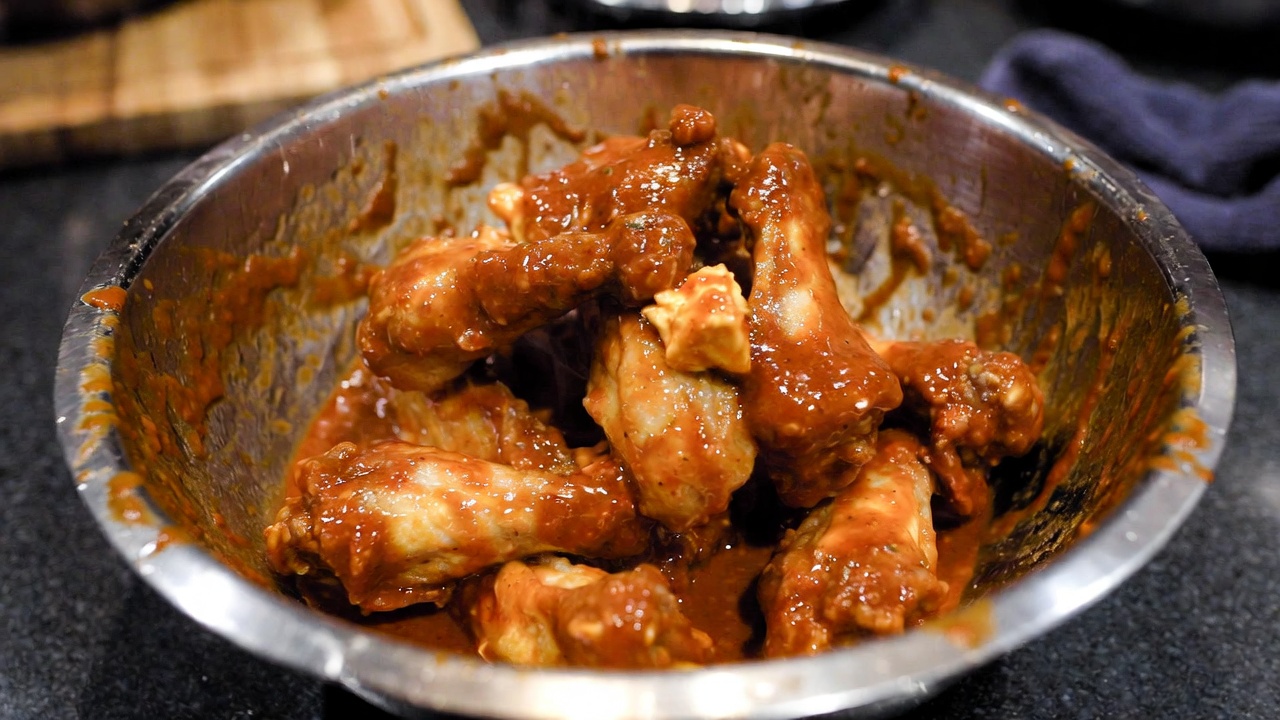
- Pour warm Buffalo sauce over and toss until every wing is glossy and coated.
- Serve immediately with blue cheese dressing, celery, and carrots.
Let the fire kiss the skin, not burn it. Your cues here are color and feel: deep golden, firm but not rock-hard, and a thermometer reading that clears 165°F.
Crispy Oven-Baked Buffalo Wings (Baking-Powder Dry Brine)

This method uses a salt-and-baking-powder dry brine and high heat to create blistered, crisp skin without deep frying, echoing techniques tested for ultra-crispy oven wings.4 Perfect when you want a big tray of wings and a clean stovetop.
Yield: About 4–6 appetizer servings (from 2 lb / 900 g wings)
Prep time: 15 minutes active, plus 8–24 hours chilling
Cook time: 45–55 minutes
Total time: 1–1½ days (mostly unattended)
Ingredients
For the wings
- 2 lb (900 g) chicken wings, flats and drumettes separated
- 1½ tsp (9 g) kosher salt
- 1 tsp aluminum-free baking powder (not baking soda)
- ½ tsp smoked paprika or sweet paprika
- ½ tsp garlic powder
- ¼ tsp freshly ground black pepper
For the Buffalo sauce
- ½ cup (120 ml) Louisiana-style cayenne hot sauce
- 6 Tbsp (85 g) unsalted butter
- ½ tsp Worcestershire sauce (optional)
- ½–1 tsp cider vinegar or lemon juice, to taste
For serving
- Blue cheese or ranch (your house rules)
- Celery and carrot sticks
Steps
-
Prep the wings and rack.
- Line a rimmed baking sheet with foil for easy cleanup and set a wire rack on top.
- Pat wings very dry with paper towels.
-
Mix the dry brine.
- In a small bowl, whisk together salt, baking powder, paprika, garlic powder, and pepper.
- Baking powder in a dry brine is a tested technique for oven-crisp wings; it raises skin pH, helps draw out moisture, and encourages tiny blistered bubbles as the wings roast.4
-
Coat and chill.
- Toss wings with the dry mixture until every piece is lightly and evenly coated.
- Arrange wings skin-side up on the rack, leaving a little space between each.
- Refrigerate uncovered for at least 8 hours, up to 24. This extended chill lets the dry brine work and dries the skin.
-
Roast at high heat.
- Preheat oven to 425–450°F / 218–232°C, in line with tested oven-wing methods for maximum crispness.4
- Roast wings on the middle rack for 35–45 minutes, flipping once midway.
- In the last 10–15 minutes, keep an eye out: the skin should turn deep golden and look dry and blistered in spots.
- Check a few wings with an instant-read thermometer; the thickest parts should register at least 165°F / 74°C.
-
Make the sauce.
- While the wings finish roasting, warm the hot sauce and butter together in a small saucepan over low heat, adding Worcestershire and vinegar if using.
- Whisk until smooth and steaming.
-
Toss and serve.
- Transfer hot wings to a large bowl.
- Pour over the warm Buffalo sauce and toss until coated.
- Serve immediately, or hold the sauced wings briefly in a low (around 200°F / 93°C) oven while you call everyone to the table, keeping that 2-hour hot-holding window in mind.1
Confidence checkpoint: When you tap a wing with tongs before saucing, the skin should sound and feel crisp, not soft. If it’s still pale or slack, give it another 5–10 minutes in the oven.
Bonus: Quick Air-Fryer Buffalo Wings
Air fryers are like little convection galleys—tight and efficient. Tested Buffalo wing recipes in air fryers cook wings at around 400°F / 204°C for a crisp, fried-like surface without a pot of oil.12
Yield: About 2–3 servings (from 1½ lb / 680 g wings)
Prep time: 10 minutes
Cook time: 20–25 minutes
Total time: 30–35 minutes
Ingredients
- 1½ lb (680 g) chicken wings, flats and drumettes
- 1 tsp (6 g) kosher salt
- ½ tsp garlic powder
- ½ tsp onion powder
- ¼ tsp black pepper
- Oil spray or 1 Tbsp (15 ml) neutral oil
Buffalo sauce
- ⅓ cup (80 ml) Louisiana-style hot sauce
- 4 Tbsp (57 g) unsalted butter
Steps
- Season. Pat wings dry and toss with salt, garlic powder, onion powder, and pepper. Lightly oil or spray.
- Arrange. Place wings in the air-fryer basket in a single layer, with a little space between pieces.
- Cook. Air fry at 400°F / 204°C until the wings are crisp and the thickest part reads at least 165°F / 74°C, about 20–25 minutes depending on your unit and wing size, flipping halfway.12
- Sauce and serve. Warm hot sauce and butter together, toss with hot wings, and serve right away.
Troubleshooting Common Wing Issues

Soggy skin
- Cause: Wet wings, low heat, or sauce added too early.
- Fix: Pat wings very dry before cooking, use a rack for air circulation, and keep your cook temps in the tested high-heat ranges for your method.3412 Always sauce wings after they’re fully cooked and crisp.
Greasy or rubbery wings
- Cause (fried): Oil too cool or overcrowded pot.
- Keep oil around 350°F / 177°C and fry in batches, letting the oil recover between loads.3
- Cause (oven): Wings sitting in their own rendered fat.
- Elevate on a wire rack and pour off excess fat if it builds up.
Bland Buffalo flavor
- Cause: Under-seasoned wings or weak sauce.
- Fix: Salt the wings directly before or during dry brining, not just the sauce. For the sauce, remember that the benchmark is bold: hot sauce and butter in a roughly equal or 2:1 ratio, as used in classic Buffalo recipes and taste tests.7
Broken or greasy sauce
- Cause: Overheating the sauce or using very cold butter.
- Fix: Melt butter gently over low heat, whisk in room-temperature hot sauce, and keep it warm, not boiling, until you toss.
Wings losing heat on the buffet
- Cause: Large pans cooling down and lingering in the temperature danger zone.
- Fix: Set out smaller batches and refresh from a 200–250°F / 93–121°C oven. USDA game-day guidance stresses keeping perishable foods hot (above 140°F / 60°C) or cold and discarding anything that’s been in the danger zone for over 2 hours.1
FAQs

Can I bake wings instead of frying and still get them really crispy?
Yes. A salt-and-baking-powder dry brine plus high-heat roasting on a rack is a tested method to achieve very crispy wing skin in the oven without deep frying, thanks to changes in skin pH, moisture loss, and blistering as they roast.4
What internal temperature should my wings reach?
All poultry, including chicken wings, should reach a minimum internal temperature of 165°F / 73.9°C, measured with a food thermometer in the thickest part away from the bone.
How long can wings sit out during the game?
USDA guidance for game-day wings states that perishable foods should not be left in the 40–140°F danger zone for more than 2 hours. After that, they should be discarded to reduce foodborne illness risk.1
What’s the classic dipping sauce: blue cheese or ranch?
Historically, Buffalo wings were served with blue cheese dressing and celery sticks, per the original Anchor Bar style and general overviews of Buffalo wings.10 11 Ranch is a popular modern alternative, so I treat it as a house-rule decision.
Is flour coating authentic for Buffalo wings?
The original Buffalo wings were unbreaded, deep-fried, and then sauced.9 10 Many modern recipes add a light flour dredge as a variation, but if you’re chasing the canonical bar style, skip the flour.
Can I grill Buffalo wings instead of frying?
Yes. Tested grilled Buffalo wing recipes use moderate indirect heat and, optionally, a light baking-powder seasoning to encourage crisp skin, then finish with classic Buffalo sauce for flavor.5 It’s a good option if you prefer cooking outdoors or want a hint of smoke.
Can I make wings ahead and reheat?
You can par-cook wings earlier in the day, chill them safely, then finish crisping and saucing before serving. When reheating, USDA guidance recommends bringing poultry back to at least 165°F / 74°C in the thickest part.
External Resources
If you want to go deeper on safety, technique, and variations, these references are worth bookmarking before game day:
- USDA Safe Minimum Internal Temperature Chart – Official temperatures for poultry and other foods, including the 165°F / 73.9°C minimum for chicken wings.
- USDA: Keep Your Chicken Wings in the Big Game – Super Bowl–specific advice on cooking, serving, and holding wings safely, including the 2-hour rule and hot-holding tips.1
- USDA Blog: Penalty-Free Chicken Wings for Game Day – Additional game-day safety reminders and thermometer guidance straight from USDA.2
- ThermoWorks: Chicken Wings for the Big Game – Detailed breakdown of oil temperature, target internal temperatures, and frying curves for juicy yet crisp wings.3
- Serious Eats: Ultra-Crispy Oven Chicken Wings – Deep-get into the science and method of baking-powder dry brines and high-heat roasting for oven-crisp wings.4
- AmazingRibs: Crispy Grilled Buffalo Wings – Trusted BBQ resource on getting Buffalo-style wings crisp on the grill with gentle smoke.5
- Serious Eats: Super Bowl Wing Recipes – A playbook of tested wing recipes covering multiple cooking methods and flavor profiles.6
- Serious Eats: Buffalo Sauce Taste Test – Exploration of different hot sauces and what defines classic Buffalo flavor.7
- Food Network Kitchen: Buffalo-Style Chicken Wings – A mainstream, approachable Buffalo wing recipe to compare with more traditional, unbreaded versions.8
- Anchor Bar: History of Buffalo Wings – The original bar’s account of how Buffalo wings came to be.9
- Wikipedia: Buffalo Wing – Concise overview of Buffalo wing history, variations, and cultural context, including their Super Bowl connection.10
- Serious Eats: Air-Fryer Buffalo Wings – Tested approach to Buffalo wings in the air fryer, echoing the temps and timings we used above.12
When the game ends and the last wing bone is bare, take a quiet breath. You steered the cook, kept everyone safe, and let the sauce and sizzle do the talking. Let the wood talk when you grill, let the oil whisper when you fry, and remember: cooking for a crowd is just like steering a boat—steady hands, full attention.
Sources
- USDA Safe Minimum Internal Temperature Chart
- USDA: Keep Your Chicken Wings in the Big Game
- USDA Blog: Penalty-Free Chicken Wings for Game Day
- ThermoWorks Blog: Chicken Wings for the Big Game
- Serious Eats: Ultra-Crispy Oven Chicken Wings Without Deep Frying
- AmazingRibs: Crispy Grilled Buffalo Wings Recipe
- Serious Eats: Super Bowl Wing Recipes Collection
- Serious Eats: Buffalo Sauce Taste Test
- Food Network Kitchen: Buffalo-Style Chicken Wings
- Anchor Bar: History of Buffalo Wings
- Wikipedia: Buffalo Wing
- Wikipedia: Anchor Bar
- Serious Eats: Air-Fryer Buffalo Wings
- Washington Post: Roasted Chicken Wings with Shishito Peppers
Reader Favorites
- Creative BBQ Recipes: Fire Up A Unique BBQ Menu Now
- Easy BBQ Foods: Grill Like a Pro with These 10 Recipes
- Grilling Crispy Hot Wings: Master Crunchy Perfection Now
- Spicy Jamaican Jerk Chicken: Unleash Fiery Flavor Now
- Dr Pepper BBQ Wings: Add an Awesome Twist to Your Wings Now
- Smoky Red Chicken Wings: Flavor-Packed Adventure Starts Now
BBQ Temperature Charts & Guides
Four quick-reference tools every cook bookmarks — target temps, pull temps, and how long leftovers keep, plus the full BBQ glossary.
| Cut | Pull | Time |
|---|---|---|
| Brisket | 203°F | 12–16h |
| Spare ribs | 195–203°F | ~6h |
| Pork butt | 203°F | 12–14h |
Target temps & times for 17 cuts, sortable by meat, weight and doneness.
View full chart →| Doneness | Target |
|---|---|
| Rare | 125–130°F |
| Medium-rare | 130–135°F |
| Well-done | 160°F+ |
Rare to well-done, burger safety (160°F) and resting times.
View full chart →| Food | Fridge | Freezer |
|---|---|---|
| Brisket, ribs | 3–4 days | 2–3 mo |
| Smoked sausage | 1 week | 1–2 mo |
| Potato salad | 3–4 days | no freeze |
How long smoked meats & sides keep — fridge and freezer, USDA-based.
View full chart →Every pit term decoded — cooking methods, gear, cuts, wood, and technique, A to Z.
Open the glossary →