Tide-Smoked Fish on the Big Green Egg
Slow, gentle smoke on a kamado is the safest way to cook fish without drying it, and this covers the temperatures and timings that work.
Gentle coastal smoke, clean flavors, and safe, confident fish cookery on your kamado
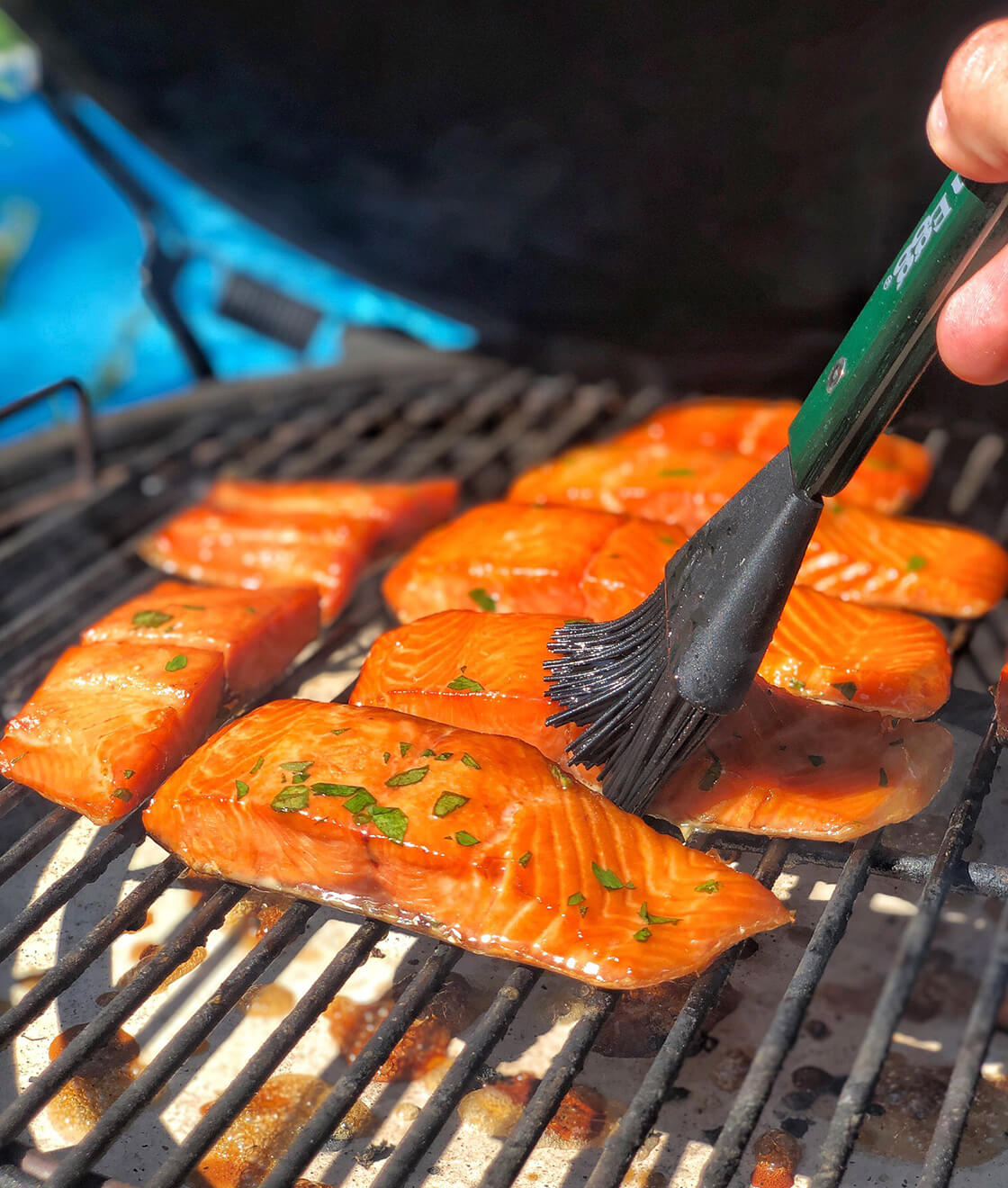
Salt air, a slow curl of smoke from the Egg, and a fillet of ocean-bright fish taking on just enough kiss from the fire. This is the heart of coastal smoking: clean, gentle, and respectful of the catch.
In this guide, we’ll walk through hot-smoking fish on a Big Green Egg (BGE) in a way that feels approachable and safe. We’ll favor mild woods, careful temperatures, and simple brines so the flavor of the fish and the story of the tide still come through.
Introduction: Smoking Fish on a Big Green Egg
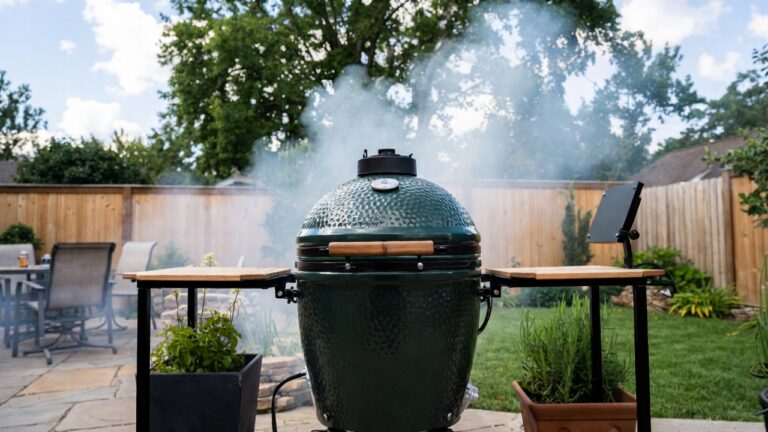
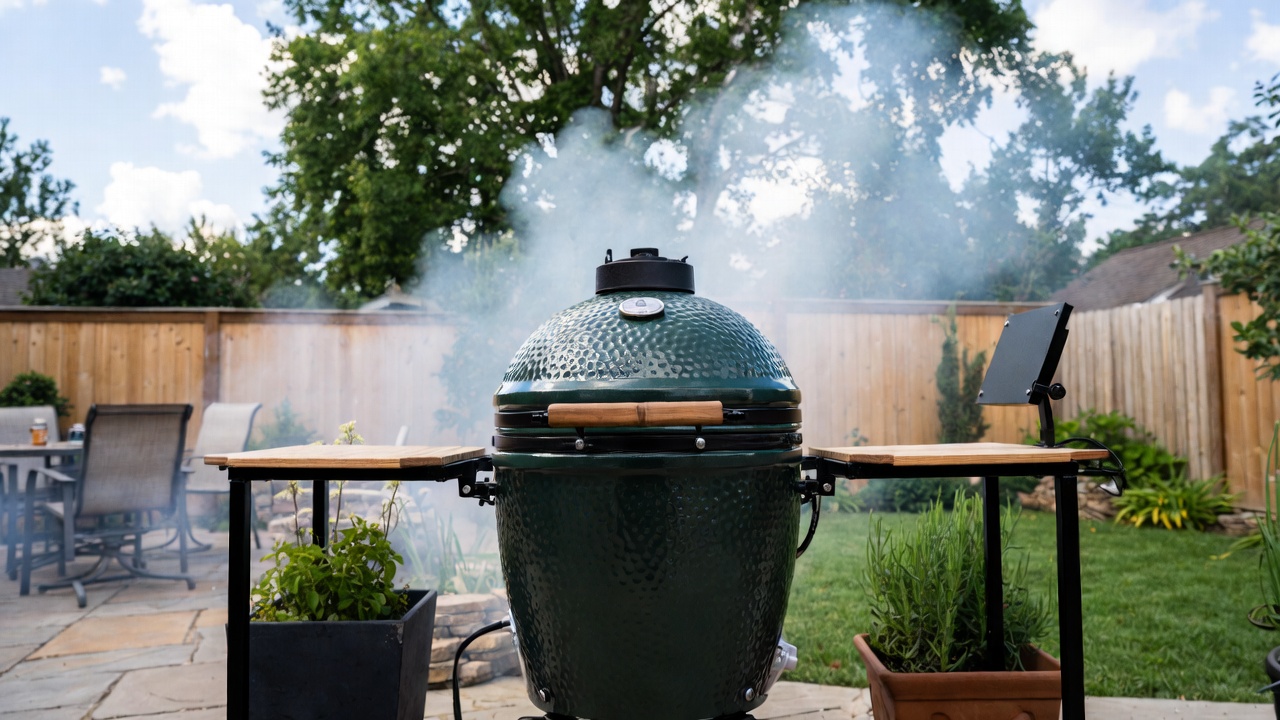
On a kamado like the Big Green Egg, you have an unusually steady partner at the shoreline. A small bed of charcoal, a gentle flow of air, and a single chunk of wood can hold you in the narrow band of heat where fish relaxes, firms, and takes smoke without drying out.
For home cooks, hot-smoking is the sweet spot. In hot-smoking, the BGE runs warm enough that the fish moves out of the bacterial danger zone, and you cook it through while adding smoke.2 3 By contrast, cold-smoking holds fish at much lower temperatures for many hours, a method that food safety experts generally recommend leaving to professionals with precise controls.2 3
You’ll see two temperature ideas in this guide:
- Food-safety guidance: The USDA recommends cooking fish to a minimum internal temperature of 145°F / 62.8°C, measured with a food thermometer in the thickest part; color or flakiness alone are not reliable indicators of safety.1
- Texture-focused ranges: Many smoked-salmon recipes and temperature guides suggest internal temperatures below 145°F, often around 120–135°F / 49–57°C, for a more silky texture; this is a quality choice that sits below the USDA guideline and therefore involves a risk trade-off.291
My job here is to lay out the options with clarity and give you the skills to steer your own course. Cooking seafood is like steering a boat?—steady hands, full attention.
Methods Table: Hot-Smoking Fish on a BGE

This is a working chart I use to choose an approach based on the fish and the mood at the grill. Times are ballpark planning ranges for hot-smoking; always let internal temperature and doneness cues call the final shot.
| Method | Typical BGE dome range* | Approx. time per 1 lb / 450 g* | Best for | Notes |
|---|---|---|---|---|
| Gentle hot-smoke (silky) | 180–210°F / 82–99°C | 45–75 min | Fatty fillets (salmon, trout) | Slow, tender, more time for smoke. |
| Ideal when you’re texture-focused and willing to watch temps closely. | ||||
| Standard hot-smoke (firm, flaky)210–250°F / 99–121°C30–60 minMost fillets, small whole troutA balanced approach I use most often on the BGE. | Gives you a bit of forgiveness on timing. | |||
| Cedar-plank smoke210–250°F / 99–121°C25–45 minSalmon, steelhead, arctic charPlank protects delicate flesh from sticking and adds gentle wood aroma. | Very beginner-friendly and mirrors Big Green Egg’s own cedar-plank salmon approach. | 6 | Leaner white fish smoke | 210–245°F / 99–118°C | 25–50 min | Cod, haddock, pollock | Slightly shorter cook and plenty of brine help guard against dryness, similar to official smoked cod guidance for the Egg. |
| 4 |
*Opinion, based on my practice on a well-calibrated BGE. Use these as starting points, then adjust for your particular grill, fish thickness, and weather.
Essential Tips for Smoking Fish on a Big Green Egg
1. Sourcing: Honor the Ocean First
I like to start with what the tide is actually offering. My default order of questions at the fish counter or dock:
- What’s local and in season? Lean into species your coast can actually support right now.
- How was it caught or farmed? Look for small-boat, line-caught, trap, or well-managed farm operations. Community Supported Fisheries are wonderful when available.
- Fatty vs. lean:
- Fatty fish (salmon, trout, arctic char) stay moist and take on smoke gorgeously.
- Lean fish (cod, haddock, rockfish) can be just as good with more brine and slightly shorter cooks.
Whenever you can, buy skin-on fillets. The skin is a built-in nonstick mat and flavor guard over the fire.
2. Brining: Season and Protect
Most authoritative smoked-fish methods use a salt-based cure followed by a drying step before smoking.2 3 7 8 This isn’t just tradition; it’s good engineering.
In my own smoking, I use brining for three reasons:
- Seasoning: Salt moves into the flesh, seasoning more evenly than surface sprinkling.
- Texture: Brining helps the proteins hold moisture once heat hits.
- Surface prep: A salted surface dries more predictably into a tacky pellicle.
I tend to:
- Use a dry brine (salt and a bit of sugar) for salmon and trout.
- Use a light wet brine for very lean fish like cod, to give them every chance to stay juicy.
We’ll walk through exact ratios in the recipes; think of them as starting charts, not laws.
3. Pellicle: Let the Surface Turn Tacky
After brining, most smoked-fish references call for some form of drying until a slightly shiny, sticky layer forms on the surface. This is the pellicle, and it makes a real difference.3 7
Guides from both university extensions and smoked salmon specialists explain that:
- Drying after brining lets the salt even out through the flesh.3
- The pellicle helps smoke stick and gives the finished fish a better color and sheen.2378
In practice, I:
- Rinse or wipe off excess brine as the recipe calls for.
- Lay the fish on a wire rack over a tray.
- Dry it in the refrigerator with good air circulation until the surface feels tacky, not wet.
You’re looking for a subtle change: the fish will look slightly glossy, and when you brush a fingertip across, it should feel just a bit sticky.
4. Wood and Smoke: Let the Wood Talk
Smoking fish is a whisper, not a shout. Multiple hot-smoking guides recommend mild to medium woods—alder, maple, apple, cherry, beech, pecan—for fish, and caution that stronger woods like mesquite or heavy hickory can easily overpower delicate fillets.8 2 4
How I usually pair:
- Salmon / trout: Alder, apple, or cherry.
- Cod and lean white fish: Alder or a small amount of pecan.
- Cedar planks: Soaked cedar plank plus a neutral or very mild smoking wood, if any.
I start with just one chunk of smoking wood in a BGE-sized fire. If you can smell a clean, light wood aroma standing at arm’s length, you’re in the zone. If your eyes sting, you’ve oversmoked; close the vents slightly, or let some of the initial smoke burn off before adding the fish.
5. Setting Up the BGE: Indirect and Steady
Official Big Green Egg recipes for smoked fish use a classic indirect setup: a small area of lit charcoal, a chunk or chips of smoking wood, then the convEGGtor or similar heat deflector installed before cooking the fish at around 120°C / 250°F until done.4 5 6 Cooking times in those recipes generally fall between about 20 and 45 minutes, depending on fish thickness.4 5 6
My usual flow mirrors that:
- Charcoal: Build a modest fire, concentrating most of the charcoal in the center or slightly to one side.
- Light: Use a chimney or starter; let the fire catch in a palm-sized zone.
- Add wood: Nestle one small chunk of your chosen wood onto the hot coals.
- Install deflector: Put in the convEGGtor or other heat shield, legs-up, with a drip pan if you like.
- Grate: Add your cooking grate and preheat the Egg until the dome stabilizes in your target range.
When the smoke looks thin and blue, not billowy white, it’s time to lay on the fish.
6. Doneness Cues: Temperature and Touch
The USDA’s food safety guidance is clear: for fish and shellfish, the minimum safe internal temperature is 145°F / 62.8°C, measured in the thickest part with a food thermometer.1 They also emphasize that relying on color alone can be misleading.1
At the same time, many smoked-salmon authorities suggest lower internal temperatures for optimum texture, often in the 120–135°F / 49–57°C range, which they describe as yielding a moist, almost custardy interior.2 7 9 That departure from the USDA guideline is a conscious quality-versus-safety trade-off.2 9 1
Here’s how I reconcile this at the grill:
- If you prioritize safety first: Cook to 145°F / 62.8°C in the thickest part.1
- If you sometimes accept the chef-style approach: Understand that pulling fish earlier is your decision, with a texture reward and a higher risk.
Beyond the numbers, I watch for:
- Flesh turning from translucent to opaque.
- The thickest part just beginning to flake when nudged with a fingertip.
- Only light beads of white albumin (the white protein on salmon) on the surface, not big chalky streaks.
Let the thermometer be your compass, and your senses your shoreline checks.
7. Rest, Serve, and Store Thoughtfully
I like to let smoked fish rest for 5–10 minutes off the heat so juices redistribute, then serve warm or at cool room temperature.
For leftovers, food safety resources for smoked fish stress quick cooling and refrigeration rather than leaving fish at ambient temperature for extended periods.3 I spread pieces in a shallow layer to cool, then refrigerate in a covered container.
Warm days, lingering tables, and rich smoked fish are a lovely trio—but keep an eye on time and temperature in the name of both safety and quality.3
Recipes: Two Anchor Methods for Smoked Fish on the BGE
Below are two workhorse recipes I use in classes: one forgiving cedar-plank salmon, one leaner white fish smoked straight on the grate. Both are designed for a Big Green Egg running in a steady, low band of heat.
Cedar-Plank Miso Maple Salmon (Beginner-Friendly)
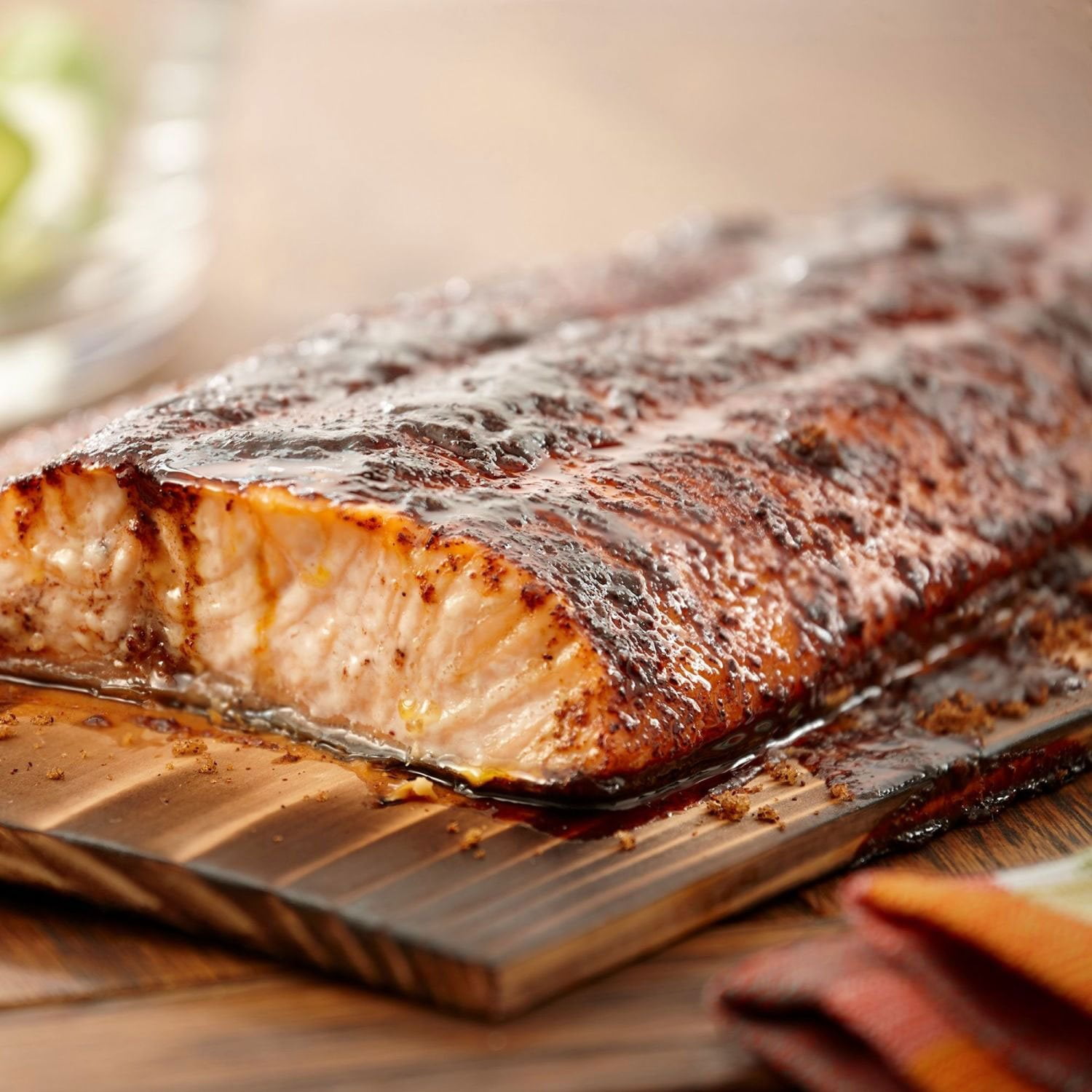
A gentle, aromatic way to smoke salmon that echoes the Big Green Egg’s own cedar-plank salmon method, with the plank acting as insurance against sticking and breakage.6
Yield: 4 servings
Prep time: 20 minutes active, plus 1–2 hours brining and pellicle time
Cook time: 25–40 minutes
Total time: About 2–3 hours
Ingredients
For the salmon:
- 1 1/2 lb (680 g) skin-on salmon fillet, center-cut if possible
- 1 food-safe untreated cedar plank, sized to fit your BGE
For the light wet brine:
- 4 cups (960 ml) cold water
- 3 tbsp (54 g) kosher salt
- 2 tbsp (24 g) brown sugar or maple sugar
For the miso maple glaze:
- 2 tbsp (34 g) white or yellow miso
- 2 tbsp (30 ml) pure maple syrup
- 1 tbsp (15 ml) rice vinegar or lemon juice
- 1 tbsp (15 ml) neutral oil or light olive oil
- Freshly ground black pepper, to taste
To finish:
- Lemon wedges
- A small handful of chopped fresh fennel fronds, dill, or chives
Steps
- Soak the plank
Submerge the cedar plank in water for at least 1 hour. A light weight on top keeps it submerged. This helps it smolder slowly instead of catching fire. - Brine the salmon
Stir the water, salt, and sugar until dissolved. Submerge the salmon in the brine, skin-side up so the flesh is fully covered. Brine in the refrigerator for 30–45 minutes for a fairly seasoned but not overly salty result. - Rinse and dry
Remove the salmon, rinse quickly under cold water, and pat very dry with paper towels. Place on a wire rack over a tray, skin-side down. - Form the pellicle
Refrigerate the salmon uncovered for 45–60 minutes, until the surface looks slightly glossy and feels tacky when you brush it with a fingertip. This pellicle will help the smoke cling and keep the fish moist, as many smoked fish methods recommend.3 7 - Make the glaze
Whisk together miso, maple syrup, vinegar or lemon juice, oil, and black pepper until smooth. -
Set up the BGE for indirect smoking
- Build a small, even fire in the charcoal bowl.
- When a palm-sized area of coals is glowing, add one chunk of a mild wood such as alder or apple.
- Install the convEGGtor for indirect heat and set the cooking grate in place.
- Adjust vents until the dome stabilizes around 210–250°F / 99–121°C.
- Preheat the cedar plank
Place the soaked plank on the grate, close the lid, and let it heat for 3–5 minutes until it just starts to smoke lightly. - Glaze and set the fish on the plank
Brush the top of the salmon with a thin layer of glaze. Lay it skin-side down on the hot plank. Close the lid and let the smoke and cedar begin to work. -
Smoke the salmon
Cook, covered, until the salmon reaches your chosen internal temperature in the thickest part.- For USDA-guideline doneness, that is 145°F / 62.8°C.1
- If you sometimes choose a silkier texture at lower temps, be conscious that you are going below that safety benchmark.29
In my cooks, a 1 1/2-inch (4 cm) thick fillet at this temperature band usually takes 25–40 minutes.
- Finish and rest
When the salmon reaches your target temperature, lightly brush with a final spoonful of glaze. Transfer the whole plank to a rimmed tray or board. Rest 5–10 minutes. - Serve
Scatter herbs over the top. Serve straight from the plank with lemon wedges. The skin may stick lightly to the wood; I like to slide a fish spatula just above the skin and lift the flesh away in big, moist flakes.
Let the fire kiss the skin, not burn it. If the plank edges flame up, gently mist them with water or briefly open the dome to calm the fire.
Gently Smoked Herb Cod Fillets (Lean White Fish)
This cod recipe tracks closely with how Big Green Egg’s own smoked cod fillet cooks: indirect heat around 120°C (about 250°F) with a single chunk of smoking wood and a relatively short cook, adapted here with a simple herb finish.4
Yield: 4 servings
Prep time: 20 minutes active, plus 45–90 minutes brining and pellicle time
Cook time: 25–40 minutes
Total time: About 2–3 hours
Ingredients
For the cod:
- 1 1/2 lb (680 g) skin-on cod loin fillets or similar firm white fish
For the light wet brine:
- 4 cups (960 ml) cold water
- 2 1/2 tbsp (45 g) kosher salt
- 1 tbsp (12 g) sugar
For seasoning and finish:
- 2 tbsp (30 ml) olive oil
- 1 tsp (2 g) lemon zest
- 1 small garlic clove, very finely minced
- 1 tbsp (4 g) chopped fresh thyme or parsley
- Freshly ground black pepper
- Lemon wedges, to serve
Steps
- Brine the cod
Dissolve the salt and sugar in the cold water. Submerge the cod in the brine in a shallow dish. Refrigerate for 30–40 minutes for thinner pieces, 45 minutes for thicker loins. Lean fish benefits from this gentle insurance. - Rinse and pat dry
Rinse the cod briefly under cold water to remove surface salt. Pat the fillets very dry, especially the skin. - Pellicle time
Lay the cod on a wire rack over a tray, skin-side down. Refrigerate uncovered 45–60 minutes until the surface feels slightly tacky rather than wet. This mirrors the drying guidance used in many smoked-fish methods to encourage a pellicle.3 8 - Mix the herb oil
In a small bowl, combine olive oil, lemon zest, garlic, herbs, and a few grinds of black pepper. This will brush on easily and perfume the smoke. -
Set up the BGE for indirect heat
- Light a modest bed of charcoal.
- When you have a small area of glowing coals, add one chunk of a mild wood like alder or a touch of pecan.
- Install the convEGGtor and the cooking grate.
- Adjust vents until the dome sits around 220–250°F / 104–121°C.
- Oil and place the fish
Lightly brush the skin side of the cod with plain oil. Brush the grate as well or use a thin, perforated grill pan. Set the cod skin-side down, leaving space between pieces. Brush the top lightly with the herb oil. -
Smoke the cod
Close the lid and smoke until the cod reaches your chosen internal temperature in the thickest part.- For USDA-guideline doneness, aim for 145°F / 62.8°C.1
Depending on thickness, this is often 25–40 minutes at this temperature range on a BGE-sized grill.
- Rest and finish
Transfer the fillets to a warm platter. Spoon over any remaining herb oil. Rest 5–10 minutes so the flakes relax. - Serve
Serve with lemon wedges. The flesh should be pearly and moist, flaking in big, glossy chunks, with the skin acting as a protective raft that kept it safe from the direct heat.
Smoke should whisper, not scream. If the cod ever smells harshly smoky or looks sooty, you likely had too much wood or not enough airflow. Make a note in your grill journal and adjust next time.
Troubleshooting Smoked Fish on the BGE
Even seasoned coastal cooks have off days at the grill. Here’s how I diagnose the common ones.
Problem: Fish is dry or chalky
Likely causes
- Dome temp ran hotter than planned.
- Lean fish wasn’t brined long enough.
- Fish stayed on the Egg after hitting target internal temperature.
What to try next time
- Brine lean fish a bit longer or bump the salt slightly.
- Keep the Egg at the lower end of your chosen range, especially for thin fillets.
- Pull the fish promptly when it hits your temperature target and rest it off the heat.
Problem: Strong, bitter smoke flavor
Likely causes
- Too much smoking wood.
- Thick white smoke instead of thin blue.
- Using very strong woods on delicate fish.
Fixes
- Use just one small chunk of mild wood for a BGE-sized fire.82
- Wait until the smoke thins to a light, clean stream before adding fish.
- Reserve heavy woods for richer fish and even then, use them sparingly.8
Problem: Fish stuck to the grate and tore
Likely causes
- Grate not clean or hot when the fish went on.
- No oil on the skin or grate.
- Trying to flip the fish too early.
Fixes
- Start with a clean, preheated grate.
- Lightly oil the skin and the grate.
- Use skin-on fillets, and avoid flipping at all; smoke skin-side down the whole cook.
- For maximum insurance, use a soaked cedar plank for delicate fish, as Big Green Egg’s cedar-plank salmon method does.6
Problem: White gunk (albumin) all over my salmon
What’s happening
Those white beads are albumin, a protein pushed to the surface as the fish cooks. A small amount is normal, but heavy streaking usually means the heat was a bit aggressive or the fish was a touch overcooked.
How to tame it
- Brine or lightly cure the salmon before smoking; this helps proteins hold moisture, as many smoked salmon recipes demonstrate.27
- Favor gentler heat and avoid sudden spikes.
- Pull the fish as soon as it hits your temperature target.
Problem: Uneven cooking (thin tail overdone, thick center underdone)
Fixes
- Fold thin tail ends under thicker portions to even out thickness before smoking.
- If using multiple pieces, group thicker fillets closer to the hotter side of the Egg.
- For very uneven pieces, start with the thickest section and add thinner pieces later in the cook.
FAQs: Common Questions About Smoking Fish on a BGE
Is hot-smoking fish at home actually safe?
Hot-smoking on a BGE can be done safely when you keep the grill in a hot-smoking range, avoid long holds in the danger zone, and cook fish to at least the USDA-recommended internal temperature of 145°F / 62.8°C if you want to align strictly with food-safety guidance.1 2 3
Cold-smoking fish at much lower temperatures for long periods is more complex; sources focused on temperature science and food safety caution that it should be approached with professional-level controls over temperature, humidity, and other factors.2 3
Can I follow chef-style temperatures below 145°F?
Many smoked-salmon references suggest internal temperatures below 145°F, often in the 120–135°F / 49–57°C range, to maximize tenderness and moisture.2 7 9 Those same discussions also acknowledge that this is below the USDA minimum for fish and therefore carries increased risk, even when ingredients and hygiene are good.1 2 9
If you choose to cook below 145°F, do so with open eyes and a clear sense of the trade-off between texture and safety.
What fish work best for smoking on a BGE?
Fatty fish like salmon and trout are classics for a reason—they stay moist and drink up smoke beautifully.2 7 Big Green Egg’s own recipes also demonstrate that lean white fish like cod can smoke well when brined and cooked gently over indirect heat around 120°C / 250°F.4 6
I like to match the method to the fish:
- Fatty: Gentle hot-smoke or cedar plank.
- Lean: Light wet brine, standard hot-smoke, shorter cook.
Which smoking woods should I avoid for fish?
Hot-smoking guides for fish routinely recommend mild to medium woods such as alder, apple, maple, cherry, and pecan, and suggest using stronger woods carefully so they do not overpower delicate fish.8 2 If you do experiment with assertive woods, pair them with richer fish and use very small amounts.
Do I really need to form a pellicle?
Most detailed smoked-fish methods include a drying step after brining to form a slightly tacky pellicle, explaining that it helps smoke adhere evenly and improves appearance.3 7 8 In my experience, skipping that step usually means paler color, patchier smoke, and a slightly drier surface.
The good news: the pellicle forms quietly in your fridge while you prep the rest of the meal.
What internal temperature should I use if I’m serving smoked fish chilled later?
If I plan to chill and serve smoked fish later, I personally align more closely with the USDA minimum of 145°F / 62.8°C as a margin of safety.1 I also cool the fish promptly and refrigerate it rather than letting it sit at room temperature, a priority echoed in smoked-fish safety guidance.3
External Resources for Learning More

If you’d like to go deeper into the science and technique of smoking fish, these are excellent companions to keep by your grill or on your tablet while you cook:
- USDA Safe Minimum Internal Temperature Chart – Clear, official guidance on safe internal temperatures for fish and other proteins, plus thermometer basics.1
- Smoked Salmon: Key Temperatures & A Recipe (ThermoWorks) – A temperature-focused walkthrough of hot-smoking salmon, with detailed discussion of internal temps, brining, and pellicle formation.2
- Smoking Fish at Home (University of Alaska Fairbanks Extension) – A comprehensive look at brining, drying, pellicle development, and safety considerations specific to smoked fish.3
- Smoked Cod Fillet, Smoked Salmon Trout on Toast, and Cedar-Wood Smoked Salmon (Big Green Egg) – Official BGE recipes that show canonical indirect setups, dome temperatures around 120°C, and timing ranges for both lean and fatty fish.456
- How to Make Smoked Salmon That’s Way Better Than Store-Bought (Serious Eats) – A modern hot-smoked salmon method emphasizing dry brining and careful temperature control, easily adapted to a BGE.7
- How to Hot Smoke Fish (Bradley Smoker) – A broad guide to hot-smoking fish, including brining, pellicle formation, wood recommendations, and gradual temperature increases up to about 200°F.8
- What’s the Ideal Smoked Salmon Internal Temp? (MeatKitchen) – A helpful explanation of chef-style pull temperatures versus USDA guidance, useful for thinking through your own risk and texture preferences.9
Fire, Tide, and Practice
Each time you lift the dome and a breath of alder or cedar drifts out, you’re part of a long conversation between ocean and fire. With a steady BGE, a good thermometer, and a little patience for brining and drying, smoking fish becomes less of a mystery and more of a quiet, repeatable ritual.
We can grill the ocean without pillaging it—by choosing well-sourced fish, using gentle smoke, and treating each fillet with the same respect we give our best cuts of meat. Let the wood talk, keep the smoke whisper-soft, and you’ll find that smoked fish off your Egg tastes like it belongs to your stretch of coast.
Sources
- Safe Minimum Internal Temperature Chart (USDA FSIS)
- Smoked Salmon: Key Temperatures & A Recipe (ThermoWorks)
- Smoking Fish at Home (University of Alaska Fairbanks Cooperative Extension)
- Smoked Cod Fillet on the Big Green Egg
- Smoked Salmon Trout on Toast (Big Green Egg)
- Cedar-Wood Smoked Salmon from the Big Green Egg
- How to Make Smoked Salmon That’s Way Better Than Store-Bought (Serious Eats)
- How to Hot Smoke Fish (Bradley Smoker)
- What’s the Ideal Smoked Salmon Internal Temp? (MeatKitchen)
Reader Favorites
- Creative BBQ Recipes: Fire Up A Unique BBQ Menu Now
- The Best Fish to Cook for a Party: A Pitmaster’s Guide to Crowd‑Friendly Seafood
- Smoke-Kissed Salmon on the Big Green Egg
- Tide-to-TV Buffalo Wings: A Coastal Cook’s Super Bowl Guide
- Grilled Buffalo Wings: Crispy, Smoky, and Ready for Any Game Day
- Smoked Salsa Recipe: Red and Green, Made Ahead for a Crowd
BBQ Temperature Charts & Guides
Four quick-reference tools every cook bookmarks — target temps, pull temps, and how long leftovers keep, plus the full BBQ glossary.
| Cut | Pull | Time |
|---|---|---|
| Brisket | 203°F | 12–16h |
| Spare ribs | 195–203°F | ~6h |
| Pork butt | 203°F | 12–14h |
Target temps & times for 17 cuts, sortable by meat, weight and doneness.
View full chart →| Doneness | Target |
|---|---|
| Rare | 125–130°F |
| Medium-rare | 130–135°F |
| Well-done | 160°F+ |
Rare to well-done, burger safety (160°F) and resting times.
View full chart →| Food | Fridge | Freezer |
|---|---|---|
| Brisket, ribs | 3–4 days | 2–3 mo |
| Smoked sausage | 1 week | 1–2 mo |
| Potato salad | 3–4 days | no freeze |
How long smoked meats & sides keep — fridge and freezer, USDA-based.
View full chart →Every pit term decoded — cooking methods, gear, cuts, wood, and technique, A to Z.
Open the glossary →