How Long to Marinate Meat: An Evidence-Graded Guide
How long to marinate each cut, graded by how good the evidence behind each timing actually is rather than by what recipes repeat.
By James Nicholas · Researched from peer-reviewed food science, USDA FSIS, Cooperative Extension publications and the National Cancer Institute · Last verified August 19, 2026
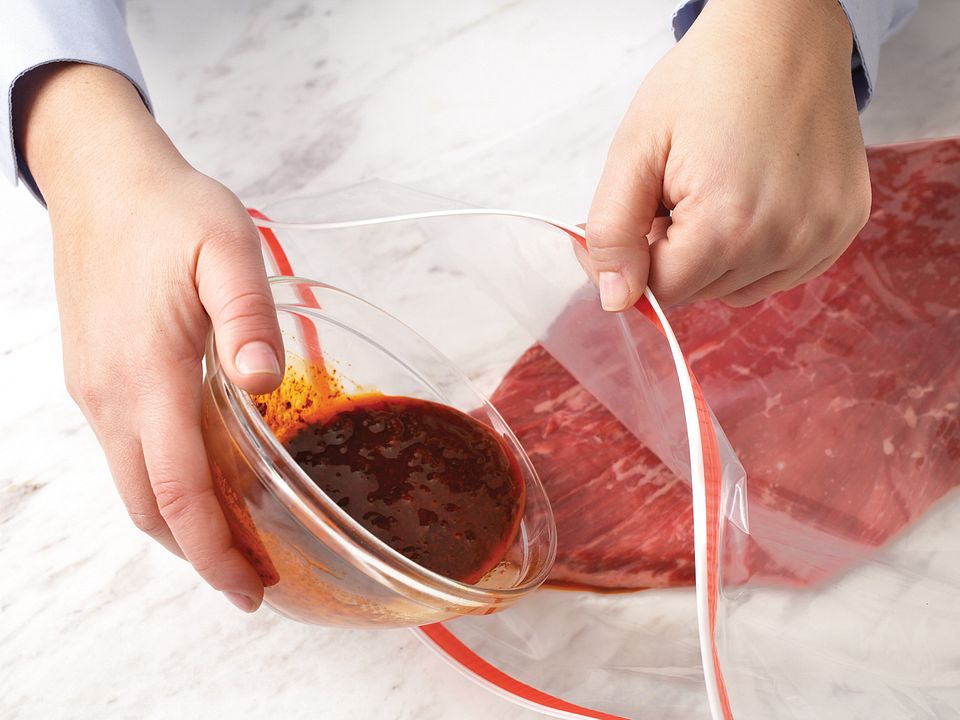
For most cuts, 30 minutes to 4 hours is the whole useful window. Boneless chicken breast peaks around 2 hours; thin steaks 2–4 hours; fish 15–60 minutes. Longer buys almost nothing, because marinade flavor travels less than a millimeter into muscle. Only salt penetrates meaningfully. USDA allows poultry up to 2 days in marinade — but that is a texture caveat, not a safety limit, and the two are constantly confused.
The parts that matter
- Marinades do not penetrate. Red wine measured less than 1 mm into beef after 18 hours. Salt, being a tiny ion, travels roughly 5–21 mm in 24 hours. Both facts are true; they describe different molecules.
- “24 hours” has no measurement behind it. We traced it to a circular citation loop: USDA describes what recipes say, and the web then cites USDA as the authority for it.
- Sugar in a marinade can make grilled chicken more mutagenic, not less. The famous “90% carcinogen reduction” study also found one compound rose more than tenfold, and found sugar was involved.
- Marinades do not tenderize tough cuts. Acid softens the outer few millimeters and degrades them if left too long. That is not the same thing.
- USDA has no consumer marinating fact sheet. The expected page returns a 404, and the boiling instruction varies across USDA’s own materials from no duration to one minute to “a few minutes.”
How long should you marinate? The table
Every row carries a grade for how much evidence is actually behind it. I think that is more useful than a confident number, and no other page on this subject grades itself.
| Cut | Useful window | Hard stop | Evidence | Basis |
|---|---|---|---|---|
| Boneless skinless chicken breast | 30 min – 2 h | 4 h | B | Test-kitchen work found 2 h optimal and texture failure at 4 h (“compressed and slightly rubbery”), total failure by 6 h |
| Chicken thighs, bone-in pieces | 2–12 h | 24 h | C | Thicker, more connective tissue, more forgiving; practitioner consensus, no measurement |
| Chicken in dairy or buttermilk | up to 24 h | 24 h | A | Peer-reviewed: at 48 h palatability and microbiological safety both declined versus 24 h |
| Whole chicken, skin on | 4–24 h | 24 h | C | Skin slows contact with the meat; ATK allows 24 h for low-acid marinades |
| Thin steak — skirt, flank, hanger | 1–4 h | 8 h | B | ATK puts the ceiling at 90 min for flank; beyond that it reports no gain and risk of mushiness |
| Thick steak — ribeye, strip, sirloin | 2–12 h in a low-acid marinade | 24 h | D | Widely recommended, never measured. Salt is doing the work; consider a dry brine instead |
| Pork chops | 2–8 h | 24 h | D | Extension guidance, no underlying measurement |
| Pork shoulder, tough roasts | Marinade adds little | — | B | Nothing reaches the interior. Season the surface; the cook does the tenderizing |
| Shrimp, scallops | 15–30 min | 30 min | C | Extension guidance; acid begins to opaque the surface quickly |
| Fish fillets | 15–60 min | 60 min | C | Extension guidance across multiple services; delicate protein |
| Anything in an enzyme marinade (fresh pineapple, papaya, kiwi, ginger, fig) | 15–30 min | 2 h | A | Peer-reviewed: past the optimum, shear force keeps falling while eating quality collapses into “mushy” with an aftertaste |
| Vegetables, firm | 30 min – 1 h | — | C | Practitioner consensus |
Evidence grades. A = peer-reviewed, measured outcome. B = practitioner testing with a disclosed method. C = institutional or practitioner assertion without an underlying measurement. D = widely repeated with no measurement we could find behind it.
Notice how few A grades there are. That is not us being coy — it is the actual state of the evidence, and it is the most honest thing anyone can tell you about marinating times.
The organizing variable should be thickness, not species. Every page on this subject sorts by animal — “chicken,” “steak” — when what actually governs the outcome is how far the marinade has to travel and how much surface is exposed relative to mass. A half-inch skirt steak and a two-inch ribeye are different problems wearing the same word.
Download the marinating-times dataset (CSV)
Twelve cuts with a useful window, a hard stop, an evidence grade and the basis for each, plus the grading key and our derived salt-diffusion depth estimates. Free to reuse with attribution (CC BY 4.0).


How far does marinade actually penetrate?
This is the fact everything else hangs on, and the two most-cited sources on the internet appear to contradict each other. They do not. They are measuring different molecules.
The measurement that says “barely at all”
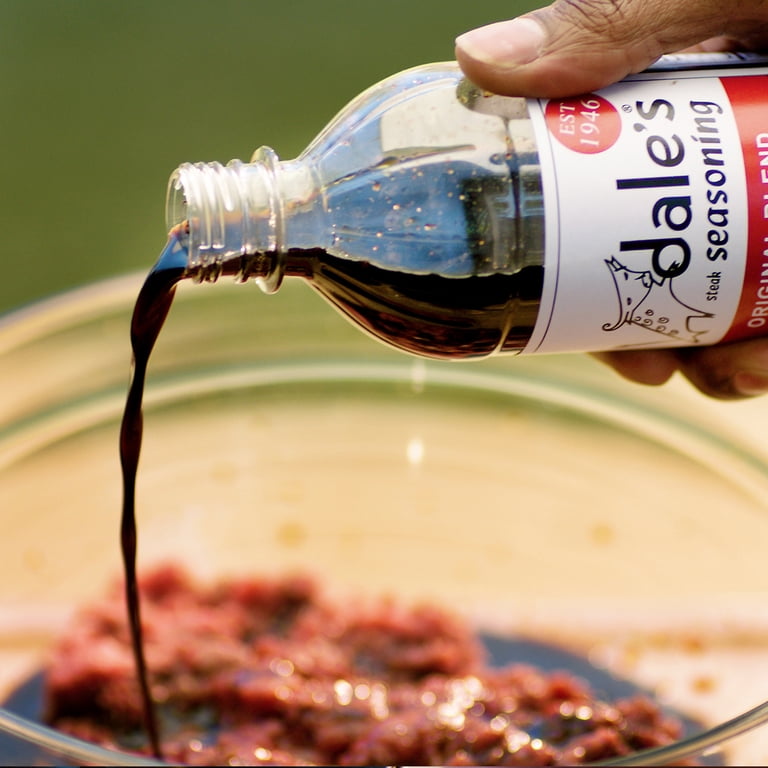
America’s Test Kitchen soaked beef short ribs in red wine at intervals from one hour to eighteen, then measured the band of purple the wine created. Their result: even after 18 hours, the wine penetrated less than 1 millimeter. Follow-up testing on boneless chicken breasts confirmed that soaking-liquid flavors do not reach the center.
AmazingRibs’ cross-section work agrees in direction: penetration “rarely more than 1/8″, even after many hours of soaking,” with large flavor molecules doing most of their work within a sixteenth of an inch.
The measurement that says “centimeters”
Meanwhile the peer-reviewed literature publishes salt diffusion coefficients in muscle. Applying the standard diffusion length scale to two published values gives:
| Time | Slower estimate | Faster estimate |
|---|---|---|
| 30 minutes | 0.8 mm | 3.1 mm |
| 2 hours | 1.5 mm | 6.1 mm |
| 4 hours | 2.1 mm | 8.6 mm |
| 8 hours | 3.0 mm | 12.2 mm |
| 24 hours | 5.2 mm | 21.1 mm |
| 48 hours | 7.3 mm | 29.9 mm |
Our calculation from published diffusion coefficients, using both conventions the literature uses. Treat it as an order-of-magnitude bracket, not a precise depth.
The reconciliation
Molecular size is the whole story. Sodium and chloride are single ions. Sucrose is 45 atoms. The compound that gives garlic its character is 18 atoms and garlic powder is larger still. Anthocyanins — the purple in red wine — are large polyphenols. Oil is not water-soluble and does not travel through a water-based tissue at all.
Penn State’s food scientists make the same point about enzymes: papain “takes longer to penetrate into the meat because the tenderizing agent is a protein, which is much larger than the agents in fruit juices, vinegars or alcohol.”
And there is an academic anchor. A University of Georgia doctoral study on marinade penetration in chicken breast — using vacuum tumbling, which is far more aggressive than anything a home kitchen can do — found marinade “only near the surface of the chicken breast meat even at the elevated temperature of vacuum tumbling.”
So: salt goes in. Flavor stays on. Every practical conclusion on this page follows from that one sentence.
A warning about numbers you will see quoted. The food-science literature reports marinade uptakes of 15–20% of meat weight. Those figures come from industrial vacuum tumbling — mechanical agitation at reduced pressure. They are not achievable by putting meat in a bag in your refrigerator, and presenting them as if they were is the single most common way food writing misuses this research.
What is a marinade actually doing?
“Marinade” is not one thing. It is up to four ingredients doing four unrelated jobs on four different timescales, and every page we surveyed treats it as a single undifferentiated liquid. Separating them is the key to knowing how long to wait.
| Component | Penetrates? | What it does | Failure mode | Time limit |
|---|---|---|---|---|
| Salt | Yes — millimeters to centimeters | Dissolves myofibrillar protein, raises water-holding capacity, improves cooking yield, seasons | Over-salting; texture turns springy in ground meat | Hours to days — the slowest and most useful component |
| Acid (vinegar, citrus, wine, buttermilk, yogurt) | Surface only | Increases collagen solubility, lowers shear force at the surface, adds brightness | Denatured, mushy, chalky exterior | Hours. Dairy acids on poultry: 24 h is the measured ceiling |
| Enzymes (papain, bromelain, actinidin, ficin, zingibain) | Surface, slowly — they are proteins | Actually cleave proteins; real tenderization | “Excessive tenderization (mushy texture) and poor quality due to an indiscriminate breakdown of proteins” | Minutes to 2 hours. The most dangerous component by far |
| Oil, sugar, herbs, spices | No | Surface adhesion, browning, aroma in the crust, carrying fat-soluble aromatics on the exterior | Sugar burns; oil causes flare-ups | Irrelevant to time — these work on contact |
Salt: the only component that earns a long soak
A study that separated the mechanisms within one experiment — comparing water, 4% salt, salt plus lactic acid, and soy sauce on chicken breast — concluded that “water-holding capacity, marination and cooking yields, and solubility of myofibrillar proteins were mainly affected by the presence of salt in the marinade, rather than by pH alternation.”
That single finding refutes two popular claims at once: that acid is what helps meat hold water (it is not; salt is), and that acid does nothing at all (it does — the same study found acid increased collagen solubility and decreased shear force).
USDA’s poultry page quotes Dr. Alan Sams of Texas A&M to the same effect on salt: “It dissolves protein in muscle, and the salt and protein reduce moisture loss during cooking.”
The practical implication is uncomfortable for the whole category: if salt is the active ingredient and the rest sits on the surface, then for a thick steak or a whole bird you are usually better off dry brining and adding the flavorings shortly before cooking. You get the salt penetration without the wet surface that fights your crust.
Acid: softens the outside, then ruins it
Does acid tenderize? The evidence is actually split, so here is both sides.
America’s Test Kitchen’s position is that acidic ingredients do not tenderize — they make meat mushy when over-marinated — and recommends using them sparingly and briefly. The peer-reviewed work says acid does measurably lower shear force by increasing collagen solubility. Ultrasound-assisted work on beef found organic acids produced “a fragmented and irregular muscle fibre structure” under the microscope.
Both are right, and the resolution is depth. Acid physically disrupts fibres — in the outer few millimeters it can reach. That reads as tender briefly and as mushy soon after. It will not turn a chuck roast into a ribeye, because it never gets there.
The best measured ceiling we found comes from a study of poultry breast marinated in buttermilk and acid whey at 24 versus 48 hours. At both times, shear force, hardness and chewiness dropped. But at 24 hours the marinade also inhibited the growth of aerobic bacteria and Pseudomonas, while “longer marinating time reduced the product palatability and decreased its microbiological safety.” Twenty-four hours in a dairy-acid marinade is a real, measured ceiling — on both quality and safety.
Even USDA’s mechanism claim has a shaky source. FSIS states that acid breaks down poultry tissue with a tenderizing effect and helps it hold more liquid — and attributes the tenderizing claim to the Woman’s Day Encyclopedia of Cookery. The “holds more liquid” half is contradicted by the peer-reviewed work above, which attributes water-holding to salt rather than pH. We note this factually, not to score a point: it is a fair illustration of how thin the evidence base is even at the federal level.
Enzymes: the ones that actually work, and the ones that go wrong fastest
Plant proteases actually cut proteins. Papain from papaya, bromelain from pineapple, ficin from figs, actinidin from kiwifruit and zingibain from ginger all do real work, which is exactly why they are the easiest way to destroy a piece of meat.
A review of plant proteases in meat tenderization states the failure mode plainly: “The uncontrolled plant protease action could cause excessive tenderization (mushy texture) and poor quality due to an indiscriminate breakdown of proteins.”
A study on papain in sous-vide beef quantifies the shape of the curve, and it is the most important thing to understand about enzymes: at high papain doses and long exposure, shear force kept dropping — the meat kept getting technically more tender — while cooking losses rose above 27% and tasters described it as “mushy” with an “aftertaste.” The optimum used a much lower dose and a much shorter time. Past the optimum, “more tender” and “better” move in opposite directions.
Not all enzymes are equal, and the evidence separates them. Kiwifruit extract is the gentlest and best-evidenced: a study using 87 grass-fed steers and 2,080 individual untrained consumers found it improved tenderness, juiciness, flavor and overall liking on both a striploin and a tougher outside flat. That is by far the largest consumer panel in this literature, and it is positive. Do not lump actinidin in with papain’s reputation.
On canned pineapple: the enzyme is heat-labile. Purified bromelain has a half-life of about 81 minutes at 45 °C, falling to roughly 5 minutes at 75 °C. Commercial canning and juice pasteurization run well above that for longer than that, so canned pineapple and shelf-stable juice should have little residual proteolytic activity. We will be exact about what that is: the kinetics are measured, the conclusion about a specific can on a specific shelf is an inference. Nobody has assayed a can. Use fresh pineapple if you want the effect — and use it briefly.
Sugar and oil: surface only, and sugar has a temperature problem
Table sugar begins to melt at 320 °F and starts to brown at about 338 °F. Maillard browning of proteins gets going around 310 °F.
Now look at where you are cooking. Direct grilling routinely runs 400–550 °F at the grate — see our charcoal grill setup guide for how wildly the published definitions of “medium-high” vary. A sugary marinade on a direct fire is past caramelization and into carbonization long before the interior is cooked. That is the entire explanation for burnt-outside, raw-inside grilled chicken, and no page on this subject gives it with a number.
The fix is structural, not a matter of watching more carefully: build a two-zone fire, cook over the cool side, and move to direct heat for the last few minutes — or hold the sweet component back and brush it on at the end.
Sugar has a second, subtler cost: adding a polyol to a cure measurably slowed salt diffusion in one study. A heavily sweetened marinade retards the one component that was actually going to do something.
Oil we will be honest about: no source we found measured oil penetration into muscle. It carries fat-soluble aromatics on the surface, promotes browning and keeps things from sticking. Any claim about oil ferrying flavor into the meat is unverified.
Marinating food safety
Before the rules, a finding worth knowing: USDA FSIS has no dedicated consumer marinating fact sheet. The URL where one would live returns a 404. Guidance is split across a grilling page and a poultry page, and it is not perfectly consistent between them.
- Marinate in the refrigerator, never on the counter. FSIS is unambiguous. Illinois Extension adds the line every marinade recipe should carry: “do not rely on marinades to kill bacteria and other microorganisms.”
- Reserve sauce before the meat goes in. FSIS: “If some of the marinade is to be used as a sauce on the cooked food, reserve a portion of the marinade before putting raw meat and poultry in it.” This is better practice than boiling used marinade and it removes the question entirely.
- If you must reuse it, bring it to a full rolling boil. Here USDA is internally inconsistent: its poultry page says “boiled first” with no duration, its grilling page says “a boil for a few minutes,” and an archived USDA script and Utah State Extension both say one minute. I recommend the conservative reading: a full rolling boil for at least one minute.
- Container: FSIS names food-grade plastic, stainless steel or glass. Utah State Extension supplies the reactive-metal warning FSIS does not: do not marinate in a metal container, since the acid can react with the metal. Aluminum and cast iron are the ones to avoid.
- Do not wash and reuse plastic bags that held raw meat and marinade.
- Keep raw marinating meat on the bottom shelf on a tray so nothing drips onto ready-to-eat food, and never serve cooked meat on the plate that held it raw.
- Cook to temperature: beef, pork, veal and lamb steaks, roasts and chops to 145 °F with a 3-minute rest; ground meats to 160 °F; all poultry to 165 °F. See how to use a meat thermometer for where to put the probe.
The most misreported sentence in marinating. You will read everywhere that “USDA says the maximum safe marinating time is 2 days.” Read the actual text: FSIS says it is safe to keep food in marinade longer than 24 hours, and that “after two days it is possible that the marinade can start to break down the fibers of the meat, causing it to become mushy.”
Two days is a texture caveat, not a safety limit. The safety limits are the ordinary ones for refrigerated raw meat. FSIS does publish a firm figure for one case — “Poultry can be refrigerated for up to 2 days in a marinade” — and the widely-quoted “5 days for other meats” pairing appears only in a USDA social media post, not on any live FSIS page we could reach.
One genuine gap: FSIS does not address freezing meat in marinade anywhere. Its freezing page never mentions the word. That is neither permission nor prohibition, and we are not going to manufacture either.
Does marinating reduce grilling carcinogens?
This is the strongest evidence-backed reason to marinate, and it is also where the reporting has gone furthest off the rails. Care is warranted, so here is the whole thing.
Grilling meat hot forms heterocyclic amines and polycyclic aromatic hydrocarbons. Marinating measurably reduces heterocyclic amine formation. But three things need saying together.
1. What the National Cancer Institute actually says
NCI’s fact sheet — last reviewed July 11, 2017 — states that animal studies used doses “equivalent to thousands of times the doses that a person would consume in a normal diet,” and that “population studies have not established a definitive link between HCA and PAH exposure from cooked meats and cancer in humans.” It also notes that IARC did not conclude the compounds were associated with cancer incidence, and that no federal guidelines address consumption of foods containing them.
Marinating does not appear on NCI’s list of recommended mitigations at all. Anyone telling you “the NCI says marinate to reduce cancer risk” is misrepresenting the source. The accurate statement is: the peer-reviewed literature shows marinades reduce heterocyclic amine formation; NCI does not list marinating among its recommendations, and NCI holds the human link is not established.
2. The honest number
A meta-analysis of seasoning effects on these compounds — the first systematic review with meta-analysis on the topic — found spices before grilling gave a response ratio of 0.63, roughly a third fewer on average. Garlic and onion are reported together as a single pooled category at 0.57, and pepper at 0.63, credited to antioxidant and electron-transfer capacity. The meta-analysis measures heterocyclic amines and polycyclic aromatic hydrocarbons together, not heterocyclic amines alone.
Individual studies report bigger effects. Kansas State work on beef steaks grilled at 400 °F with commercial marinades found total heterocyclic amines fell by 88% (Caribbean), 72% (herb) and 57% (Southwest), with the polyphenolic antioxidants carnosic acid, carnosol and rosmarinic acid credited.
Lead with the meta-analysis, not the headline. Roughly a third fewer, on average, from herb-and-spice-rich seasoning. That is a real, defensible, useful number.
3. The reversal nobody reports
The famous “more than 90% reduction” study also found one carcinogen went up more than tenfold — and found sugar was involved.
The 1997 Lawrence Livermore study on marinating and grilled chicken is the source of the >90% figure everyone quotes. Read the whole abstract and it says:
- PhIP fell 92 to 99% 92–99% — the number that gets quoted.
- “Conversely, MeIQx increased over 10-fold with marinating” — at the 30- and 40-minute cooking times.
- At 40 minutes of grilling, the marinated chicken was more mutagenic in the Ames assay than the unmarinated control.
- “Marinating chicken in one ingredient at a time showed that sugar was involved in the increased MeIQx.”
Nearly every marinade on the internet contains brown sugar, honey, maple syrup or balsamic. And an Extension article we traced repeats the “more than 90 percent” line while omitting the reversal entirely — a clean example of how a real finding degrades as it travels.
Actionable version: keep sugar low, and keep grilling times short. A sugary marinade on a long, hot cook can leave you worse off than no marinade at all. Set against NCI’s position that the human link is not established, this is not a reason for alarm — it is a reason not to repeat the headline without the footnote.
What every marinade page gets wrong
- “Marinate for 24 hours.” We could not trace this to a single measurement. FSIS says most recipes recommend six to 24 hours — it is describing the folk consensus — and the web then cites FSIS as the authority for the number FSIS got from the web. A closed loop.
- Treating “chicken” and “steak” as units. Thickness governs everything and almost nobody sorts by it.
- Conflating flavor, tenderization and browning. Three different mechanisms, three different clocks.
- Irreconcilable maxima nobody flags. On boneless chicken breast alone the top results offer 90 minutes, 2 hours, 3 hours, 4–6 hours as optimal, 24 hours, and 2 days — a 32-fold range. One page’s optimum is another’s measured failure zone.
- “Poke holes with a fork so it penetrates.” No source we found measures any benefit — including FSIS, which suggests it.
- “Vacuum marinating does in 20 minutes what soaking does in hours.” A commercial claim with no evidence behind it. The research that accelerates marination uses tumbling, ultrasound or pulsed electric fields — all of which add energy or agitation a static canister does not.
How to actually marinate
- Decide what you want. Seasoning depth on a thick cut? Dry brine instead. Surface flavor and browning? Marinade, briefly.
- Salt it properly. Salt is the component that works. Aim for roughly 0.5–0.75% of the meat’s weight in salt across the whole preparation, and mind your salt brand — a teaspoon of Diamond Crystal is 2.8 g, a teaspoon of Morton is 4.8 g.
- Keep acid moderate and the clock short. Hours, not days. Dairy acids on poultry: 24 hours maximum.
- Treat enzymes as a timer, not an ingredient. Fresh pineapple, papaya, kiwi or ginger: 15–30 minutes, 2 hours absolute maximum.
- Hold the sugar back. Add sweet glazes in the last few minutes over indirect heat.
- Reserve the sauce before the meat goes in.
- Pat the surface dry before it hits the grate. A wet surface steams instead of browning — you spend the first minutes boiling off marinade rather than building crust.
- Cook over two zones and finish to temperature.
Related reading
If your goal is seasoning that actually reaches the meat, start with dry brining — it is the same salt mechanism without the wet surface. For fire management, our charcoal grill setup guide covers two-zone cooking and the grilling-temperature confusion that makes sugary marinades burn. For doneness, see how to use a meat thermometer and the smoking times and temperatures chart. Our earlier piece on brine vs marinade is the short version of the choice, and beer can chicken is what happens when a flavor-penetration claim goes untested for thirty years. For rubs, which do the same surface job without the liquid, see our guide to BBQ rubs.
Elsewhere in the Brand Avalanche network, Current Homesteading covers acid, salt and safety from the preservation side in its home canning times and pressures chart.
What we refused to publish
- “Marinades tenderize meat.” No source supports whole-muscle tenderization from a consumer marinade.
- “Acid tenderizes tough cuts” unqualified. It softens the outer few millimeters and degrades them past a point. FSIS carries the unqualified claim, sourced to a cookbook.
- “The NCI recommends marinating to reduce cancer risk.” Marinating does not appear on NCI’s fact sheet.
- “More than 90% carcinogen reduction” as a headline. That figure is specific to one compound, in one study that also found another rose tenfold.
- “71% reduction” attributed to the Kansas State journal paper. The published journal figures are 88%, 72% and 57%; the 71% comes from an associated thesis.
- Industrial 15–20% marinade uptake figures presented as home-kitchen outcomes.
- “Canned pineapple contains no bromelain” as a measured product fact. The kinetics are verified; the specific product claim is an inference, and we labeled it.
- A claim that meat “recognizes” naturally-occurring acids and “panics” at vinegar. This appears on a major food site. It is not food science.
Frequently Asked Questions
How long should you marinate meat?
For most cuts, 30 minutes to 4 hours is the whole useful window. Boneless chicken breast peaks around 2 hours, thin steaks 2–4 hours, and fish 15–60 minutes. Longer marinating buys almost nothing in flavor.
Does marinade actually penetrate the meat?
Barely. Red wine measured less than 1 mm into beef after 18 hours — marinade flavor essentially stays on the surface. Salt is the exception: as a small ion it travels roughly 5–21 mm in 24 hours, which is why salt, not the rest of a marinade, is doing most of the seasoning work below the surface.
Does marinating tenderize tough cuts of meat?
No, not meaningfully. Acid in a marinade softens only the outer few millimeters of the meat, and it actually degrades that surface texture if left too long — that is a different effect from tenderizing the interior of a tough cut.
Does sugar in a marinade reduce cancer-linked compounds when grilling?
Not reliably. The often-cited study claiming a 90% reduction in one carcinogen also found a different compound rose more than tenfold in the same marinade, and sugar was implicated in that increase. The full picture is more complicated than the “90%” headline usually quoted.
Sources
- USDA FSIS, Grilling and Food Safety, last updated March 21, 2022; Poultry: Basting, Brining, and Marinating, last updated May 20, 2024; Freezing and Food Safety, last updated August 9, 2024
- National Cancer Institute, Chemicals in Meat Cooked at High Temperatures and Cancer Risk, reviewed July 11, 2017
- Salmon C.P., Knize M.G., Felton J.S. (1997), “Effects of marinating on heterocyclic amine carcinogen formation in grilled chicken,” Food and Chemical Toxicology 35(5):433–441
- Smith J.S., Ameri F., Gadgil P. (2008), “Effect of marinades on the formation of heterocyclic amines in grilled beef steaks,” Journal of Food Science 73(6):T100–T105
- Neves T.M. et al. (2021), “Effects of seasoning on the formation of heterocyclic amines and polycyclic aromatic hydrocarbons in meats: A meta-analysis,” Comprehensive Reviews in Food Science and Food Safety 20(1):526–541
- Kim H.W. et al. (2014), “Effects of soy sauce on physicochemical and textural properties of tumbled chicken breast,” Poultry Science 93(3):680–686
- Augustyńska-Prejsnar A. et al. (2020), “Quality and Safety of Marinating Breast Muscles of Hens… with Buttermilk and Whey,” Animals 10(12):2393
- Mohd Azmi S.I. et al. (2023), “Application of Plant Proteases in Meat Tenderization,” Foods 12(6):1336
- de Oliveira T.L.C. et al. (2024), “Impact of adding papain to sous vide cooking…,” Journal of Texture Studies 55(4):e12860
- Lees A. et al. (2019), “Influence of Kiwifruit Extract Infusion on Consumer Sensory Outcomes…,” Foods 8(8):332
- Zhou W. et al. (2021), “Purification and characterization of bromelain from pineapple peel waste,” Journal of Food Science 86(2):385–393
- Chen D. et al. (2023), Foods 12(7):1451; Dong Z. et al. (2023), Journal of Food Science 88(5):2023–2035 — NaCl diffusion coefficients
- Xiong Y.L. & Kupski D.R. (1999), Poultry Science 78(7):1053–1059 — time-dependent marinade absorption
- Palang E.Y. (2004), doctoral dissertation, University of Georgia — marinade penetration in chicken breast
- America’s Test Kitchen / Cook’s Illustrated, Marinating Myths; Guide to Marinating for Flavor
- Illinois Extension, Marinating; Utah State University Extension, Tips on Safe Meat Marination (2009) and Tips on Marinating Meat (2011)
- Penn State College of Agricultural Sciences, on protease penetration, July 1, 1997
- Gisslen, Professional Cooking, ch. 6 — sucrose melting and browning temperatures
How this guide was made. We separated the four things a marinade does and looked for a measurement behind each, then graded every timing recommendation by how much evidence actually supports it — which is why most rows are a C or a D. Peer-reviewed work is cited as such; practitioner cross-section measurements are labeled as practitioner measurements; our diffusion depths are our own calculation from published coefficients and are labeled as estimates. Where the popular version of a study omits an inconvenient half — as with the sugar reversal — we published both halves. Researched, sourced, and human-edited.


Reader Favorites
- Budget-Friendly BBQ Tips: Master Savings Now!
- Cleaning Your Gas Grill Cooking Grate: Make it Great Again
- Stainless Steel BBQ Grill Cleaning: Master Maintenance Now
- Best Beef Breeds: Pick The Best For Smoking Now
- Lid Open or Closed: Master Your Grill Heat Now
- Different Cuts of Pork: Elevate BBQ Mastery Now
BBQ Temperature Charts & Guides
Four quick-reference tools every cook bookmarks — target temps, pull temps, and how long leftovers keep, plus the full BBQ glossary.
| Cut | Pull | Time |
|---|---|---|
| Brisket | 203°F | 12–16h |
| Spare ribs | 195–203°F | ~6h |
| Pork butt | 203°F | 12–14h |
Target temps & times for 17 cuts, sortable by meat, weight and doneness.
View full chart →| Doneness | Target |
|---|---|
| Rare | 125–130°F |
| Medium-rare | 130–135°F |
| Well-done | 160°F+ |
Rare to well-done, burger safety (160°F) and resting times.
View full chart →| Food | Fridge | Freezer |
|---|---|---|
| Brisket, ribs | 3–4 days | 2–3 mo |
| Smoked sausage | 1 week | 1–2 mo |
| Potato salad | 3–4 days | no freeze |
How long smoked meats & sides keep — fridge and freezer, USDA-based.
View full chart →Every pit term decoded — cooking methods, gear, cuts, wood, and technique, A to Z.
Open the glossary →