
Poor Man’s Burnt Ends: Chuck Roast Burnt Ends Done Right
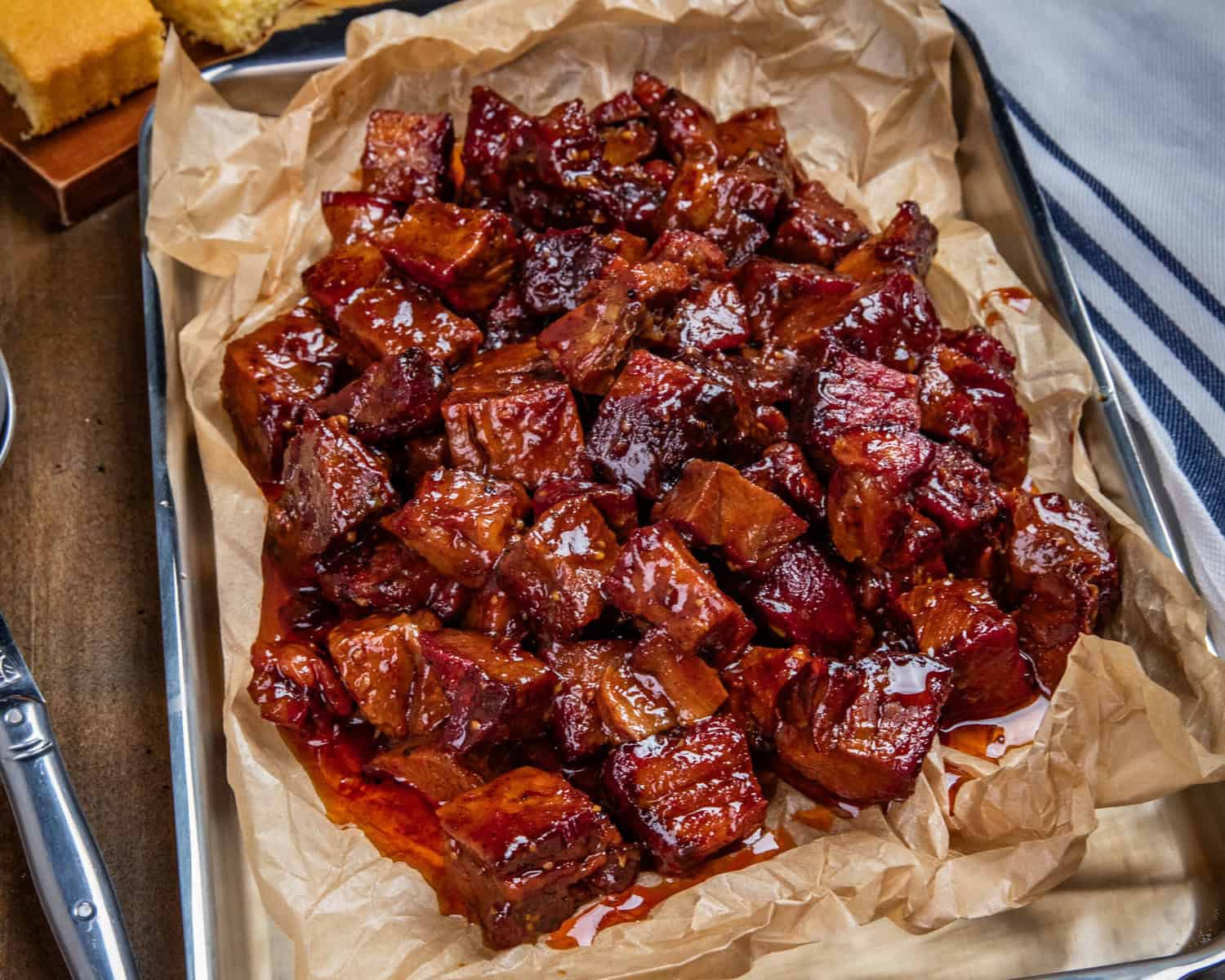
Poor man’s burnt ends are cubed, sauced and re-smoked chuck roast. Smoke a 3–4 lb chuck roast at 250–275 °F until it reaches about 165 °F and takes bark, cube it into 1½-inch pieces, toss with sauce and a little brown sugar in a foil pan, then return it to the smoker for 1½–2 hours until the cubes are tender. Total time runs 6–8 hours.
Last updated: October 10, 2026 · Originally published August 28, 2026
Key takeaways
-
Marbling is non-negotiable:Chuck roast has less fat than a brisket point, so pick USDA Choice or better with visible intramuscular flecks—not big chunks of hard fat. That fat renders into the cubes and keeps them juicy instead of dry and chewy.
- Cube size and timing decide bark vs. moisture: Cut into 1½–2 inch cubes (they shrink). Cubing before smoking gives bark on every side and shortens the cook; cubing after smoking the whole roast first preserves more moisture. Either works, but going smaller than 1 inch almost always dries them out.
- Cook to feel and temperature, never the clock: Smoke at 225–275°F until the meat hits roughly 160–170°F and has a set bark, wrap (butter + honey or tallow is the usual combo), then continue until 195–205°F and a probe or toothpick slides in with almost no resistance. Time estimates vary wildly by smoker and roast size.
- The wrap-and-glaze stage is where they become “burnt ends.”: After wrapping and reaching tenderness, toss the cubes in a light coating of sauce (plus a little extra brown sugar or honey if you want stickiness) and return them uncovered so the glaze caramelizes. Too much sauce too early turns the bark soggy and one-note sweet.
- Moisture management beats extra smoke: Spritz every 30–45 minutes with a 50/50 beef broth and water mix (or apple juice) once the surface looks dry. Keep the smoke thin and blue. Dirty or heavy smoke plus a dried-out surface is the fastest way to bitter, tough cubes.
The lab data: chuck is more tender than brisket
Warner-Bratzler shear force is the pounds of force needed to shear the cooked muscle. Lower is more tender. Both brisket muscles rank tough, while the principal chuck muscles rank tender — which is why the “poor man’s” cut beats the thing it imitates.
| Muscle | Found in | lb | kg | Tenderness |
|---|---|---|---|---|
| Infraspinatus | Chuck (flat iron) | 7.1 | 3.20 | Tender |
| Serratus ventralis | Chuck roll | 7.8 | 3.54 | Tender |
| Multifidus dorsi | Chuck roll | 8.0 | 3.65 | Tender |
| Subscapularis | Chuck roll | 8.3 | 3.76 | Tender |
| Complexus | Chuck roll | 8.8 | 3.99 | Intermediate |
| Superficial pectoral | Brisket point (IMPS 120B) | 10.7 | 4.86 | Tough |
| Deep pectoral | Brisket flat (IMPS 120A) | 10.8 | 4.92 | Tough |
| Trapezius | Chuck | 11.1 | 5.05 | Tough |
| Rhomboideus | Chuck roll | 11.3 | 5.12 | Tough |
| Longissimus dorsi (chuck) | Chuck roll | 11.4 | 5.15 | Tough |
Source: Calkins & Sullivan, Ranking of Beef Muscles for Tenderness, University of Nebraska–Lincoln / Cattlemen’s Beef Board, 2007. Download the full ten-muscle dataset (CSV).


The five things that make or break them
Chuck has less fat than a brisket point. Buy USDA Choice or better and look for the little white flecks running through the muscle. Hard exterior fat caps don’t count. That intramuscular fat is what keeps the cubes juicy after hours of smoke.
Cut 1½–2 inch cubes. They shrink. Cubing before the smoke gives you bark on every side and a shorter cook. Cubing after you smoke the roast whole first holds a little more moisture. Both work. Cubes under an inch almost always dry out.
Smoke at 225–275°F until the meat is around 160–170°F with a set bark. Wrap with butter and honey (or tallow). Keep going until 195–205°F and a probe or toothpick slides in with almost no resistance. Time estimates lie. Your thermometer and your fingers don’t.
Tenderness first, then a light sauce coating and back on the heat uncovered so the glaze caramelizes and gets tacky. Drown them in sauce too early and you lose the bark and end up with sweet stew meat.
Spritz with a 50/50 beef broth and water mix (apple juice works too) whenever the surface looks dry. Keep the smoke thin and blue. Dirty smoke plus a dried-out surface is how you get bitter cubes.
How I make them
- 3–4 lb well-marbled chuck roast
- Yellow mustard or a thin smear of oil as binder
- Generous beef rub (salt, pepper, garlic, paprika, a little brown sugar is plenty)
- 3 tbsp butter
- 2–3 tbsp honey
- ½–¾ cup of your favorite BBQ sauce
- Spritz: equal parts beef broth and water
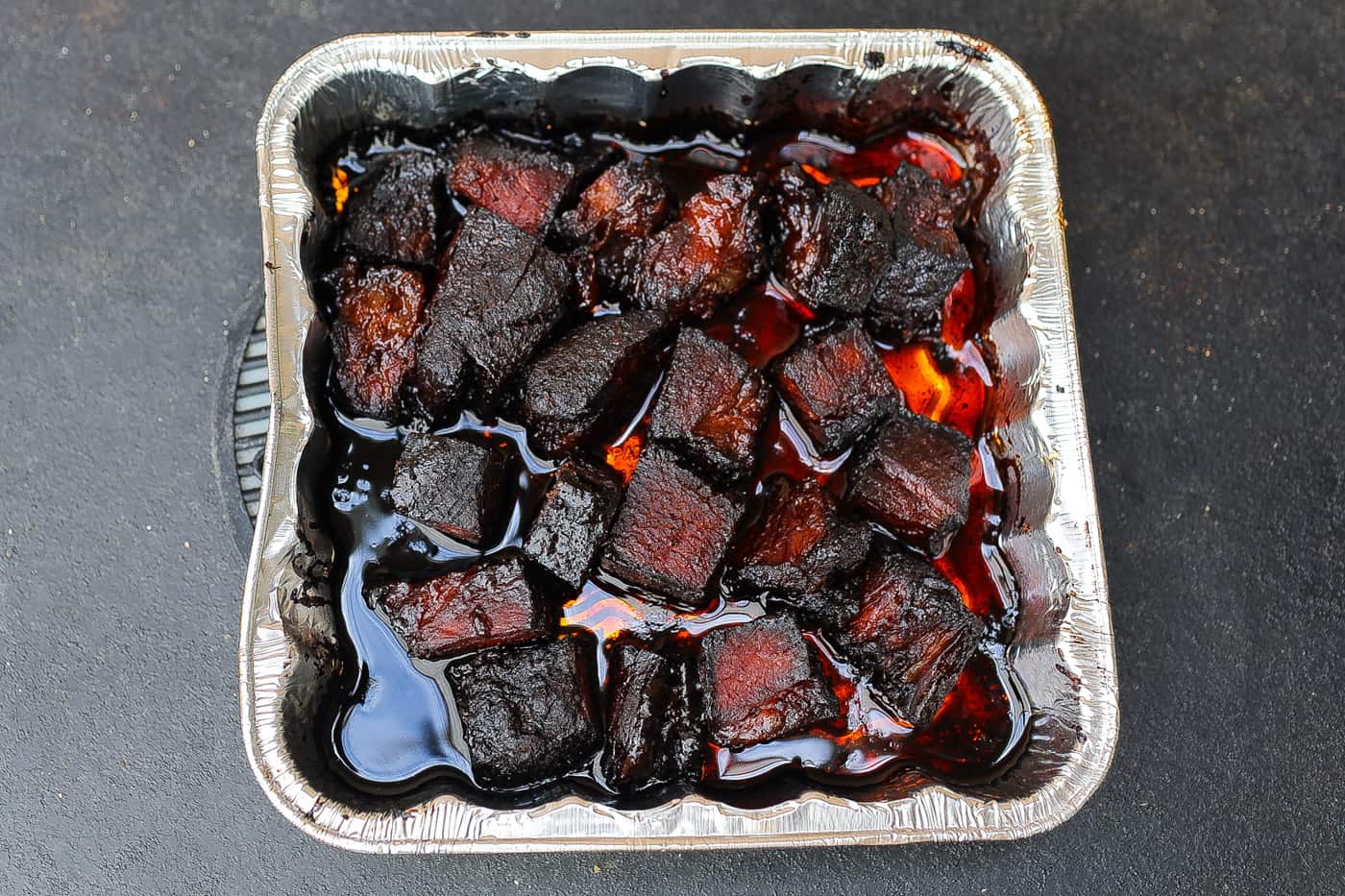
How to serve them so people actually fall in love

Do yourself a favor and buy the chuck. Give it the time. Follow the five points above. Then watch what happens when you set the tray down.

Reader Favorites
BBQ Temperature Charts & Guides
Four quick-reference tools every cook bookmarks — target temps, pull temps, and how long leftovers keep, plus the full BBQ glossary.
| Cut | Pull | Time |
|---|---|---|
| Brisket | 203°F | 12–16h |
| Spare ribs | 195–203°F | ~6h |
| Pork butt | 203°F | 12–14h |
Target temps & times for 17 cuts, sortable by meat, weight and doneness.
View full chart →| Doneness | Target |
|---|---|
| Rare | 125–130°F |
| Medium-rare | 130–135°F |
| Well-done | 160°F+ |
Rare to well-done, burger safety (160°F) and resting times.
View full chart →| Food | Fridge | Freezer |
|---|---|---|
| Brisket, ribs | 3–4 days | 2–3 mo |
| Smoked sausage | 1 week | 1–2 mo |
| Potato salad | 3–4 days | no freeze |
How long smoked meats & sides keep — fridge and freezer, USDA-based.
View full chart →Every pit term decoded — cooking methods, gear, cuts, wood, and technique, A to Z.
Open the glossary →