
Smoked Turkey Legs: The Fair-Style Pink Ham Leg
Smoked turkey legs are safe at 165°F. Smoke them at 225°F to 275°F, and take them to 175°F to 180°F if you want tender, pull-apart meat.
Last updated: October 17, 2026 · Originally published October 16, 2026
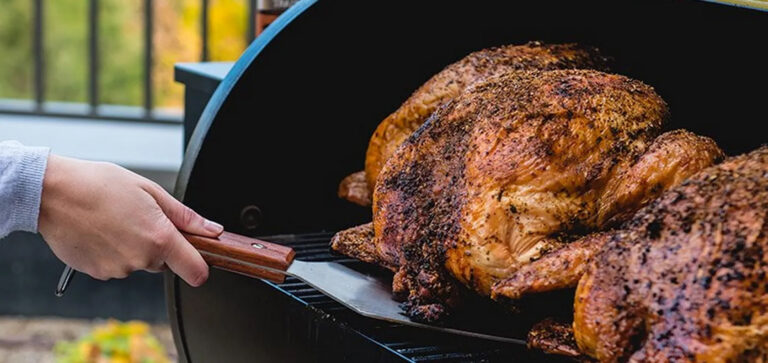
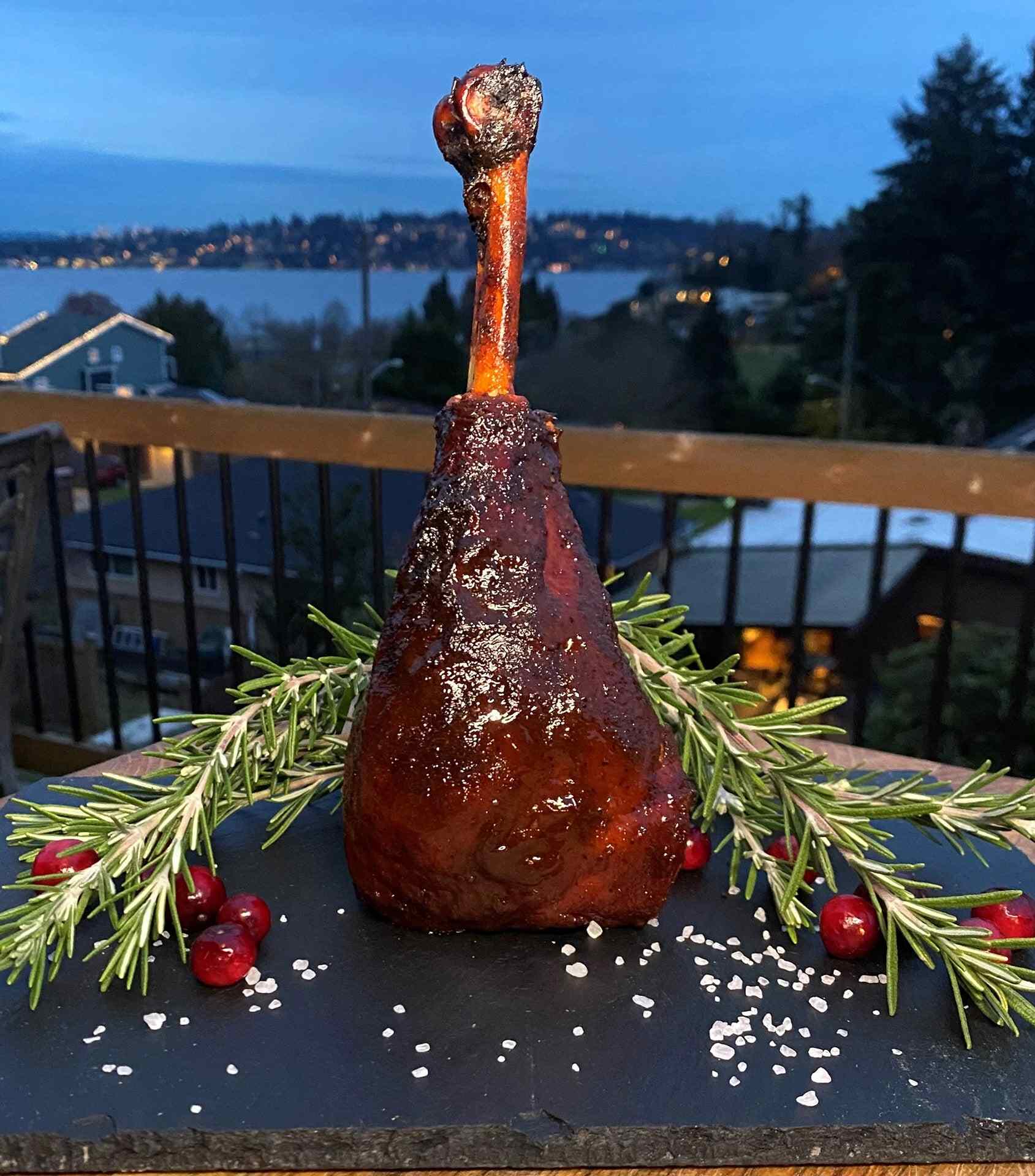
Somewhere at a county fair every summer, a grown man is walking around holding a turkey leg like a caveman’s club, and he has never looked happier. That leg is pink, salty and smoky, and it tastes a whole lot like ham. No, it is not ham. It only went to the same school. Being a turkey leg connoisseur myself, I wanted to see what was up behind fair-style smoked turkey legs: the cure, the brine by leg count, the pit temperature and the done temperature. Each one is credited to whoever published it.
Food safety note. The USDA says to cook all poultry, legs included, to 165°F, measured with a food thermometer. Thaw legs completely in the refrigerator before smoking, keep every brine at 40°F or below, and refrigerate leftovers within 2 hours. Curing salt contains sodium nitrite: weigh it on a scale, use only a cure labeled 6.25 percent sodium nitrite, and never substitute another curing product spoon for spoon.
The parts that matter
- Safe: 165°F in the thickest part, per the USDA.
- Tender: 175°F to 180°F is where Hey Grill Hey and Smoking-Meat.com pull theirs.
- Smoker: the USDA range for smoking is 225°F to 300°F.
- Pink and ham-like: that comes from a cure with 6.25 percent sodium nitrite, per Oregon State University Extension.
- Brine: about ½ gallon for every 3 legs.

Why Do Fair Turkey Legs Taste Like Ham?
Because they are cured. Oregon State University Extension explains that a commercial cure with 6.25 percent sodium nitrite turns poultry light pink after heating. Curing and smoking also adds a unique, delicate flavor. Smoked poultry without the cure comes out brownish-white, not pink. Hey Grill Hey says the same thing about its copycat theme-park legs: the curing salt is what gives them the signature pink color that looks almost like ham.
Pink smoked meat scares people, so hold on to this one. According to the USDA Food Safety and Inspection Service, smoked turkey meat is always pink. Poultry smoked outdoors can even show a pink rim after it has reached 165°F. The thermometer tells you it is done. The color does not.


Buying Turkey Legs
Size changes everything downstream, from how much brine you need to how long the legs sit in the smoke. According to Hey Grill Hey, grocery store hen legs run about ¾ to 1 pound apiece. The giant tom legs sold at Disney run 1½ to 2 pounds apiece. Hen legs are easier to find and make a more sensible serving per person.
Buy fresh legs if you can. If they are frozen, the USDA says to thaw meat and poultry completely before smoking, because a low smoker thaws it too slowly and lets it linger in the 40°F to 140°F “Danger Zone.” Thaw them in the refrigerator, never on the counter.
Cured Brine vs. Plain Brine
Here is the fork in the road. A plain salt brine gives you juicy, seasoned smoked turkey legs that look like barbecued chicken. A cured brine gives you the pink, ham-like fair leg. Both recipes below are per gallon of cold water, and both come from a government or university source, not from a guess.
Plain brine, on the USDA ratio. FSIS gives ¾ cup of salt per gallon of water, or 3 tablespoons per quart, and says table salt gives the best flavor. With Morton table salt at 1.5 grams per ¼ teaspoon, ¾ cup is 36 teaspoons x 6.0 grams = 216 grams. Add sweetener if you want it; Smoking-Meat.com uses 1 cup of brown sugar per gallon. Keep the legs submerged and covered in the refrigerator at least overnight, and no longer than 2 days.
Cured brine, from Oregon State University Extension. OSU’s tested curing brine is 5 gallons of water, 5 pounds of non-iodized salt, 3 pounds of sugar and ⅛ pound of cure containing 6.25 percent sodium nitrite. Divide everything by 5 for one gallon:
- 1 gallon cold water, 36°F to 40°F
- 1 pound, or 454 grams, non-iodized salt
- 0.6 pound, or 272 grams, sugar or brown sugar
- 0.025 pound, or 11.3 grams, cure with 6.25 percent sodium nitrite, such as Prague Powder #1
Check the Cure Math
Check the math, since that is what the scale is for. A gallon of water weighs about 3,785 grams, so the whole batch is 3,785 + 454 + 272 + 11.3 = 4,522 grams. The salt is 454 ÷ 4,522 = about 10 percent of the brine. The nitrite is 11.3 x 0.0625 = 0.71 grams, and 0.71 ÷ 4,522 works out to about 157 parts per million in the liquid, before the legs go in. The meat itself ends up lower than the liquid, and both sit under the 200 ppm federal cap for immersion-cured meat that our Equilibrium Brine Calculator checks against.
Two warnings, and I mean both of them. First, OSU says complete cures such as Morton Tender Quick replace most of the salt and sugar. If that is what you bought, follow its label and skip this formula. Second, OSU keeps the brine between 32°F and 40°F for the entire cure. For a refresher on why salt and acid behave differently, see our brine vs. marinade breakdown.
How Much Brine for Your Legs?
Smoking-Meat.com used half of a 1-gallon batch to brine 3 turkey legs, so plan on about ½ gallon of brine for every 3 legs. This scaler does the rest. Weigh everything, because salt brands do not measure the same by the cup.
| Legs | Water | Plain: table salt | Cured: salt / sugar | Cured: cure #1 |
|---|---|---|---|---|
| 1 to 3 | ½ gal | 108 g (6 Tbsp) | 227 g / 136 g | 5.7 g |
| 4 to 6 | 1 gal | 216 g (¾ cup) | 454 g / 272 g | 11.3 g |
| 7 to 9 | 1½ gal | 324 g (1 cup + 2 Tbsp) | 680 g / 408 g | 17.0 g |
| 10 to 12 | 2 gal | 432 g (1½ cups) | 907 g / 544 g | 22.7 g |
Plain column: USDA FSIS ratio of ¾ cup salt per gallon, at 6.0 grams per teaspoon for Morton table salt. Cured columns: Oregon State University Extension curing brine, divided by 5 per gallon. Volume for brine: ½ gallon per 3 legs, from Smoking-Meat.com.

How Long to Brine Turkey Legs
That depends on which brine you mixed. For the plain brine, FSIS says at least overnight for best results, with the poultry in the refrigerator no longer than 2 days after thawing. For the cured brine, OSU keeps a 2-pound bird in the brine for 2 to 3 days and larger birds one day per pound. Even a big tom leg tops out around 2 pounds, per Hey Grill Hey, so this recipe uses the short end of that window: 2 days. When the cure is done, OSU rinses the meat in fresh, cold tap water and soaks it overnight in cold water to pull out excess salt. Then it drips dry for about half an hour before smoking. Clean and sanitize the sink afterward, the way FSIS asks after any raw poultry soak.
How Long to Smoke Turkey Legs?
About 1 to 4 hours, depending on leg size and pit temperature. The USDA’s range for smoking poultry is 225°F to 300°F, and the three published recipes below all sit inside it.
| Recipe | Smoker | Time | Pulled at |
|---|---|---|---|
| Meat Church | 250°F | About 2 to 2¾ hr | 160°F, carries over to 165°F |
| Hey Grill Hey | 225°F | About 1½ hr | 175°F |
| Smoking-Meat.com | 225°F (or 250°F to 275°F) | 3 to 4 hr (1 to 1½ hr hotter) | 180°F |
From each recipe as published. The USDA’s own guidance for smoking meat or poultry in general says it “can take anywhere from 4 to 8 hours,” which is why the thermometer, not the clock, decides.
Notice how far apart those times are. Leg size, pit temperature and how steady your smoker holds all move the clock, so plan with our smoked turkey guide and cook to temperature. Our smoked turkey breast recipe runs on the same rule.
What Temperature Are Smoked Turkey Legs Done?
165°F is the safety line. The FSIS safe temperature chart lists all poultry, legs and thighs by name, at 165°F. Meat Church pulls at 160°F and counts on carryover to finish the job. If you do that, check again after the rest and make sure it really got to 165°F.
Above 165°F, it is a texture choice. The published legs that get called tender go further: Hey Grill Hey takes them to 175°F, Smoking-Meat.com to 180°F. FSIS notes that you may choose to cook poultry to higher temperatures for personal preference. Use two thermometers, the way the USDA recommends for smoking: one for the pit and one in the meat. Our guide on how to use a meat thermometer covers placement.
Fair-Style Smoked Turkey Legs, Step by Step

Makes: 4 to 6 legs. Total time: about 3 days, nearly all of it hands-off in the refrigerator.
- Mix the cured brine. One gallon, from the OSU formula above. Stir until the salt, sugar and cure dissolve and the brine runs clear.
- Cure 2 days. Submerge the legs, weigh them down, cover and refrigerate between 32°F and 40°F.
- Rinse and soak. Rinse in cold water and soak overnight in fresh cold water, per OSU. Keep the soak in the refrigerator, as FSIS asks for any meat or poultry soak.
- Dry the skin. Drip dry about 30 minutes, pat dry, and leave them uncovered on a rack in the refrigerator if you have time.
- Smoke at 250°F to 275°F. That range sits inside the USDA’s 225°F to 300°F window, and Smoking-Meat.com says the hotter end gives better skin. Hickory, apple or maple are the woods FSIS names for the best smoke flavor.
- Glaze late, if you want it. Smoking-Meat.com starts brushing at about 160°F internal with ¼ cup maple syrup, ½ stick butter and 2 tablespoons of rub. FSIS says to apply any sauce in the last 15 to 30 minutes so it does not burn.
- Finish at 175°F to 180°F. Never under 165°F.
How Do You Fix Rubbery Skin?
Rubbery skin is the complaint Smoking-Meat.com readers raise in the comments, and it has two fixes. First, dry the skin before it goes in. Illinois Extension refrigerates its brined turkey overnight on a shallow pan so the skin dries out and crisps, and a Smoking-Meat.com reader suggests the same trick for legs. Second, run the pit hotter. Smoking-Meat.com says 250°F to 275°F improves the skin and cuts the cook to 1 to 1½ hours. The same idea works on chicken, as our crispy smoked chicken thighs show.
How Do You Cook Turkey Legs That Are Already Smoked?
Read the package first. If it says fully cooked, you are reheating, and FSIS says to reheat cooked turkey to 165°F. In the oven, set it no lower than 325°F, add a little broth or water to keep the meat moist, and cover it. In the microwave, cover the leg, rotate it for even heating, let it stand, then check for 165°F with a thermometer. If the label does not say fully cooked, treat the leg like raw poultry and cook it to 165°F.
Leftovers follow the usual turkey rules: refrigerate within 2 hours, use within 3 to 4 days, or freeze.
Frequently Asked Questions
Is pink meat in a smoked turkey leg safe?
If it reached 165°F, yes. FSIS says smoked turkey meat is always pink, and a cured leg is supposed to be pink. Trust the thermometer over your eyes.
Can I use Morton Tender Quick instead of Prague Powder #1?
Not in this recipe. OSU says complete cures like Tender Quick replace most of the salt and sugar, so follow the directions on that container instead.
How long do smoked turkey legs keep?
Three to four days in the refrigerator, per FSIS. Frozen, FSIS says use cooked turkey within 2 to 6 months for best quality.
Can I smoke turkey legs straight from frozen?
No. FSIS says to thaw meat and poultry completely before smoking, because a frozen leg spends too long in the Danger Zone at smoker temperatures.
Cure them, smoke them hot, and pull them by the thermometer, and you will have a fair leg without the fair parking. Rather bring home a wild bird next spring? Popular Outdoorsman’s guide to wild turkey scouting is a good place to start.
How this guide was made. USDA FSIS, “Safe Temperature Chart”; USDA FSIS, “Smoking Meat and Poultry”; USDA FSIS, “Poultry: Basting, Brining, and Marinating”; USDA FSIS, “Is Pink Turkey Meat Safe?”; USDA FSIS, “Let’s Talk Turkey Roasting”; USDA FSIS, “Washing Food: Does It Promote Food Safety?”; Oregon State University Extension, “Curing and Smoking Poultry Meat” (PDF); Illinois Extension, “Brine Method”; Morton Salt, iodized salt nutrition facts; Meat Church, “Smoked Turkey Legs”; Hey Grill Hey, “Smoked Turkey Legs”; Smoking-Meat.com, “Buttery Maple Glazed Smoked Turkey Legs”.

Reader Favorites
- Creative BBQ Recipes: Fire Up A Unique BBQ Menu Now
- Easy BBQ Foods: Grill Like a Pro with These 10 Recipes
- Grilling Crispy Hot Wings: Master Crunchy Perfection Now
- Spicy Jamaican Jerk Chicken: Unleash Fiery Flavor Now
- Dr Pepper BBQ Wings: Add an Awesome Twist to Your Wings Now
- Smoky Red Chicken Wings: Flavor-Packed Adventure Starts Now
BBQ Temperature Charts & Guides
Four quick-reference tools every cook bookmarks — target temps, pull temps, and how long leftovers keep, plus the full BBQ glossary.
| Cut | Pull | Time |
|---|---|---|
| Brisket | 203°F | 12–16h |
| Spare ribs | 195–203°F | ~6h |
| Pork butt | 203°F | 12–14h |
Target temps & times for 17 cuts, sortable by meat, weight and doneness.
View full chart →| Doneness | Target |
|---|---|
| Rare | 125–130°F |
| Medium-rare | 130–135°F |
| Well-done | 160°F+ |
Rare to well-done, burger safety (160°F) and resting times.
View full chart →| Food | Fridge | Freezer |
|---|---|---|
| Brisket, ribs | 3–4 days | 2–3 mo |
| Smoked sausage | 1 week | 1–2 mo |
| Potato salad | 3–4 days | no freeze |
How long smoked meats & sides keep — fridge and freezer, USDA-based.
View full chart →Every pit term decoded — cooking methods, gear, cuts, wood, and technique, A to Z.
Open the glossary →