Weber Searwood XL 600 vs. Traeger Ironwood XL: The 2026 Sear-Off
The short answer: the Weber Searwood XL 600 wins on direct-flame searing reach and price. The Traeger Ironwood XL wins on cooking surface, app polish, and warranty. If you reverse-sear ribeyes weekly, the Searwood is the better grill. If you cook overnight pulled pork three weekends a month, the Ironwood is the easier life.
Last updated: August 7, 2026 · Originally published May 9, 2026
The 2026 setup — and a note on the Smokefire
Weber retired the Smokefire EX-series and replaced it with the Searwood line in 2024. The Searwood XL 600 is now Weber’s flagship pellet grill, with DirectFlame™ cooking taking over the role the EX6’s sear plate used to play. Traeger’s Ironwood XL is the company’s full-size do-everything pellet grill. Both grills launched on their current platforms in 2024 and run on 2026 firmware revisions.
Specs at a glance

| Spec | Weber Searwood XL 600 | Traeger Ironwood XL |
|---|---|---|
| Cooking surface | 972 sq in (top grate 342) | 924 sq in (top rack 220 + bottom 396) |
| Temperature range | 180°F – 600°F | 165°F – 500°F |
| Searing | DirectFlame™ via grate exposure | Convection only |
| Heat-up | 15 minutes or less | ~15 minutes |
| Connectivity | Wi-Fi + Bluetooth, Weber Connect app | WiFIRE app, Super Smoke Mode |
| Pellet capacity | 20 lb (Weber spec) | 22 lb |
| Built-in fuel gauge | Yes | Integrated pellet sensor |
| Weight | ~158 lb | 199 lb |
| Warranty | Weber limited warranty (terms on warranty card) | 10-year limited |
| Price (Weber and Traeger direct) | $1,299 | $1,999 |
Weber Searwood vs. Ironwood: where the Weber Searwood wins
DirectFlame searing. The Searwood reaches a 600°F grate temperature with direct flame access through the cooking surface. That is the difference between “good crust” and “steakhouse crust” on a reverse-sear ribeye. The Ironwood XL tops out at 500°F via convection and produces lighter Maillard browning at finish.
Price. The Searwood XL 600 is $700 cheaper than the Ironwood XL at MSRP. Sale pricing tightens the gap but Weber consistently undercuts Traeger on the comparable size class.
Top grate area. The Searwood XL 600 has a larger top grate (342 sq in versus 220 on the Ironwood XL), useful when you want indirect-rest space above the main cook.
Heat-up. Weber publishes a 15-minute-or-less startup target for the Searwood XL 600. The Ironwood XL gets there too, but Weber leans into it as a feature.
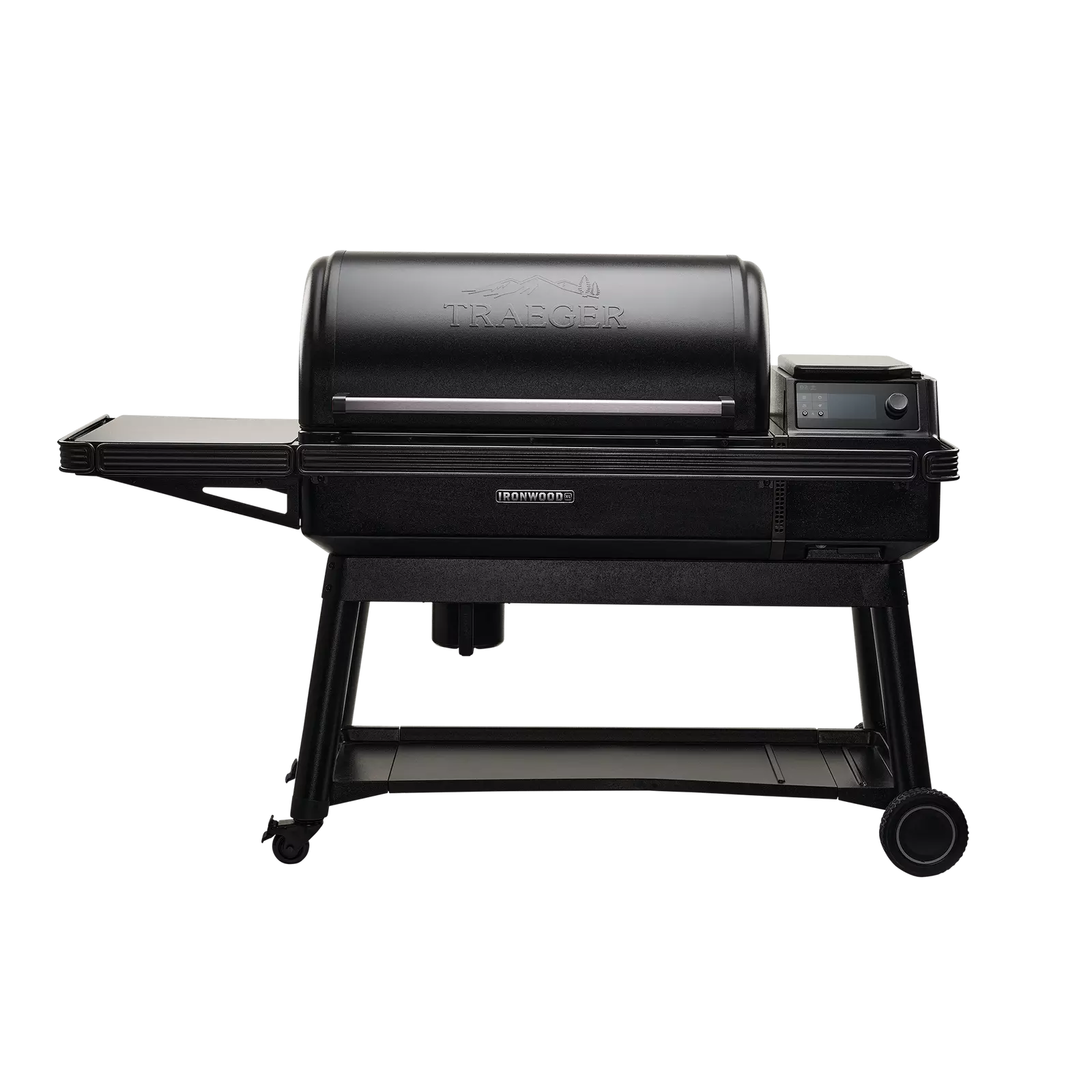
Weber Searwood vs. Ironwood: where the Ironwood wins
App and ecosystem. WiFIRE is the reason a first-timer can run a 14-hour brisket without panic. Recipes set ramp temperatures and probe targets for you. Super Smoke Mode pumps additional smoke at low temps. Weber Connect is solid but Traeger’s app is still the gold standard for unattended overnight cooks.
Warranty. Traeger’s 10-year limited warranty on the Ironwood is best in class for full-size pellet grills. Weber’s limited warranty terms are documented on the Searwood warranty card and are shorter on most components.
Accessory rail. Traeger’s P.A.L. Pop-And-Lock accessory rail and ModiFIRE® drop-in cooking surfaces give the Ironwood meaningful customization that the Searwood doesn’t try to match.
Two-rack design. The Ironwood XL splits its 924 sq in across an upper rack and a main grate, which makes it easier to run two-temp cooks (low-smoke top, high-finish bottom).
Weber Searwood vs. Ironwood: where the differences disappear
Smoke quality at 225°F is functionally identical when you run the same hardwood pellets. Both grills produce clean, blue-tinted smoke at low temperatures and either will handle a brisket. Pellet quality matters more than grill brand here — see our pellet brand comparison for the picks we run on each.
Weber Searwood vs. Ironwood: which one we recommend by buyer
The reverse-sear weekly buyer: Searwood XL 600. The DirectFlame access is the difference-maker. If steak night is the regular cook, the $700 you save versus the Ironwood XL is real money.
The overnight-cook regular: Ironwood XL. The app, the pellet sensor, and the 10-year warranty earn the premium when the grill runs unattended for 14 hours at a time.
The single-grill household: Searwood XL 600. It collapses pellet smoking and steakhouse searing into one machine. The Ironwood XL is excellent at smoking and convection grilling but leans on a separate searing solution for true crust.
The two-grill setup: Ironwood XL plus a Weber kettle. The Ironwood handles the long cooks. A 22-inch kettle handles the searing. Total spend is similar to the Searwood XL alone, with more flexibility on technique.
Weber Searwood vs. Ironwood: frequently asked questions
Did Weber discontinue the Smokefire?
Yes. Weber phased out the Smokefire EX-series and replaced it with the Searwood line in 2024. New buyers should look at the Searwood 600 and Searwood XL 600 rather than the older EX4 or EX6.
Can a pellet grill actually sear a steak?
Yes — but only models with direct-flame access produce steakhouse-grade crust. The Weber Searwood XL 600 uses DirectFlame™ cooking that exposes the cooking surface to flame at 600°F. Convection-only pellet grills like the Traeger Ironwood XL top out around 500°F.
What temperature do I need for a real sear?
Cast-iron-skillet searing happens at 450–500°F surface temperature. Restaurant searing happens at 600°F and above. The Maillard reaction that produces deep brown crust accelerates dramatically once the cooking surface clears 575°F.
Is the Traeger Ironwood XL worth $1,999?
For pitmasters running overnight cooks twice a month or more, yes — the WiFIRE app and pellet sensor pay for themselves in unattended-cook reliability, and the 10-year limited warranty is the best in the class. For weekend grillers who mainly cook steaks and burgers, the Searwood XL 600 at $1,299 is a better fit.
Which grill produces better smoke flavor at 225°F?
Both grills produce nearly identical smoke flavor at low-and-slow temperatures when running the same hardwood pellets. Smoke quality is more a pellet-quality question than a grill-brand question.
Related reading on PopularBBQ.com
- Pit Boss vs. Traeger 2026: The Pellet-Grill Comparison
- Why Pellet Smokers Stall at 165°F
- Reverse Sear for Thin Steaks: The Method That Works on Cuts Under 1.5 Inches
- Smoking Woods by Cut: The Pitmaster’s Wood-Meat Pairing Guide
Across the BAM network
Friday-night ribeyes need a sharp knife — see Popular EDC for the steak-knife buyer’s guide.
Weber Searwood vs. Ironwood: the bottom line
The Weber Searwood XL 600 wins the sear, the Ironwood XL wins the app, and most weekend cooks will be happier with the platform that fits the cooks they actually do most. The Weber Searwood is the move if your weekends end at the steak; the Ironwood XL is the move if your weekends end at a 14-hour brisket. Either way, the Weber Searwood vs. Ironwood call is closer in 2026 than the spec sheets suggest.
Reader Favorites
- Essential BBQ Tools: Get The Tools Pros Recommend Now
- Cleaning Your Gas Grill Cooking Grate: Make it Great Again
- Stainless Steel BBQ Grill Cleaning: Master Maintenance Now
- Smoke on a Gas Grill: BBQ Made Simple
- Grill Baskets: Smoky Veggies & Fish Made Easy
- Trimming Beef Brisket: Learn What the Pros Know Now
BBQ Temperature Charts & Guides
Four quick-reference tools every cook bookmarks — target temps, pull temps, and how long leftovers keep, plus the full BBQ glossary.
| Cut | Pull | Time |
|---|---|---|
| Brisket | 203°F | 12–16h |
| Spare ribs | 195–203°F | ~6h |
| Pork butt | 203°F | 12–14h |
Target temps & times for 17 cuts, sortable by meat, weight and doneness.
View full chart →| Doneness | Target |
|---|---|
| Rare | 125–130°F |
| Medium-rare | 130–135°F |
| Well-done | 160°F+ |
Rare to well-done, burger safety (160°F) and resting times.
View full chart →| Food | Fridge | Freezer |
|---|---|---|
| Brisket, ribs | 3–4 days | 2–3 mo |
| Smoked sausage | 1 week | 1–2 mo |
| Potato salad | 3–4 days | no freeze |
How long smoked meats & sides keep — fridge and freezer, USDA-based.
View full chart →Every pit term decoded — cooking methods, gear, cuts, wood, and technique, A to Z.
Open the glossary →