The Best Fish to Cook for a Party: A Pitmaster’s Guide to Crowd‑Friendly Seafood
How to choose the right fish, manage heat, and turn out buffet‑worthy salmon, tacos, and more without overcooking a single bite
Why Fish Works for a Party
I’m a smoke-and-fire guy by trade, but when I’m feeding a crowd and I don’t want everyone in a meat coma, I reach for fish. It cooks fast, feels a little luxurious, and plays just fine with live fire.
You’re not just cooking fish for a party. You’re managing heat, time, and traffic: oven space, grill real estate, and that buffet table. Done right, fish gives you:
- Speed – most cuts cook in 10–20 minutes once they hit the heat.
- Flexibility – you can roast a whole side of salmon, grill skewers, fry bites for sliders, or do a taco bar.
- Make-ahead options – rich fish like salmon still taste great warm or at room temp within safe time limits, which buys you breathing room on the schedule.101112
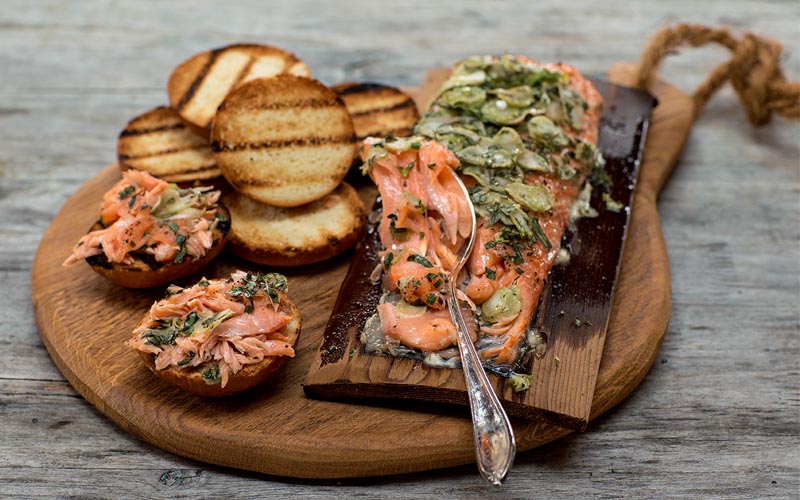
Salmon in particular shows up at the top of seafood buying guides for special meals, and a side of salmon is often called out as ideal for serving a crowd.20
Let’s walk through how to pick the right fish, keep it safe, and hit textures that make people come back for seconds.
Methods at a Glance

First rule: don’t chase temperature, manage heat. Whether you’re on a grill, in the oven, or over a fryer, you want steady, predictable heat and a plan.
Party Fish Methods Comparison Table
These are planning ranges from my own cooks. Always cook fish to a safe internal temperature and use a thermometer to verify.1 3
| Method & Cut | Best Fish Types | Pit/Oven Oil Temp* | Internal Temp – Safety vs. Quality | Planning Time** | Party Strengths |
|---|---|---|---|---|---|
| Sheet‑pan roast, side of salmon | Salmon (king, sockeye, coho; wild or farmed) | 300–375°F (150–190°C) | 145°F (63°C) for safety; ~125–130°F (52–54°C) for a silkier texture1 3 | ~10–15 min per inch at thickest point | Showpiece, easy carving, great warm or room temp |
| Grilled steaks/fillets | Salmon, swordfish, halibut, tuna, mahi‑mahi, snapper | Grill ~400–500°F (205–260°C) | 145°F (63°C) for safety; ~125–130°F (52–54°C) for richer fish1 3 17 | 6–12 min total depending on thickness | Outdoor parties, fast batches, live‑fire flavor |
| Fish kebabs (skewers) | Swordfish, halibut, mahi‑mahi, salmon, firm snapper | Grill ~400–450°F (205–230°C) | Same as grilled steaks above | 8–12 min total | Easy portioning, grab‑and‑go |
| Deep‑fried bites or fillets | Cod, halibut, haddock | Oil 350–375°F (175–190°C) | Pull around 140°F (60°C) internal for flaky, moist fish13 | 3–6 min per batch | Fish‑and‑chips, sliders, super casual spreads |
| Whole small fish, roasted or grilled | Snapper, branzino, trout | 375–425°F (190–220°C) environment | Aim for 145°F (63°C) at the thickest part near the backbone1 | ~18–30 min depending on size | Seated dinners, dramatic plating |
*”Pit/Oven Oil Temp” is your environment, not the fish.
**Planning times are rough; use your thermometer and visual cues to finish.
Firm, “meaty” fish like swordfish, halibut, tuna, mahi‑mahi, salmon, and medium‑firm fish like snapper hold together on the grill far better than delicate flaky fish, which is why most grilling guides push you toward those for skewers and direct‑grilled fillets.14 15 16
For frying, cod and halibut are favored for classic fish‑and‑chips–style parties, while tilapia is generally discouraged in that role because it stays bland and can overcook quickly.13
Essential Party Fish Tips
1. Safety first: temperature and time windows
When you’re feeding a crowd, food safety is not up for debate.
- Cook fish to a safe internal temperature. USDA’s Food Safety and Inspection Service recommends cooking fish and shellfish to a minimum internal temperature of 145°F (62.8°C).1
- Hold hot, keep cold. To limit bacterial growth, hot foods should be held at 140°F (60°C) or above and cold foods at 40°F (4°C) or below.2
- Respect the time limits. Perishable foods shouldn’t sit in the 40–140°F (4–60°C) “danger zone” for more than 2 hours total, or 1 hour if ambient temps are above 90°F (32°C).2
Culinarily, many pros prefer slightly lower internal temps for ideal texture: around 125°F for salmon, 130–135°F for halibut, and 130–140°F for lean white fish like cod.3 4 Those ranges stay below the point where fish muscle, which has very little collagen, starts drying out fast once it passes roughly 140°F (60°C).3 4
When I’m serving a mixed crowd, I generally:
- Aim close to 145°F (63°C) for buffet fish to align with official guidance.1
- Use sauces, olive oil, and fat from the fish (like salmon) to keep things moist.
2. Choosing fish that behaves at scale
For parties, you want cuts and species that are forgiving and easy to portion.
Salmon: the workhorse centerpiece
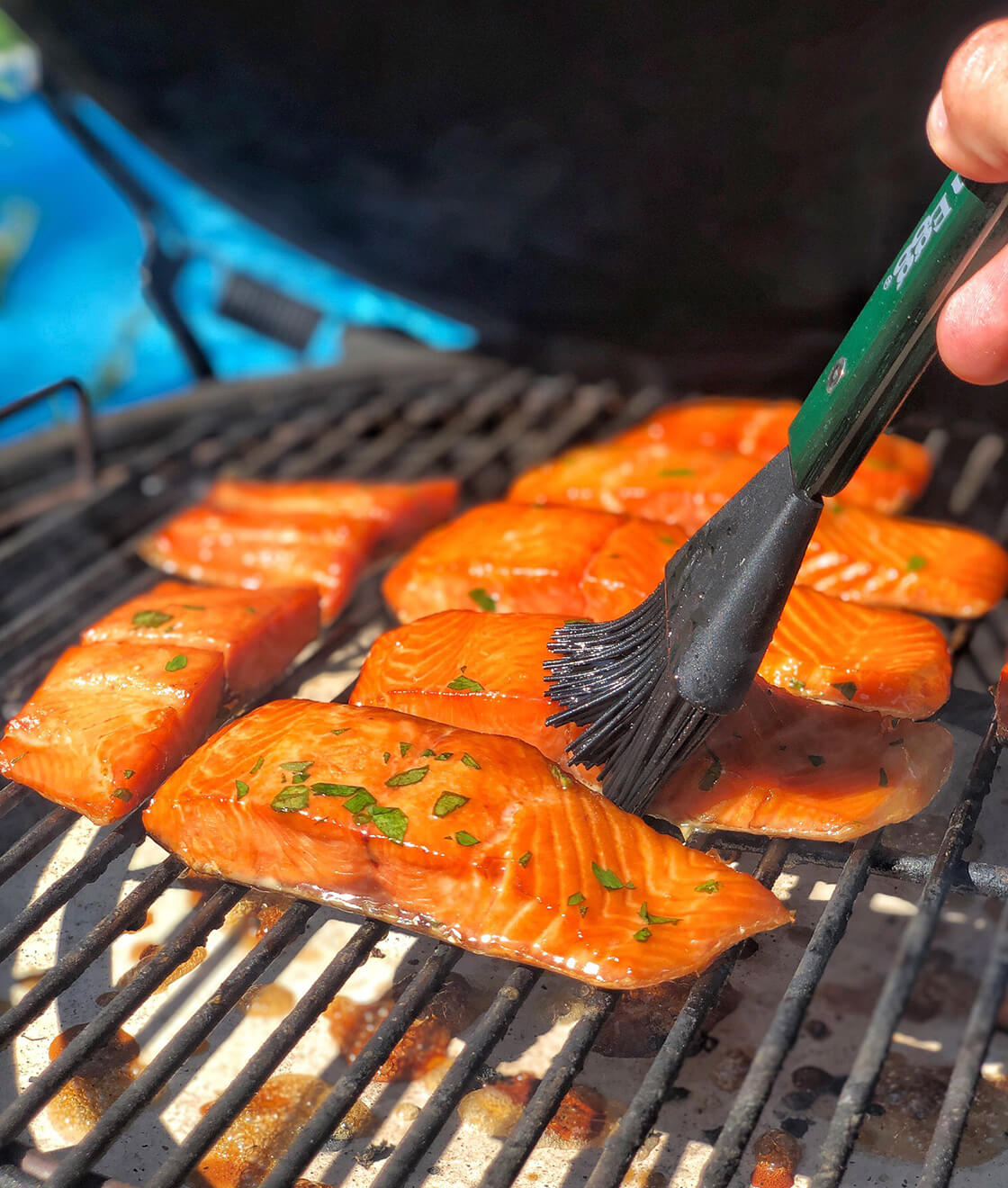
- A whole side of salmon (roughly half a fish) or a whole fish itself is widely used as an easy, dramatic centerpiece for 6–16 guests and fits on a standard sheet pan.56789
- Salmon is among the most popular fish in the U.S., and seafood experts recommend king or sockeye for special meals, while calling a salmon side ideal for serving a crowd.20
- Both wild and farmed salmon can be sustainable choices when certified by groups like the Marine Stewardship Council or Aquaculture Stewardship Council.2021
Why salmon holds up on a buffet
Salmon’s higher fat content makes it more forgiving than many lean white fish. Caterers and recipe developers routinely serve sides of salmon hot or at room temperature, still moist and flavorful within safe time windows, which is a big win for party timing.10 11 12
Frozen vs fresh
Modern freezing methods mean frozen salmon and other fish can be high quality and are widely accepted as a good option, especially when you’re feeding a crowd on a budget.20 21 The key is buying from reputable suppliers and thawing safely in the fridge.
3. Matching fish to the party format
- Buffet or family‑style: Side of salmon, whole small fish, or trays of grilled steaks.
- Casual backyard: Grilled skewers, fish tacos, or a fry station.
- Seated dinner: Whole small fish (snapper, trout, branzino) or plated salmon.
Lean, delicate fish that flake apart easily are more trouble at scale unless you’re baking them quietly in the kitchen.
4. Fire and heat management
Even when we’re not talking brisket, the rules don’t change:
- Grill: Run a clean fire, preheat 15–20 minutes, and wire‑brush the grates. Clean, oiled grates plus waiting until fish naturally releases before flipping drastically reduce sticking.1718
- Oven: Preheat fully and avoid stacking pans so tight that hot air can’t move.
- Fryer: Keep oil in the 350–375°F (175–190°C) range and let it come back to temp between batches for crisp coatings and moist fish.13
For grilled fish, it helps to pull rich species like salmon, tuna, and halibut around 125–130°F (52–54°C) for ideal texture when you’re cooking for diners comfortable with chef‑style doneness.3 17
5. How much fish to buy (my working ranges)
These are planning numbers from my own cooks, not from any authority:
- Buffet with other mains: 4–5 oz (115–140 g) cooked fish per person.
- Fish as the main event: 6–8 oz (170–225 g) cooked fish per person.
- Tacos: 2–3 oz (55–85 g) cooked fish per taco, 2–3 tacos per person.
I round up a bit for big eaters and trim that down if there are lots of sides.
Recipes for Crowd-Pleasing Fish
Two anchor recipes: one oven‑based centerpiece and one grill‑friendly taco setup. Both are built for repeatability.
Recipe 1: Sheet‑Pan Side of Salmon with Herb–Lemon Finish
A big, beautiful side of salmon you can roast, rest, and serve warm or closer to room temp, staying within safe time limits.1 2 10 11 12
Yield: Serves 8–10 as a main
Prep time: 20 minutes
Cook time: 18–30 minutes (depends on thickness)
Total time: 45–60 minutes (including resting)
Ingredients
- 1 side of salmon, about 3–4 lb (1.4–1.8 kg), skin on, pin bones removed
- 2–3 tbsp olive oil, plus more for the pan
- 2 tsp kosher salt
- 1 tsp freshly ground black pepper
- 1–2 tsp lemon zest
- 2 tbsp fresh lemon juice
- 2 tbsp chopped fresh dill
- 2 tbsp chopped fresh parsley
- Optional: 1 tsp mild chili flakes or smoked paprika for a light kick
- Lemon wedges and extra herbs for serving
Steps
-
Set your oven and pan.
- Preheat oven to 325°F (165°C). This moderate heat gives you control and even cooking.
- Line a full sheet pan or large rimmed baking sheet with parchment or lightly oiled foil.
-
Prep the salmon for even cooking.
- Pat the salmon dry with paper towels.
- If the tail is much thinner than the center, make a shallow crosswise cut and fold the tail under to even the thickness. This “fish origami” trick is recommended for big salmon fillets so they cook more evenly.19
- Lay the salmon skin‑side down on the pan.
-
Season with intention.
- Rub the flesh lightly with olive oil.
- Sprinkle on the salt, pepper, and lemon zest. Press gently so it sticks.
- If using chili flakes or smoked paprika, dust them evenly across the top.
-
Roast to temp, not time.
- Slide the pan into the oven.
- Start checking internal temp at the thickest point after about 15 minutes using a probe thermometer.
- For broad, mixed‑ability guests, roast until the thickest part reaches 145°F (62.8°C) for safety.1
- If you and your crowd are comfortable with chef‑style doneness and high‑quality fish, you can pull closer to 125–130°F (52–54°C) for a softer, silkier texture, understanding that this is below the USDA’s recommended minimum.13
-
Rest and dress.
- Transfer the pan to a cooling rack.
- Immediately drizzle the lemon juice and another tablespoon or so of olive oil over the hot salmon.
- Sprinkle with dill and parsley.
- Let it rest 5–10 minutes so juices redistribute.
-
Serve smart.
- Slide the salmon, parchment and all, onto a platter, or serve straight from the pan.
- Garnish with extra herbs and lemon wedges.
- Keep within safe serving windows: don’t let it sit between 40–140°F (4–60°C) more than 2 hours total, or 1 hour if it’s hot outside.2
Why this works for parties (my view)
- One big piece is easier to manage than many small ones.
- Salmon’s fat helps it stay moist over a buffet window.
- Neutral seasoning lets guests add sauces without fighting the base flavor.
Recipe 2: Grilled Fish Taco Bar for a Crowd
You set up the fire, you set up the toppings, and then you get out of the way. This is where live fire earns its keep.
Yield: Serves 10–12 (about 24–30 tacos)
Prep time: 40 minutes (plus optional 30–60 minutes marinating)
Cook time: 20–30 minutes total active grilling
Total time: 1½–2 hours
Fish and Marinade
- 3½–4 lb (1.6–1.8 kg) firm white fish, cut into 2–3 inch (5–7.5 cm) pieces
- ¼ cup neutral oil (canola, grapeseed, or light olive oil)
- 2 tbsp fresh lime juice
- 2 tsp kosher salt
- 1½ tsp ground cumin
- 1½ tsp chili powder or smoked paprika
- 1 tsp garlic powder
- 1 tsp dried oregano
For Grilling and Serving
- 24–30 small corn or flour tortillas
- Oil for grill grates
- Shredded cabbage or slaw mix
- Pico de gallo or salsa
- Lime wedges
- Crumbled cheese (cotija, queso fresco, or feta)
- Sour cream or crema
- Hot sauce
Steps
-
Set up the grill and grates.
-
Season the fish.
- Pat the fish dry.
- Whisk the oil, lime juice, salt, cumin, chili powder, garlic powder, and oregano.
- Toss the fish gently in the mixture. Let sit 30–60 minutes in the fridge if you have time; otherwise, grill right away.
-
Grill the fish.
- Lay the pieces on the hot side of the grill with a little space between them.
- Close the lid and cook 3–4 minutes.
- When the fish releases easily from the grates, flip carefully using a thin spatula or fish turner. Waiting until food naturally loosens is a standard method to reduce sticking on the grill.1718
- Cook another 2–4 minutes, depending on thickness.
- Target internal temps:
-
Warm the tortillas.
- While the last batch of fish cooks, warm tortillas on the cooler side of the grill, about 30–60 seconds per side, stacking them in a covered pan or foil packet to stay soft.
-
Set up the taco bar.
- Transfer grilled fish to a warm platter.
- Put out tortillas, slaw, salsa, lime, cheese, crema, and hot sauce.
- Keep the fish in the safe zone: either over 140°F (60°C) or chilled under 40°F (4°C), and avoid more than 2 hours in the danger zone total, or 1 hour in very hot conditions.2
Why this works for parties (my view)
- Firm fish recommended for grilling hold together, so you’re not fishing flakes out of the grates.141516
- Tacos stretch your fish budget and let guests customize without slowing the line.
- Everything can be staggered in batches, which keeps the cook at the grill and out of the weeds.
Troubleshooting Party Fish
Problem 1: Fish sticks to the grill
Likely causes: Dirty grates, low grate temperature, or flipping too early.
Fixes:
- Preheat thoroughly and brush the grates clean.
- Oil the grates lightly and pat the surface of the fish dry before seasoning.
- Don’t rush the flip. Good grilling technique calls for waiting until the fish naturally releases before turning, using a thin spatula to help lift it.1718
Problem 2: Dry, chalky fish
Likely causes: Overcooking, especially with lean white fish.
Fixes:
- Use a thermometer. Fish muscle has very little collagen and dries out quickly once it passes roughly 140°F (60°C), so many culinary guides recommend lower internal temps for best texture, like ~125°F for salmon or 130–140°F for cod.34
- Add fat: brush with oil or butter, choose fattier species like salmon for buffets.
- For buffets where you need to reach 145°F (63°C) for safety and hold hot, rely on sauces and moist cooking methods like gentle roasting.12
Problem 3: Soggy fried fish
Likely causes: Oil too cool, overcrowded fryer, or fish resting directly on a solid surface.
Fixes:
- Keep oil in the 350–375°F (175–190°C) zone and let it recover between batches.13
- Fry in smaller batches so the oil temperature does not crash.
- Drain on a rack over a sheet pan instead of paper towels, which can trap steam and soften the crust.
Cod and halibut are specifically recommended for fried fish because they stay flaky and moist under a crisp crust, especially when pulled around 140°F (60°C) internal.13
Problem 4: “Fishy” aroma that scares people off
Likely causes: Older fish, improper storage, or fish sitting too long in the danger zone.
Fixes:
- Buy from high‑turnover sources and look for moist, not slimy, flesh and a clean sea smell. Salmon buying guides emphasize bright color and fresh smell as quality markers.2021
- Keep fish cold (under 40°F / 4°C) until shortly before cooking.2
- Don’t leave cooked fish at room temperature beyond the recommended windows.2
Problem 5: Unevenly cooked salmon – dry tail, underdone center
Likely cause: The tail end is much thinner than the center, so it overcooks.
Fixes:
- Score and fold the tail under to even the thickness, a technique specifically recommended for big salmon fillets.19
- Roast at a moderate oven temperature so heat has time to penetrate the thickest part without burning the thin edge.
Fish Party FAQs
What’s the safest internal temperature for serving fish to a crowd?
USDA’s Food Safety and Inspection Service recommends cooking fish to 145°F (62.8°C) as a safe minimum internal temperature.1 When I’m cooking for a wide range of guests, that’s the number I use as my baseline.
But chefs talk about lower temps for “perfect” fish. What’s that about?
Culinary temperature guides often suggest about 125°F for salmon, 130–135°F for halibut, and 130–140°F for lean white fish like cod for ideal texture.3 4 Fish muscle lacks the collagen found in tough red meats, so once it climbs much past 140°F (60°C) it dries out quickly.3 4
If you choose to serve fish below 145°F, you’re prioritizing texture in a culinary sense and stepping away from USDA’s safety guidance, so that’s a judgment call you have to own.
How long can cooked fish sit out on the buffet?
Food safety guidance says perishable foods should not stay in the 40–140°F (4–60°C) danger zone for more than 2 hours total, or 1 hour if the ambient temperature is above 90°F (32°C).2 For longer windows, keep hot fish at or above 140°F (60°C), or chill and serve it cold.2
Is a whole side of salmon really enough for a party centerpiece?
Multiple reputable recipes present a whole side of salmon (around 1.5–3 lb / 0.7–1.4 kg) or a whole salmon (4–6 lb / 1.8–2.7 kg) as a centerpiece that comfortably feeds 6–16 guests, depending on appetite and side dishes.5 6 7 8 9
Caterers and family‑style services also sell whole roasted salmon specifically for group events, which confirms how common that approach is.11 12
What are the best fish for grilling at a party?
Grilling guides consistently recommend firm, “meaty” fish like swordfish, halibut, tuna, mahi‑mahi, salmon, and medium‑firm fish like red snapper for direct‑grilled fillets and kebabs, because they resist falling apart over the fire.14 15 16
Can I rely on frozen fish for a big event?
Seafood experts note that modern frozen salmon is often high quality thanks to improved freezing technology, and is now widely accepted as a good, accessible option.20 21 Frozen fish can make it easier and more economical to feed a crowd, as long as you buy from reputable sources and thaw slowly in the refrigerator.
What fish should I use for fish‑and‑chips or fried sliders?
Thermometer‑driven fish‑and‑chips recipes recommend cod or halibut for their flavor and flaky yet firm texture, and advise pulling the fish around 140°F (60°C) internal in a crisp batter.13 They specifically advise against tilapia for this style of frying because it tends to be too mild and can overcook easily.13
External Resources and Further Study

If you want to dig deeper into the science and best practices behind party fish, these are worth your time:
- USDA FSIS Safe Minimum Internal Temperature Chart – Official word on safe internal temperatures for fish and shellfish, including the 145°F (62.8°C) recommendation.1
- FSIS: Steps to Keep Food Safe – Clear guidance on the danger zone, the 2‑hour rule, and proper hot/cold holding and leftovers, all crucial for buffets and outdoor parties.2
- ThermoWorks: Recommended Temperatures for Seafood – Chef‑oriented internal temperature targets for salmon, halibut, cod, and more, plus an explanation of why fish dries out quickly over 140°F (60°C).3
- ThermoWorks: Fish and Chips Guide – A detailed look at choosing cod or halibut for frying, ideal oil temperatures, and internal temp targets for flaky fish in batter.13
- ThermoWorks: Grilled Fish Tacos – Practical walkthrough on cleaning and oiling grates, timing flips, and pulling fish at the right temperature for juicy tacos.17
- Serious Eats: How to Buy Salmon – Interviews with seafood experts on which salmon types to choose, wild vs farmed, and why a side of salmon is so useful for feeding a crowd.20
- Serious Eats: Salmon Shopping Tips – Visual cues for spotting quality salmon and understanding sustainability certifications like MSC and ASC.21
- Food Network, BBC Good Food, and Alaska Seafood Institute Salmon Centerpieces – Multiple whole or side‑of‑salmon recipes pitched directly as party centerpieces, useful templates for seasoning and timing.578
Log your cooks, note your temps and timing, and adjust for your gear. Do that a few times, and feeding a crowd with fish will feel as controlled as a good brisket run.
Sources
- USDA FSIS Safe Minimum Internal Temperature Chart
- USDA FSIS – Steps to Keep Food Safe
- ThermoWorks – Recommended Temperatures for Seafood
- ThermoWorks – Baked Cod with Roasted Peppers: Temperatures You Need to Know
- Alaska Seafood – Alaska Salmon Side with Country Garden Herb Sauce
- Tasting Table – Easy Roasted Salmon Recipe
- BBC Good Food – Whole Roasted Salmon
- Food Network – Whole Roasted Salmon
- Food Network – Whole Roasted Side of Salmon (Valerie Bertinelli)
- Hungry Healthy Happy – Honey Garlic Side of Salmon
- Cosma Catering – Whole Roasted Salmon
- Gina Feeds – Whole Roasted Salmon with Cucumber Scales
- ThermoWorks – Fish and Chips
- Hip Hip Gourmet – Best Fish for Grilling
- Flavor365 – Best Fish for Grilling: Your Definitive Buying Guide
- The Daily Meal – Why You Should Use Firmer Fish for Grilling
- ThermoWorks – Grilled Fish Tacos
- Serious Eats – How to Prevent Food from Sticking to the Grill
- Serious Eats – The Salmon Cooking Technique That Will Make You a Pro
- Serious Eats – I Asked 4 Seafood Experts How to Buy Salmon, and They All Agreed
- Serious Eats – You Don’t Need to Be a Chef to Spot Great Salmon—Here’s What to Look For
Reader Favorites
- Creative BBQ Recipes: Fire Up A Unique BBQ Menu Now
- Tide-Smoked Fish on the Big Green Egg
- Smoke-Kissed Salmon on the Big Green Egg
- Tide-to-TV Buffalo Wings: A Coastal Cook’s Super Bowl Guide
- Grilled Buffalo Wings: Crispy, Smoky, and Ready for Any Game Day
- Smoked Salsa Recipe: Red and Green, Made Ahead for a Crowd
BBQ Temperature Charts & Guides
Four quick-reference tools every cook bookmarks — target temps, pull temps, and how long leftovers keep, plus the full BBQ glossary.
| Cut | Pull | Time |
|---|---|---|
| Brisket | 203°F | 12–16h |
| Spare ribs | 195–203°F | ~6h |
| Pork butt | 203°F | 12–14h |
Target temps & times for 17 cuts, sortable by meat, weight and doneness.
View full chart →| Doneness | Target |
|---|---|
| Rare | 125–130°F |
| Medium-rare | 130–135°F |
| Well-done | 160°F+ |
Rare to well-done, burger safety (160°F) and resting times.
View full chart →| Food | Fridge | Freezer |
|---|---|---|
| Brisket, ribs | 3–4 days | 2–3 mo |
| Smoked sausage | 1 week | 1–2 mo |
| Potato salad | 3–4 days | no freeze |
How long smoked meats & sides keep — fridge and freezer, USDA-based.
View full chart →Every pit term decoded — cooking methods, gear, cuts, wood, and technique, A to Z.
Open the glossary →