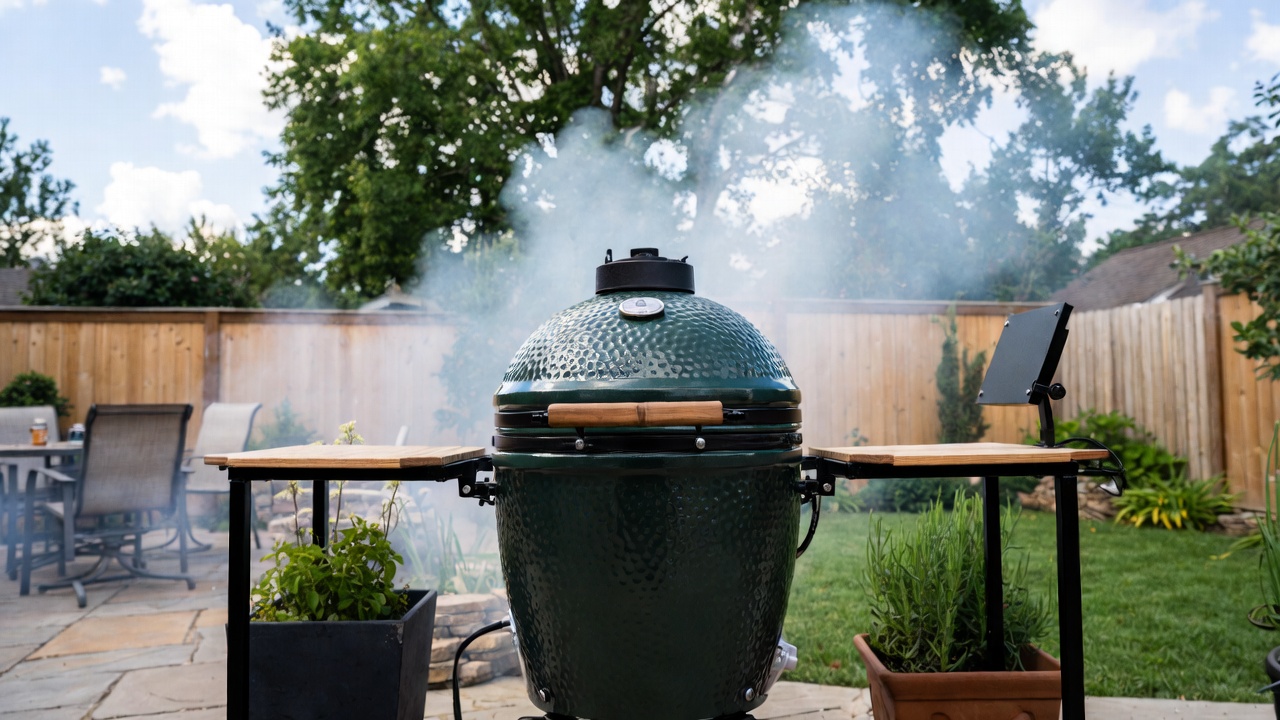
Smoke-Kissed Salmon on the Big Green Egg
Two reliable Big Green Egg methods for salmon, gentle hot-smoking and cedar-plank grilling, with fruitwood smoke that does not overpower it.
Learn two reliable Big Green Egg methods—gentle hot-smoking and cedar-plank grilling—with fruitwood smoke that flatters the salmon and respects the sea.

The air at the coast changes when fish hits hot iron or ceramic. You smell the brine first, then the sweet edge of fruitwood, then that moment when fat begins to shimmer and the salmon’s color deepens. On a Big Green Egg, the ceramic dome and tight vents turn that moment into a long, gentle conversation between fire, fish, and smoke.
In this guide, we’ll walk through two dependable paths to “smoke-grilled” salmon on a Big Green Egg: a low-and-slow, hot-smoked style and a cedar-plank method with a bit more grill energy. You’ll learn how to choose the fish, set up the Egg, choose your wood, manage temperature, and read doneness by sight, touch, and thermometer so the fire kisses the salmon, not burns it.
Methods at a Glance: Heat, Time, and Texture
There are many ways to work salmon over charcoal, but on a Big Green Egg most cooks end up in one of two camps:
- Gentle hot-smoking for silky, sliceable salmon you can serve warm or chill.
- Cedar-plank smoked grilling for a slightly firmer, dinner-plate fillet with a toasty, aromatic plank.
US food safety guidance recommends cooking fish, including salmon, to an internal temperature of 145°F (63°C) or until the flesh is opaque and flakes easily with a fork.1 Many hot-smoked salmon recipes instead aim for an internal temperature around 120–125°F (49–52°C) for a moist, almost custardy texture, often using smoker or grill temperatures roughly between 150–275°F (66–135°C).2 That lower range is a texture and flavor choice, not a safety guideline.
Use the table below as a navigation chart, not a law. Wind, grill size, and fillet thickness all shift the timing a bit.
| Method | Setup on BGE | Dome temp (approx) | Time per 1 lb / 450 g (guide) | Texture & best use |
|---|---|---|---|---|
| Gentle hot-smoked salmon | Indirect with convEGGtor, drip pan, grid above; 1–2 small fruitwood chunks | 175–225°F / 80–110°C | 30–45 minutes | Very moist, softly flaky, great warm with sides or chilled for salads and spreads |
| Cedar-plank moderate heat | Indirect with convEGGtor; soaked cedar plank on grid, salmon on plank | 325–375°F / 165–190°C | 18–25 minutes | Medium, restaurant-style fillet with light smoke and cedar aroma, best served hot |
| Cedar-plank faster cook | Direct over coals; soaked plank on grid, salmon on plank | 300°F / 150°C | 20–30 minutes | Firmer, more grilled character, good when you want a quicker cook |
Consider time-per-pound a rough heading. Your true destination is internal temperature and how the salmon feels and looks in the center.
- For maximum safety, steer toward 145°F (63°C) internal.1
- For more delicate texture, many cooks choose 120–125°F (49–52°C) and accept that this is below the safety-focused guidance.2
An instant-read thermometer lets you decide consciously which harbor you’re sailing into.
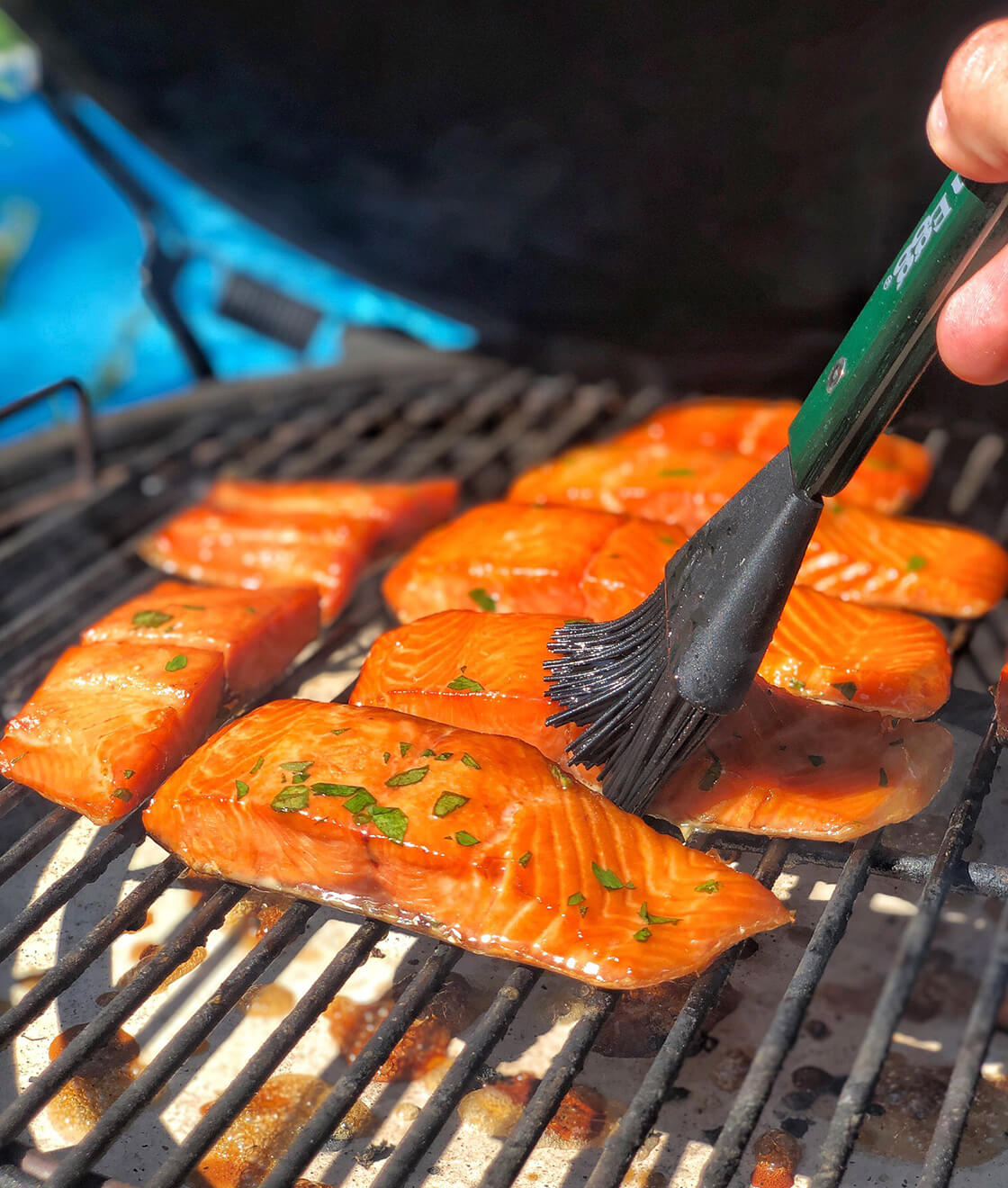
Essential Tips for Salmon on the Big Green Egg

1. Choosing and Sourcing Your Salmon
Wild vs farmed
Farmed Atlantic salmon tends to be richer and fattier, making it more forgiving over higher heat. Leaner wild salmon (like sockeye or coho) can dry out more easily and benefits from gentler cooking, brining, or slightly lower internal temperature targets for best texture.9
What I look for at the counter
This is personal practice, not a sourced rule.
- Skin-on sides or thick fillets (about 1–1½ inches / 2.5–4 cm at the thickest point) for even cooking on the Egg.
- Moist, translucent flesh with no browning or drying at the edges.
- Clean ocean scent—briny and fresh, never fishy.
Sustainability notes
We can grill the ocean without pillaging it.
- Favor regional fisheries, seasonal runs, and transparent labeling.
- Community-supported fisheries (CSFs) and trusted fishmongers often know which runs are healthy and responsibly managed.
- Frozen can be excellent; look for individually quick frozen (IQF) portions with minimal frost and simple ingredient lists.
2. Wood and Smoke: Let the Fire Whisper
For salmon, smoke should whisper, not scream.
Mild fruitwoods such as apple, alder, cherry, or peach are widely recommended for hot-smoking salmon, while stronger woods like hickory and mesquite are often discouraged because they can overpower the fish.8
A Big Green Egg recipe for smoked salmon with dill sauce, for example, uses apple wood chips, an indirect setup with the convEGGtor, a dome temperature of about 80°C (176°F), and cooks a whole salmon side for roughly 30 minutes to a very gentle core temperature of 42°C (about 108°F).5
My usual approach:
- Use 1–2 small chunks of fruitwood or a small handful of chips. Too much smoke in a closed ceramic cooker can quickly turn acrid.
- Skip soaking chips and chunks for this style; focus on clean combustion instead of steam.
3. Prep: Dry Brine and Pellicle
Dry-brining salmon with a mixture of salt and sugar, then air-drying it until the surface feels tacky, forms a pellicle that helps smoke adhere evenly and gently firms the texture.3
How I like to prep for smoking:
- Check for pin bones. Run clean fingers along the flesh side and pull any tiny bones with fish tweezers.
- Dry-brine lightly. Mix roughly equal parts kosher salt and sugar, then sprinkle a thin, even layer over the flesh. You want coverage, not a thick crust.
- Chill. Lay the salmon uncovered on a rack over a tray in the fridge until the surface looks slightly glossy and feels tacky when you touch it with a dry fingertip. For most fillets, 1–4 hours is plenty.
- Dry briefly at room temp. Just long enough to take the extreme chill off while you set up the Egg.
This brine is about seasoning and texture, not preservation. Keep the fish cold before it goes on the grill.
4. Setup: A Kamado, Tamed
Think of your Big Green Egg as a tide you can control.
- For gentle hot-smoking, I aim for a small, steady fire and a dome temperature around 175–225°F (80–110°C). A handful of lump charcoal lit in a chimney, spread and then choked down with the vents, usually does it.
- For cedar-plank grilling, I use a more open fire and dome temperatures in the mid-300s°F (around 175–190°C).
In both cases, I:
- Install the convEGGtor for indirect heat (legs up), with a drip pan on top if I want cleaner air.
- Set the stainless grid above that so the salmon rides in gentle convection, away from direct flame.
Exact vent settings vary by Egg size, charcoal, and weather. Adjust in small increments and give the dome thermometer time to respond.
5. Doneness Cues and Thermometers
An instant-read thermometer is your compass here.
- US guidance calls for 145°F (63°C) internal for fish, or until the flesh is opaque and flakes easily with a fork.1
- Many smoked salmon recipes intentionally pull the fish earlier, around 120–125°F (49–52°C), to keep the flesh moist and silky, often cooking with a relatively low grill or smoker temperature between about 150–275°F (66–135°C).2
If you choose those lower temperatures for texture, understand you’re steering below the safety-focused harbor and making a quality-vs-risk decision.
Visual and tactile cues I trust alongside the thermometer:
- The deep center of the fillet has turned opaque but still glistening.
- The fish flakes in large, moist sections when nudged with a fork.
- A fingertip press in the thickest area feels springy but not firm—like the pad at the base of your thumb when you press it gently together with your index finger.
Let the wood talk, and let the thermometer confirm.
Recipe 1: Gentle Hot-Smoked Salmon (Indirect, Low Heat)
A soft, almost confit-like salmon, kissed with fruitwood smoke. I love this one served slightly warm with new potatoes, or chilled and flaked over greens.
Yield: About 4 servings
Prep time: 20 minutes active, plus 1–4 hours dry-brining
Cook time: 45–75 minutes (depending on thickness and dome temp)
Total time: About 2–5 hours
Ingredients
- 1 side salmon (about 1½–2 lb / 680–900 g), skin on, pin bones removed
- 1 ½ Tbsp (18 g) kosher salt
- 1 ½ Tbsp (18 g) sugar (white or light brown)
- 1 tsp (2 g) freshly ground black pepper
- 1 small lemon, zested
- 1 Tbsp (4 g) chopped fresh dill or fennel fronds (optional)
- 1–2 small chunks apple, alder, or cherry wood
- Neutral oil for grates (if desired)
Steps
- Trim and dry-brine.
Pat the salmon dry. Mix salt, sugar, pepper, lemon zest, and dill or fennel if using. Sprinkle this mixture evenly over the flesh side. Lay the salmon on a rack over a tray, flesh side up. - Chill to form a pellicle.
Refrigerate uncovered 1–4 hours, until the surface looks a bit shiny and feels tacky. -
Set up the Big Green Egg for low indirect heat.
- Light a small amount of lump charcoal. Once a few pieces are ashed over, spread them into a small fire.
- Add 1–2 fruitwood chunks to the hot coals.
- Install the convEGGtor for indirect cooking, legs up, with a drip pan on top if you like. Set the cooking grid in place.
- Close the dome and adjust vents until the temperature settles around 175–225°F (80–110°C). This is guidance, not a strict requirement; stability matters more than the exact number.
- Dry the salmon briefly at room temp.
While the Egg comes to temperature, take the salmon from the fridge and let it stand at room temperature for about 20–30 minutes to lose its chill. - Load the salmon.
Lightly oil the cooking grid if you wish. Place the salmon skin-side down on the grid, thicker end toward the hotter part of the grill. Close the dome and let the smoke settle into a gentle, bluish thread rather than thick white clouds. -
Smoke to your chosen internal temperature.
Begin checking internal temperature in the thickest part after about 35–40 minutes. Use your instant-read thermometer as your guide:- For a very moist, tender texture, many smoked-salmon recipes pull the fish at 120–125°F (49–52°C).2
- For maximum adherence to US safety guidance, cook to 145°F (63°C) internal.1
Wherever you choose to land, approach in 5-degree increments so you can feel how the texture changes.
- Rest briefly.
When the salmon reaches your chosen temperature, transfer it to a warm platter or board. Let it rest 5–10 minutes, loosely tented with foil if it’s breezy. The carryover heat will finish the cook and redistribute juices. - Serve or chill.
Slide a spatula between skin and flesh to lift portions, or serve in slabs right off the skin. For chilled preparations, cool it down with plenty of air circulation before refrigerating, and follow your local food safety guidance on storage.
Confidence checkpoint:
When you press the thickest part with a fingertip, it should spring back but still feel a bit lush. If it feels firm and dry, you’ve sailed past the sweet spot—note your temperatures and times so next time you can pull a little earlier.
Recipe 2: Cedar-Plank Smoked & Grilled Salmon (Moderate Heat)

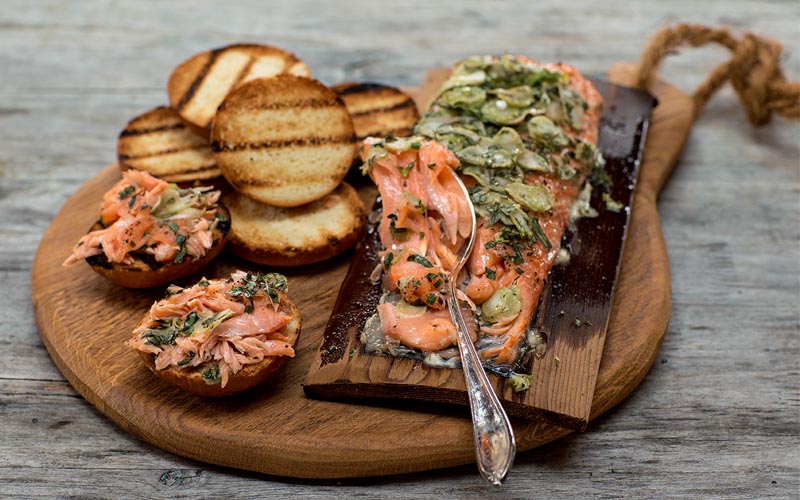
This is the classic “plank salmon” many people picture: salmon sizzling on cedar over a glowing fire, smoke rising in ribbons and the plank crackling softly. A Big Green Egg cedar-plank recipe from a specialist retailer cooks a salmon side indirect at about 180°C (356°F) for roughly 20–25 minutes, aiming for a core temperature of around 52°C (125°F) for medium doneness.6 The method below echoes that approach with simple seasoning.
Yield: About 4 servings
Prep time: 15 minutes active, plus 30–60 minutes plank soaking (hands-off)
Cook time: 18–25 minutes
Total time: About 1–1½ hours
Ingredients
- 1 salmon side (about 1½–2 lb / 680–900 g), skin on
- 1 untreated cedar grilling plank, sized to fit your Egg
- 2 Tbsp (30 ml) olive oil
- 1 ½ tsp (9 g) kosher salt
- 1 tsp (3 g) sugar or maple syrup
- ½ tsp (1 g) freshly ground black pepper
- Zest of 1 lemon
- 2 Tbsp (8 g) chopped fresh dill, chives, or fennel fronds
- Lemon wedges, for serving
- 1 small chunk or modest handful of apple or cherry wood chips
Optional glaze (for a more assertive, glazed finish)
- 2 Tbsp (30 ml) maple syrup or honey
- 1 Tbsp (15 ml) soy sauce or tamari
- 1 tsp (5 ml) rice vinegar or lemon juice
A Big Green Egg salmon recipe using a cedar plank over direct heat at about 300°F (149°C) has the fish cooking around 20 minutes, then being brushed with a honey–balsamic glaze and cooked roughly 10 minutes more until it flakes easily.7 The glaze above is a gentler nod to that style.
Steps
- Soak the plank.
Submerge the cedar plank in water for 30–60 minutes. This slows scorching and gives you a longer window of gentle smolder. - Season the salmon.
Pat the salmon dry. Rub with olive oil. In a small bowl, mix salt, sugar or maple syrup, pepper, and lemon zest. Sprinkle this over the flesh in an even layer. Top with chopped herbs. -
Set up the Egg for moderate indirect heat.
- Light a medium bed of lump charcoal. Once burning well, scatter your fruitwood chunk or a small handful of chips over the coals.
- Install the convEGGtor for indirect cooking, legs up, with a drip pan if you like. Set the grid in place.
- Close the dome and stabilize the temperature in the 325–375°F (165–190°C) range. For a result closest to the retailer’s cedar-plank reference, steer toward about 350°F (180°C).6
- Preheat the plank.
Shake excess water from the cedar plank and place it on the cooking grid, rough side up. Close the dome for 3–5 minutes until you hear a gentle crackle and see a wisp of smoke from the plank’s edges. - Load the salmon.
Open the Egg, flip the plank if one side looks more evenly heated, and lay the salmon skin-side down on the hot plank. Close the dome. -
Cook and, if desired, glaze.
- Cook with the dome closed for about 12–15 minutes before your first temperature check.
- If using the glaze, stir the ingredients together while the salmon cooks. Around the 12–15 minute mark, brush a thin layer over the fish and close the dome. Add a second light coat a few minutes later if you like.
-
Finish to your chosen internal temperature.
Begin checking temperature in the thickest part.- For a moist, just-cooked texture similar to many cedar-plank recipes, you can pull the salmon around 120–125°F (49–52°C), which also aligns with several hot-smoked salmon guides and the 52°C (125°F) target used in that Big Green Egg cedar-plank reference.26
- For maximum alignment with US safety guidance, continue cooking to 145°F (63°C).1
The surface should be opaque and lightly browned at the edges, the interior moist and flaky.
- Rest and serve on the plank.
Wearing heatproof gloves, carefully transfer the entire plank to a tray or board. Let the salmon rest 5 minutes, then serve it directly from the plank with lemon wedges.
Confidence checkpoint:
When you slide a thin knife into the center and twist gently, you should see large, moist flakes that still glisten. If clear juices run and the flesh looks glassy, give it a few more minutes. If it’s dry and chalky, note where your temperature landed so you can pull earlier next time.
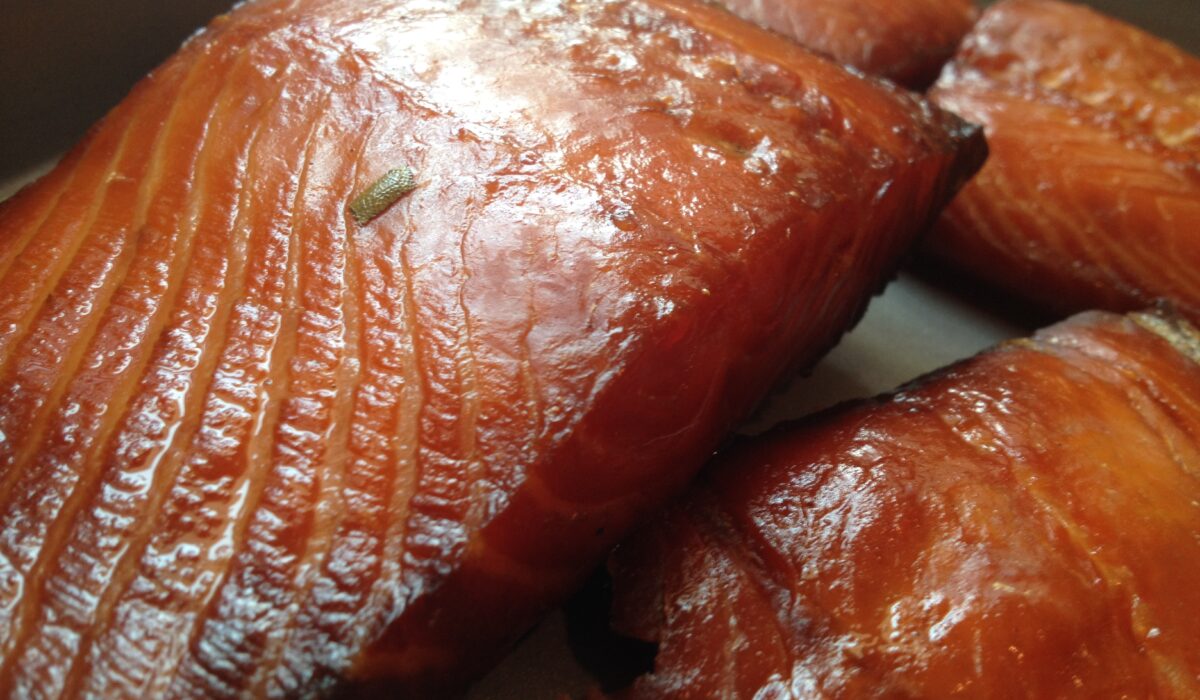
Troubleshooting: When the Seas Get Choppy
Even seasoned coastal cooks have choppy days. Here’s how to correct course.
Problem: White albumin weeping heavily from the salmon surface
What’s happening: The proteins are squeezing out under relatively aggressive heat.
How to respond: Next time, lower the dome temperature, pull the salmon a bit earlier, or extend the dry-brine so the flesh is better seasoned and slightly firmer before it hits the grill.
Problem: Bitter, harsh smoke flavor
What’s happening: You may be burning too much wood, closing vents so far that the fire smolders, or using very strong wood.
How to respond: Use fewer chunks, favor fruitwoods like apple or cherry, and aim for thin blue smoke rather than billowing white. If you’re using hickory or mesquite, try cutting back or switching to milder wood for salmon.8
Problem: Salmon stuck to the grid
What’s happening: The skin was very wet, the grid wasn’t hot when you put the fish down, or you tried to move it too early.
How to respond: Let the Egg and grate fully preheat, keep the skin dry and lightly oiled, and resist touching the fish for the first stretch of the cook. With plank cooking, sticking is rarely an issue—the plank does the work.
Problem: Overcooked edges, undercooked center
What’s happening: Heat is higher on one side of the Egg or directly under the thin tail end.
How to respond: Point the thicker part of the salmon toward the hotter zone, tuck the very thin tail under, or trim and save it for another use. In low-and-slow smoking, rotating the plank or rack midway can even things out.
Problem: Temperature swings in the Egg
What’s happening: Vents are being adjusted too aggressively, or the fire is too large.
How to respond: Build a smaller fire for low-temp smoking, and make vent changes in tiny increments. Give the dome thermometer several minutes after each adjustment before making another change.
Let the fire teach you. Each imperfect cook is a new tide chart in your mind.
FAQ: Your Big Green Egg Salmon Questions
Can I safely eat salmon cooked to 120–125°F (49–52°C)?
US food safety charts recommend cooking fish to 145°F (63°C) or until it’s opaque and flakes easily with a fork.1 Many hot-smoked salmon recipes, including those tested by temperature-focused experts, deliberately pull at 120–125°F (49–52°C) for superior texture, often using relatively low smoker temperatures to get there.2 Cooking below 145°F prioritizes texture over the most conservative safety guidance; it’s a choice each cook must evaluate for themselves.
Which salmon is better for the Egg: wild or farmed?
Fattier, farmed salmon tends to handle higher grill temperatures more gracefully, staying moist where lean wild salmon might dry out. Wild salmon generally benefits from gentler heat, brining, or slightly lower internal temperature targets to keep it tender.9
What wood is best for smoking salmon on a Big Green Egg?
Mild fruitwoods like apple, alder, cherry, and peach are ideal for salmon’s delicate flavor. Stronger woods such as hickory and mesquite are often considered too aggressive for this fish and can easily overpower it.8
Do I need to soak cedar planks?
I soak planks briefly to slow scorching and buy myself a longer, gentler smolder, especially at moderate temperatures. It’s less about safety and more about managing how quickly the wood chars.
Should I use skin-on or skinless salmon?
For the Egg, I strongly prefer skin-on. The skin acts as a protective raft between the flesh and the heat, and it makes moving the salmon much easier. You can always leave the skin behind on the board when you serve.
How do I adapt these methods for smaller portions?
For individual fillets, reduce the cook time and start checking internal temperature earlier. The same temperatures apply; you just reach them faster.
External Resources for Deeper Study
If you’d like to anchor these techniques with more reading and recipe variations, these resources are worth your time:
- A detailed guide to hot-smoked salmon with dry-brining, pellicle formation, and texture-focused internal temperature targets.3
- A temperature-science primer on smoked salmon that walks through how fish proteins change from undercooked to overcooked, with a step-by-step recipe.2
- A thoroughly tested hot-smoked salmon recipe with clear brining advice and wood recommendations (including why to avoid very strong woods for salmon).8
- The official Big Green Egg warm-smoked salmon with dill sauce, demonstrating a very low-temperature, apple-wood method on the Egg.5
- A Big Green Egg cedar-plank salmon side cooked indirect at 180°C, useful as a benchmark for your own plank cooks.6
- A cedar-plank grilled salmon with honey–balsamic glaze on the Egg, for when you want a sweeter, more assertive flavor profile.7
- US government fish temperature guidance, if you want to review the safety-focused numbers behind your choices at the grill.1
Let the fire kiss the skin, not burn it. With a steady hand on the vents, a thermometer in your pocket, and good salmon on the grate, your Big Green Egg can become a quiet, reliable partner in cooking the coast—one smoke-kissed fillet at a time.
Sources
- Cook to a Safe Minimum Internal Temperature – FoodSafety.gov
- Smoked Salmon: Key Temperatures & A Recipe – ThermoWorks
- How to Make Smoked Salmon That’s Way Better Than Store-Bought – Serious Eats
- Simple Hot Smoked Salmon – Virtual Weber Bullet
- Smoked salmon with dill sauce – Big Green Egg
- Salmon side on cedar plank from the Big Green Egg – GreenEggTotal
- Grilled Salmon with Honey Balsamic Glaze On Big Green Egg – HowToBBQRight
- Schmancy Hot Smoked Salmon Recipe (Works for All Fish) – AmazingRibs.com
- Tips for Cooking Wild vs. Farm-Raised Salmon – Serious Eats
Reader Favorites
- Creative BBQ Recipes: Fire Up A Unique BBQ Menu Now
- Grilled Buffalo Wings: Crispy, Smoky, and Ready for Any Game Day
- Smoked Salsa Recipe: Red and Green, Made Ahead for a Crowd
- Overtime on the Blackstone: Fast Feeds When the Game Won’t End
- Smoked Carrot Steaks: The Plant-Based BBQ Entrée That Eats Like Brisket
- Memorial Day Brisket Playbook: A 30-Day Pitmaster Prep Schedule
BBQ Temperature Charts & Guides
Four quick-reference tools every cook bookmarks — target temps, pull temps, and how long leftovers keep, plus the full BBQ glossary.
| Cut | Pull | Time |
|---|---|---|
| Brisket | 203°F | 12–16h |
| Spare ribs | 195–203°F | ~6h |
| Pork butt | 203°F | 12–14h |
Target temps & times for 17 cuts, sortable by meat, weight and doneness.
View full chart →| Doneness | Target |
|---|---|
| Rare | 125–130°F |
| Medium-rare | 130–135°F |
| Well-done | 160°F+ |
Rare to well-done, burger safety (160°F) and resting times.
View full chart →| Food | Fridge | Freezer |
|---|---|---|
| Brisket, ribs | 3–4 days | 2–3 mo |
| Smoked sausage | 1 week | 1–2 mo |
| Potato salad | 3–4 days | no freeze |
How long smoked meats & sides keep — fridge and freezer, USDA-based.
View full chart →Every pit term decoded — cooking methods, gear, cuts, wood, and technique, A to Z.
Open the glossary →