Brisket on a Pellet Grill: Fuel, Pellets and the Real Numbers
Run a pellet grill at 225 to 250F, wrap the brisket when the bark sets and it stalls near 160F, and pull it when a probe slides in freely.
Run the pellet grill at 225–250 °F, wrap the brisket when the bark is set and the internal temperature stalls around 160–165 °F, and pull it when a probe slides in with no resistance — usually 200–203 °F. Allow 1 to 1½ hours per pound. The part nobody tells you: check your hopper capacity first, because most pellet grills cannot hold enough fuel to finish a brisket unattended.
The parts that matter
- “Hickory pellets” is a flavor name, not a recipe. Traeger’s own support page says every one of its pellets is an alder or oak base plus flavor.
- No standard anywhere defines what a hickory pellet must contain. We checked the industry specification word by word.
- Traeger’s own brisket recipe does not fit in Traeger’s biggest hopper — at the only published low-and-slow burn rate in the industry.
- The one peer-reviewed brisket protocol that exists disagrees with the entire internet: hotter, wrapped earlier, in foil, pulled lower.
- Eight of nine top-ranking pages cite no source at all, and they disagree by 52 °F on when to wrap and by 48× on how long to rest.
Brisket on a pellet grill is the easiest version of the hardest cook in barbecue. The controller holds the temperature, the auger feeds the fire, and you go to bed. That is the pitch, and it is mostly true.
But two things determine whether it works, and neither appears on any page currently ranking for this dish: what is actually inside the pellets you bought, and whether your hopper physically holds enough of them to finish. Both are answerable from manufacturers’ own published words and a calculator. So we did that first, then wrote the recipe.

What is actually in a bag of flavored pellets?
Start with the sentence that makes this whole section possible. From Traeger’s own support page, last updated September 19, 2024 — we loaded it in a browser on 2026-08-21 to confirm it verbatim:
“In addition to our standard flavors, we also sell a variety of pellet blends (combinations of different flavors with possible additional spices and herbs). All pellets are a blend of either Alder or Oak plus the wood flavor.“
Read that second sentence carefully. It is not hedged and it is not limited to the bags marketed as “blends.” It says all pellets. A bag sold as Hickory is, by the manufacturer’s own description, alder or oak carrying hickory flavor.
Traeger is not alone, and it is not being uniquely shifty — it is being unusually forthcoming. Bear Mountain’s FAQ says the same thing:
“Yes, we use either Alder or Oak as a base wood depending on the region of the country where the specific wood species are native… These base woods create a more consistent burn and smoking experience.”
That last clause is the honest engineering reason. Oak and alder pellet well, burn evenly and are available at scale. Pure fruitwood or pure hickory does not behave as predictably in an auger.
The word that does the work is “hardwood”
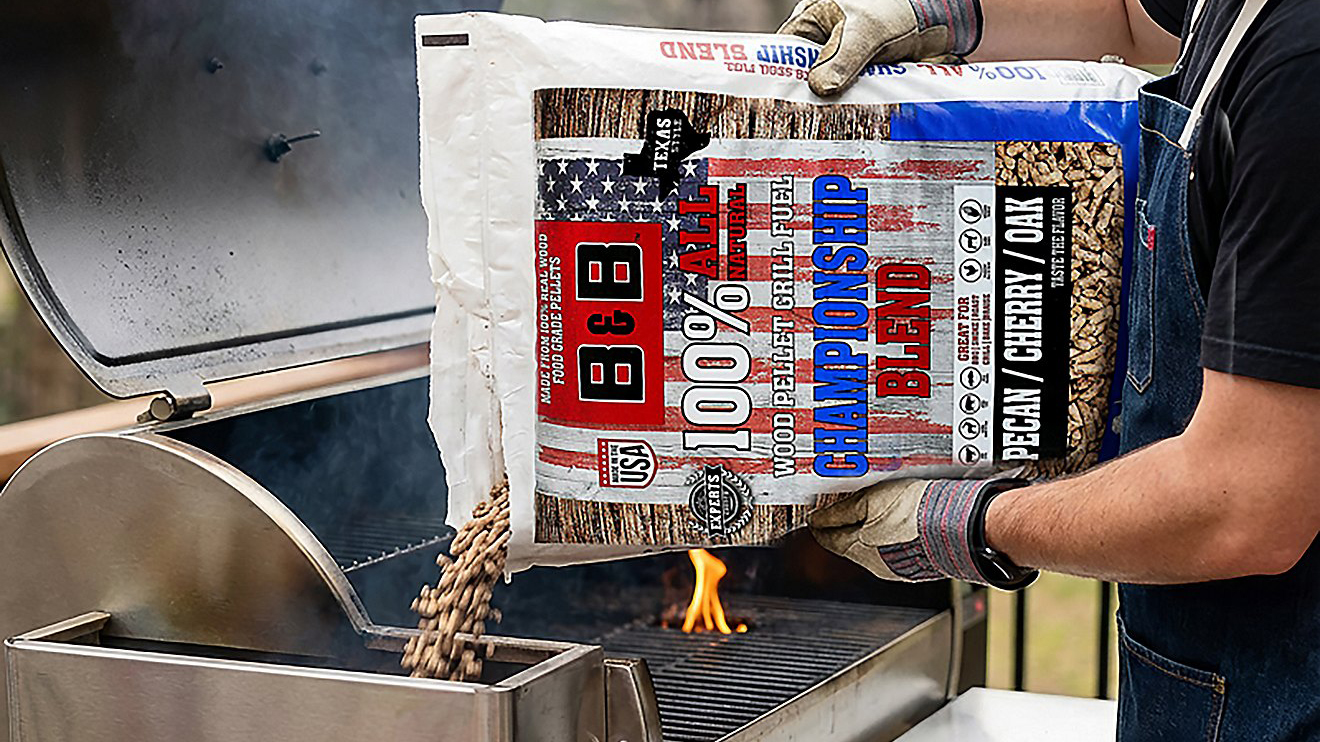
Here is the linguistic move, and once you see it you cannot unsee it. Camp Chef’s hickory pellet page says its pellets are “100% pure virgin hardwood.” Not 100% hickory. 100% hardwood. Every major brand’s “100%” claim we could find attaches to the word hardwood, or to natural, or to virgin — never to the species named on the front of the bag.
The clearest proof sits in a single storefront: LumberJack sells both a “100% Hickory” SKU and a separate “Hickory Blend” SKU. If “Hickory” already meant hickory, the first product would not need the qualifier.
| Brand | The “100%” claim attaches to… | Admits an oak/alder base? | Flavor oil? |
|---|---|---|---|
| Traeger | “natural, food-grade hardwood” | Yes — explicitly | Yes — disclosed |
| Bear Mountain | — | Yes — explicitly | Not stated |
| Camp Chef | “pure virgin hardwood” | No species stated | Denies added flavoring |
| CookinPellets | the species itself — “100% Hickory” | No — denies it | Denies additives |
| LumberJack | sells “100% Hickory” and “Hickory Blend” | Not verified | Not stated |
| Pit Boss | “All-Natural Hardwood” | No species stated | Not stated |
| Weber | No species composition published on pages we could reach | ||
Is there a standard? No — and we can prove it
The industry document is the Pellet Fuels Institute Standard Specification for Residential/Commercial Densified Fuel, dated October 4, 2022. We searched its full text. These words appear zero times:
species · flavor · food · cook · label · hardwood · softwood · grill · barbecue · BBQ
The entire material-composition requirement, identical across all three grades, is one cell: “Woody Biomass.” Not a species. Not even hardwood versus softwood. And the scope is heating fuel — the specification exists so appliance makers can meet air-emission rules, not so anyone can eat the smoke.
The FTC’s only on-point rule is the Made in USA Labeling Rule (16 CFR Part 323), which governs country of origin and says nothing about wood species. We found no FDA rule specific to cooking pellets either — though we state that as “no evidence found” rather than a proven negative.
The loophole, in the industry’s own words
Traeger says “Pellets contain no additives” and, four paragraphs later, that “the food-grade soybean oil is infused with natural woods, herbs, or citrus in all of our specialty wood pellet flavors.” Those look contradictory — until you read PFI §3.1.1, which defines additives as substances intentionally introduced before extrusion and then adds: “Grease or other lubricants that are introduced into the fuel processing stream as part of normal mill operations are not considered additives.” A flavored oil introduced as a mill lubricant is, under the industry’s own definition, not an additive. The statement is defensible under the standard and misleading in ordinary English. That is a more interesting story than anyone lying.
What this means for your cook: not much — and that is the useful part. If the base is oak or alder regardless of the bag, then chasing exotic flavor names is chasing a minority ingredient. Buy on burn quality, moisture content and price per pound. If you want a species to actually dominate, buy from a brand that makes the species claim about the species, and expect to pay for it.

Will your hopper actually finish a brisket?
This is the question that decides whether you sleep, and no competitor page asks it. It is answerable with division.
Only three manufacturers publish a burn rate at all. Pit Boss states: “A good rule of thumb is to have 2 lbs. of pellets for every hour of smoking low and slow or 4 lbs. for every hour of grilling hot and fast.” Camp Chef gives about 3 lb/hr for a 24-inch grill on high. recteq claims a 30-pound hopper gives “30 hours of continuous cooking” — an implied 1 lb/hr.
Notice that Pit Boss and recteq disagree by a factor of two on the same duty cycle, and neither publishes a test method. That disagreement is the real finding here, and everything below depends on which number you trust.
| Model | Hopper | @1 lb/hr | @2 lb/hr | @3 lb/hr |
|---|---|---|---|---|
| Pit Boss Pro Series II Portable 150 | 5 lb | 5.0 h | 2.5 h | 1.7 h |
| Traeger Pro 575 / 780 | 18 lb | 18.0 h | 9.0 h | 6.0 h |
| Traeger Ironwood 885 (legacy) | 20 lb | 20.0 h | 10.0 h | 6.7 h |
| Traeger Ironwood / XL | 22 lb | 22.0 h | 11.0 h | 7.3 h |
| Traeger Timberline / XL | 22 lb | 22.0 h | 11.0 h | 7.3 h |
| Pit Boss 1150 DX | 30 lb | 30.0 h | 15.0 h | 10.0 h |
| recteq Backyard Beast 1200 | 30 lb | 30.0 h | 15.0 h | 10.0 h |
The number that writes itself
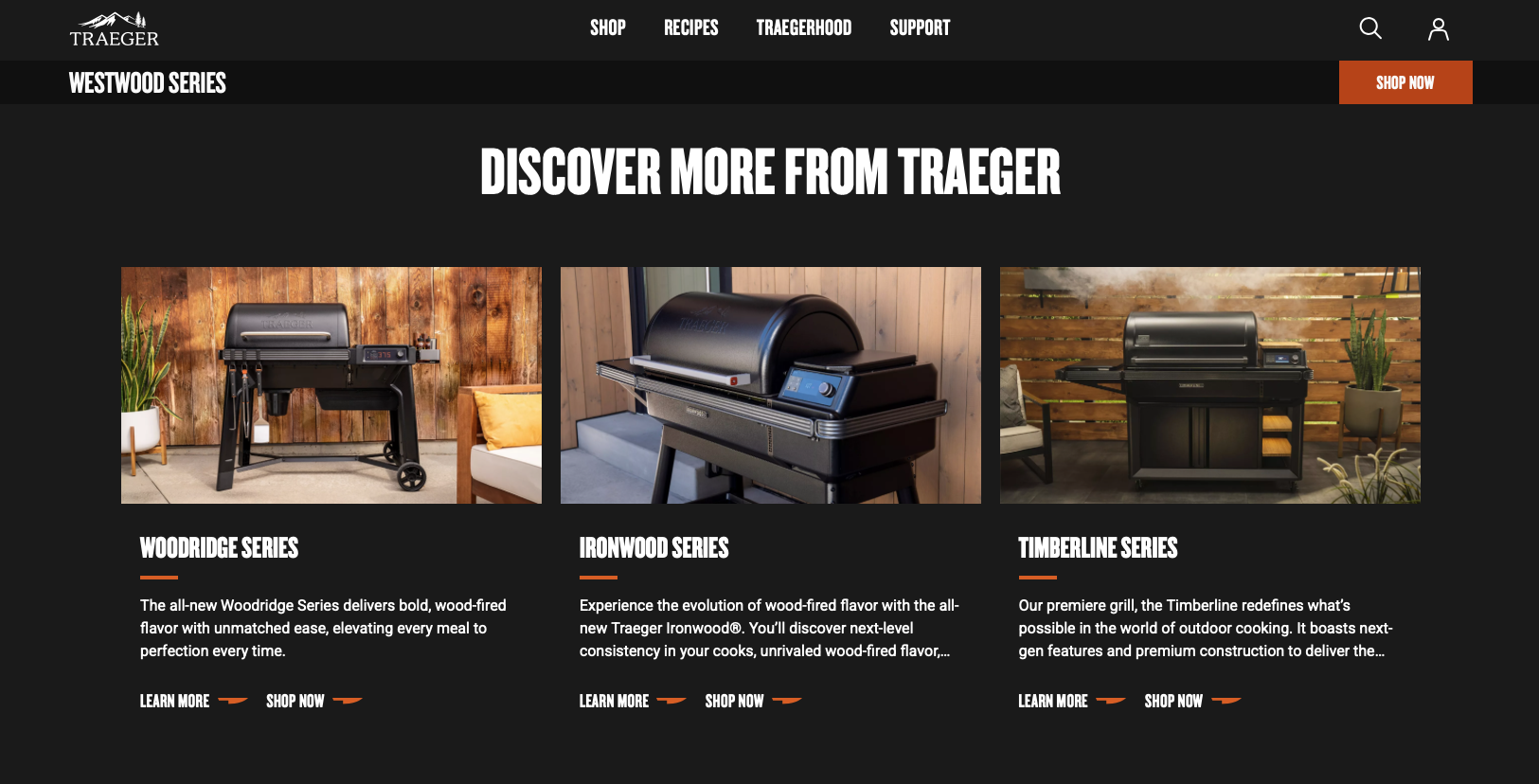
Traeger’s own brisket recipe runs 225 °F for roughly six hours to 160 °F, then “about 4-6 hours more” — call it 10 to 12 hours. At 2 lb/hr that needs 20 to 24 lb of pellets. The largest hopper Traeger sells holds 22 lb. At the top of Traeger’s own stated time range, the cook needs more fuel than the biggest Traeger holds — and the Pro 575 and 780, the volume sellers at 18 lb, run out at nine hours, short of even the fast end of Traeger’s own recipe.
Two honest caveats, because this finding is only as good as its inputs. First, 2 lb/hr is Pit Boss’s figure and we are applying it to Traeger hardware — Traeger publishes no rate, so no like-for-like comparison is possible. Second, at recteq’s implied 1 lb/hr every grill in that table except the 5 lb portable clears 18 hours comfortably. The conclusion flips entirely on a number two companies disagree about by 100%.
Which is the actual point: the industry does not publish the one specification that determines whether you can sleep through a brisket.
Traeger goes further. It has a support page titled “Fuel Input Rating” (updated November 21, 2024) whose entire subject is the burn rate. It defines the metric, then tells you the number is printed on a label under the hopper lid. No model-by-model figures. And on the main pellets page there is a heading reading “How Much Grill Time Will I Get out of a Bag of Pellets?”, followed by “The following burn rates are approximations…” — and then no burn rates. You have to own the grill to learn how fast it eats.
Practical rule: multiply your planned cook hours by 2 lb, compare to your hopper, and if the hopper loses, plan a refill or start the cook in the morning rather than overnight. Running dry mid-cook drops the chamber into the danger zone while you sleep — which is a food-safety problem, not just a ruined dinner.
What temperature should a pellet grill be for brisket?
Most sources say 225 °F. The federal guidance and the only peer-reviewed protocol both point higher.
FSIS “Smoking Meat and Poultry” (last updated August 13, 2024) says to keep the chamber “between 225 and 300 °F throughout the cooking process.” 225 °F is the floor, not the ideal. Four of the nine top-ranking pages we audited instruct cooks to run below it — 180 °F, 190 °F, 195 °F, 200 °F — and not one of them mentions that this sits outside published federal guidance.
Meanwhile the only peer-reviewed low-and-slow brisket protocol we could find — Lees et al., Foods 2024;13(19):3049, DOI 10.3390/foods13193049, published September 25, 2024 — ran at 120 °C (248 °F), wrapped in heavy-duty aluminum foil at 65.6 °C (150 °F), finished at 93.3 °C (200 °F) and rested a minimum of 30 minutes in an insulated box. Consumers in two countries rated the result highly, with no difference in overall liking between them (p = 0.75).
That protocol disagrees with essentially the entire internet on all four variables: hotter, wrapped earlier, in foil rather than the fashionable butcher paper, and pulled lower than the near-ritual 203 °F. Not one competitor page cites it — because eight of the nine cite nothing at all.
Why do the recipes disagree so much?
Because almost none of them rests on a measurement. Here is the field:
| Source | Chamber | Wrap at | Wrap in | Pull at | Rest | Cites a source? |
|---|---|---|---|---|---|---|
| Traeger — Traeger Brisket | 225 °F | 160 °F | foil | 204 °F | 30 min+ | No |
| Traeger — K.I.S.S. Texas-Style | 225 °F | 165 °F | paper | 203 °F | 30 min+ | No |
| Meat Church | 200→225 °F | 175 °F | paper | 203 °F | 3 h+ | No authority |
| Smoked BBQ Source | 180–190 °F | 165 °F | paper | 200–203 °F | 1–6 h | Storage only |
| How to BBQ Right | 195→250 °F | 150–160 °F | paper | 200 °F | 2 h | No |
| Z Grills | 225→250 °F | 160 °F | foil | 200 °F | 10 min | No |
| Pit Boss — Classic | 225 °F | 150–160 °F | paper/foil/pan | 192 °F | 2 h+ | No |
| Pit Boss — 14-Hour Flat | 200→250 °F | 202 °F | paper | 202 °F | 1 h | No |
| Foods 2024 (peer-reviewed) | 248 °F | 150 °F | foil | 200 °F | 30 min+ | Peer reviewed |
Two of those rows come from the same company. Pit Boss publishes a 192 °F finish on one recipe and 202 °F on another; its 14-hour recipe tells you to wrap at 202 °F and finish at 202 °F, which makes the wrap step incoherent as written. Traeger publishes three different wrap temperatures across three of its own pages.
What is actually known, and what is craft consensus
- Butcher paper versus foil: no measurement exists. We searched the peer-reviewed literature; “Texas crutch” returns zero results, and “butcher paper” returns only food-packaging migration studies. Every claim about paper breathing and preserving bark is craft consensus. It may well be right. Nobody has measured it.
- The stall. Texas A&M AgriLife Extension states it “has been scientifically documented to be evaporative cooling” — and cites nothing. We could not locate the documentation. Physically plausible, institutionally asserted, evidentially thin. (The Extension post’s own deep link now returns HTTP 410.)
- 203 °F. No agency, university or study names it. It is a convention, and a good one, but the thermometer is really measuring elapsed time at collagen-converting temperatures rather than crossing a threshold. Probe feel is the better cue.
- The smoke ring means nothing about flavor. America’s Test Kitchen (July 14, 2022): “the color change does not change the flavor.” More striking: the barbecue smoke ring has zero indexed peer-reviewed literature — searches for it paired with myoglobin or with meat both return nothing. The most photographed feature in American barbecue has never been studied.
- “Pellet grills make less smoke than stick burners” is universally repeated and, as far as the published literature goes, entirely unmeasured. The mechanism offered — cleaner combustion producing fewer flavor phenols — is chemically plausible and untested.
Is it safe to smoke a brisket overnight?
Yes, with two numbers worth knowing that no competitor page connects to brisket.
The safety temperature and the doneness temperature are different questions. FoodSafety.gov (reviewed November 21, 2024) puts beef roasts at 145 °F with a 3-minute rest. Every brisket recipe pulls at 192–204 °F — 47 to 59 degrees above the safety threshold. You are not cooking brisket hot for safety. You are cooking it hot to convert collagen. Several pages imply otherwise.
The long rest deserves more care than it gets. Meat Church notes that Texas joints hold briskets “for 8 hours in a warmer at 140.” FSIS defines the danger zone as “temperatures between 40 and 140 °F.” 140 °F is the boundary itself, not a margin above it. An eight-hour hold sitting exactly on the line is fine in a calibrated commercial warmer and considerably less fine in a home oven with a ±25 °F swing and no thermometer in it. If you hold long, hold at 150–160 °F and verify with a probe.
There is also a federal number nobody in barbecue has looked at. FSIS Appendix A (FSIS-GD-2021-14, December 2021) recommends “limiting the total time product temperature is between 50 and 130 °F to 6 hours or less.” A refrigerator-cold brisket in a 225 °F chamber can spend longer than that climbing through the window. The honest caveat: Appendix A is commercial guidance for inspected establishments producing ready-to-eat product under HACCP. It has never been applied to backyard barbecue and it is not a rule you are breaking. But it is a real, citable number, and a hotter start is the easy way to stay inside it.

Brisket on a Pellet Grill
Our method. Where a number is convention rather than evidence, it says so.
Ingredients
- 1 whole packer brisket, 12–14 lb (flat and point together)
- 2 tbsp yellow mustard or hot sauce, as a binder
- ¾ cup coarse beef rub — equal parts 16-mesh black pepper and kosher salt is the Texas default; our rub guide covers why salt brand changes the dose
- Pellets: at least 2 lb per planned hour, plus a margin
- Unwaxed butcher paper or heavy-duty foil
Method
- Trim the day before. Take the fat cap to about ¼ inch and remove the hard deckle fat between the flat and the point. Season on all sides and rest uncovered in the refrigerator overnight — see our dry-brining guide for what the salt is doing in that time.
- Do the fuel math before you light it. Planned hours × 2 lb. If that exceeds your hopper, either plan a refill or move the cook to daylight. This is the step that separates a finished brisket from a cold one.
- Run the chamber at 250 °F, not 225 °F. It sits comfortably inside the FSIS 225–300 °F window, it is close to the peer-reviewed protocol’s 248 °F, and it moves the meat through the low-temperature window faster. Fat side up or down makes no measurable difference anybody has published.
- Smoke unwrapped until the bark is set — color is dark mahogany and the surface does not smear when touched, typically 160–165 °F internal and 6–8 hours. Do not wrap on temperature alone; wrap on bark.
- Wrap. Butcher paper if you want a firmer bark, foil if you want speed and do not mind it softening. Both are defensible; neither is proven. The peer-reviewed protocol used foil, earlier than most recipes advise.
- Cook to feel, not to a number. Start probing around 195 °F. Done is when a probe enters the thickest part of the flat with no resistance — usually 200–203 °F, sometimes higher. The temperature is a proxy for hours spent converting collagen.
- Rest at least an hour, two is better. In a cooler with towels, or in an oven held at 150–160 °F. Not at 140 °F.
- Slice across the grain, and note the grain runs in different directions in the flat and the point — separate them before slicing.
Total time for a 12–14 lb packer at 250 °F runs roughly 10 to 14 hours including the rest. Start earlier than you think; a finished brisket holds well, a late one ruins dinner.
Related reading
For pull temperatures across every cut, see the smoking times and temperatures chart. If the cook stalls longer than you expect, our pellet smoker stall fixes covers the options. For the broader cut-and-technique picture, the smoked brisket guide is the place to start, and leftovers make excellent burnt ends. Hunters cooking wild game on the same equipment should note that USDA’s temperature for venison is materially different — see the venison guide at Popular Outdoorsman.
What we would not tell you
- A filler percentage for any brand’s pellets. The one number in circulation is a competitor’s marketing claim with no published methodology.
- That butcher paper beats foil, or the reverse. No measurement exists either way.
- That pellet grills produce measurably less smoke flavor. Universally repeated, never measured.
- A per-model temperature swing. Only Pit Boss publishes a figure and it is a category claim on a blog, not a per-model specification. No independent measurement of pellet grill setpoint accuracy exists in the peer-reviewed or standards literature.
- That 203 °F is the magic number. No agency, university or study names it.
How this guide was made: research-based, not a kitchen test. Pellet composition claims are quoted from each manufacturer’s own published pages, with the load-bearing Traeger quote confirmed in a live browser on 2026-08-21. Hopper hours are simple division on manufacturer-published capacities and burn rates, shown so you can reproduce them. Regulatory text is quoted from the PFI specification, eCFR and FSIS as of the dates given. Reviewed and edited by James Nicholas.
Frequently Asked Questions
Are “hickory pellets” actually made of hickory?
Mostly not. Traeger’s own support page says every one of its pellets, regardless of the flavor printed on the bag, is built on an alder or oak base with flavor added — and no industry standard defines what a “hickory pellet” must contain. Bear Mountain’s own FAQ confirms the same base-wood approach. The flavor name on the bag is a marketing label, not a recipe.
Does Traeger’s own brisket recipe actually fit a Traeger hopper?
Not in the largest one, at the only published low-and-slow burn rate we could find in the industry. That is Traeger’s own numbers working against Traeger’s own recipe, not an outside criticism.
What does the peer-reviewed research say about smoking brisket?
The one peer-reviewed brisket protocol we found disagrees with most popular online advice: it runs hotter, wraps the brisket earlier in foil, and pulls it at a lower finishing temperature. Meanwhile, eight of nine top-ranking brisket guides we checked cite no source at all, and disagree with each other by 52 °F on when to wrap and by 48× on how long to rest.
How do you slice a brisket?
Against the grain, and expect to change direction partway through. The grain runs differently in the flat than in the point, so slice the flat, then rotate before slicing across the point’s own grain rather than continuing in the same direction.

Reader Favorites
- Essential BBQ Tools: Get The Tools Pros Recommend Now
- Creative BBQ Recipes: Fire Up A Unique BBQ Menu Now
- Easy BBQ Foods: Grill Like a Pro with These 10 Recipes
- Cleaning Your Gas Grill Cooking Grate: Make it Great Again
- Stainless Steel BBQ Grill Cleaning: Master Maintenance Now
- Best Beef Breeds: Pick The Best For Smoking Now
BBQ Temperature Charts & Guides
Four quick-reference tools every cook bookmarks — target temps, pull temps, and how long leftovers keep, plus the full BBQ glossary.
| Cut | Pull | Time |
|---|---|---|
| Brisket | 203°F | 12–16h |
| Spare ribs | 195–203°F | ~6h |
| Pork butt | 203°F | 12–14h |
Target temps & times for 17 cuts, sortable by meat, weight and doneness.
View full chart →| Doneness | Target |
|---|---|
| Rare | 125–130°F |
| Medium-rare | 130–135°F |
| Well-done | 160°F+ |
Rare to well-done, burger safety (160°F) and resting times.
View full chart →| Food | Fridge | Freezer |
|---|---|---|
| Brisket, ribs | 3–4 days | 2–3 mo |
| Smoked sausage | 1 week | 1–2 mo |
| Potato salad | 3–4 days | no freeze |
How long smoked meats & sides keep — fridge and freezer, USDA-based.
View full chart →Every pit term decoded — cooking methods, gear, cuts, wood, and technique, A to Z.
Open the glossary →